
Which watch brands can be dated to a birth year?
Some vintage watches tell you the month they were made. Others only tell you the decade. Here is how each brand we sell can be dated, how close the answer gets, and where to look on the watch.
Some watch brands stamped the date on every watch. Others never did. That one fact decides how closely a vintage watch can be matched to a birth year, and it matters far more than the age or the price of the watch.
In short, the brands fall into three groups. Seiko, Citizen and Bulova put a date code on the case back, so the answer is a month or a year. Swiss makers with numbered movements, such as Longines, Omega, Tissot and Certina, can be dated to a year or two with published serial charts, but only for certain decades. Fashion houses and most later quartz watches, including Gucci and Raymond Weil, carry no public date code, so the honest answer is a decade.
Our own stock shows the split clearly. On 21 November 2026 we had 588 watches for sale. 66 were dated to a single year, 43 to about a year (we write "circa"), and the other 479 to a decade or a period. Seiko alone gave 38 of the 66 single years. This guide explains why, brand by brand. For the general method behind it, see how to date a vintage watch, and for the bigger picture on choosing a watch from your year, read finding your birth year watch.
Which brands can be dated to the exact month?
Seiko and Citizen. Both put a serial number on the case back whose first characters are a date.
On a Seiko, the first character of the serial is the last digit of the year. The second is the month: 1 to 9 for January to September, then 0 or O for October, N for November and D for December. The serial does not say which decade, so you read the calibre too. That is the first four digits of the model number beside it, such as 2205 in 2205-0250, and each calibre was only made for a set number of years. Our step by step guide on how to date a vintage Seiko by its serial number works through the method.
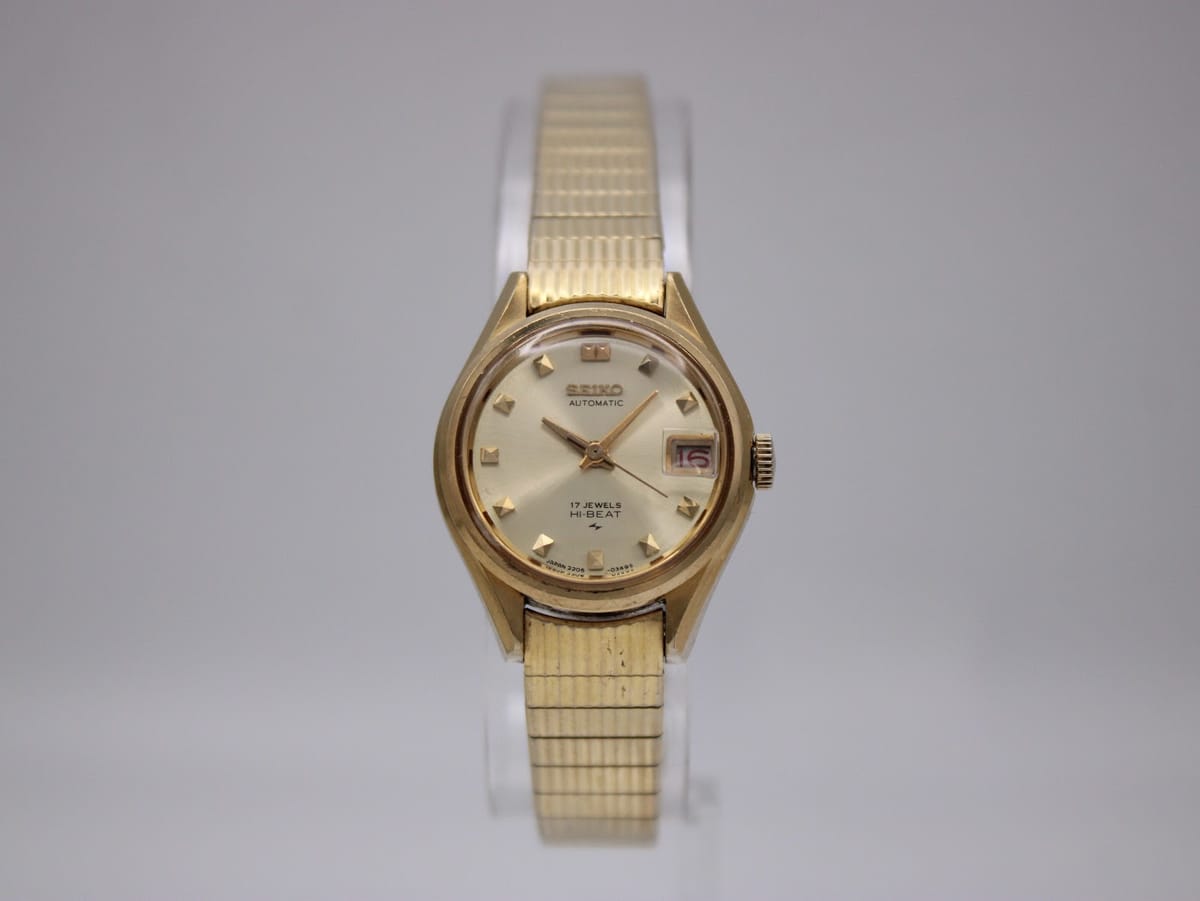
Here is a real one from our stock. The case back reads 2205-0250 and serial 534227. The 5 means a year ending in 5, the 3 means March, and the 2205 calibre is a 1970s automatic, so the watch was made in March 1975. Another Seiko of ours, a 7223-6010 quartz alarm, has serial 9D0490: December of a year ending in 9, and Seiko only launched the 7223 calibre in 1979, so the watch dates to December 1979.
Two warnings. Seiko serials from before about 1967 had seven digits and are less well documented. Seiko 5 Sports watches made from 2019 onwards use a newer serial that cannot be read this way. Seiko has never published the rule; it comes from collectors, and their sources agree with each other.
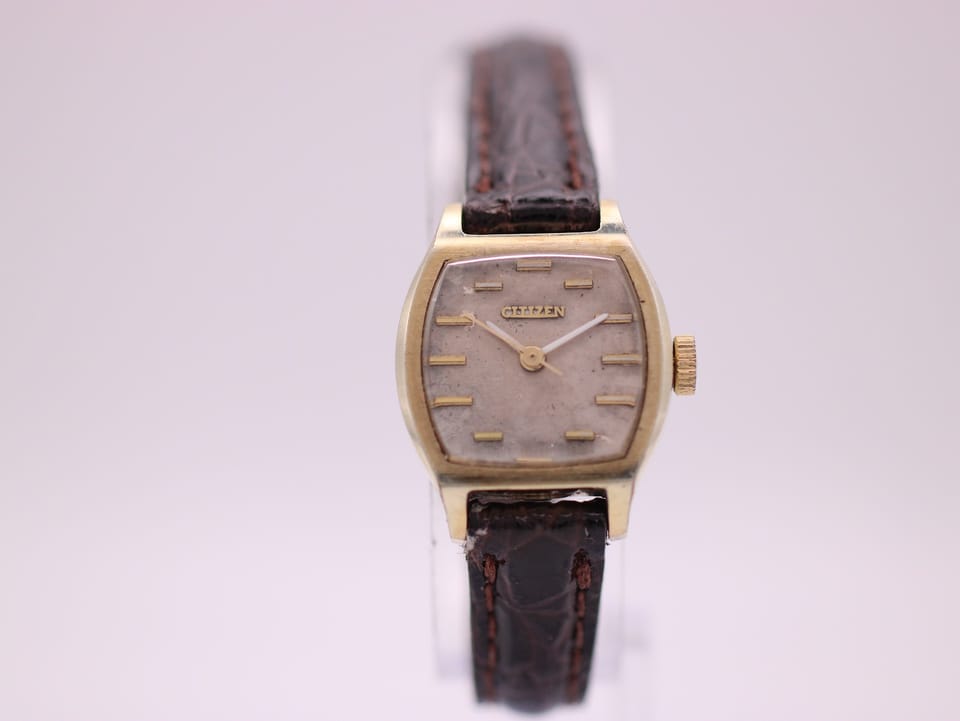
Citizen works in a similar way. The serial is usually eight digits, though six to nine also turn up. The first digit is the last digit of the year and the next two are the month, 01 to 12. Some later Citizens use O, N or D in the second place instead. The decade again comes from the model and movement, and from the wording: older Citizens say Parawater, while watches from about 1972 or 1973 onwards say Water Resistant. Our gold-plated Citizen 65-4329 has serial 9122826, which reads December of a year ending in 9. The serial alone cannot say which decade, so we go by the case, dial and style, which point to the late 1960s, and list it as 1969.
What do the letters on a Bulova case back mean?
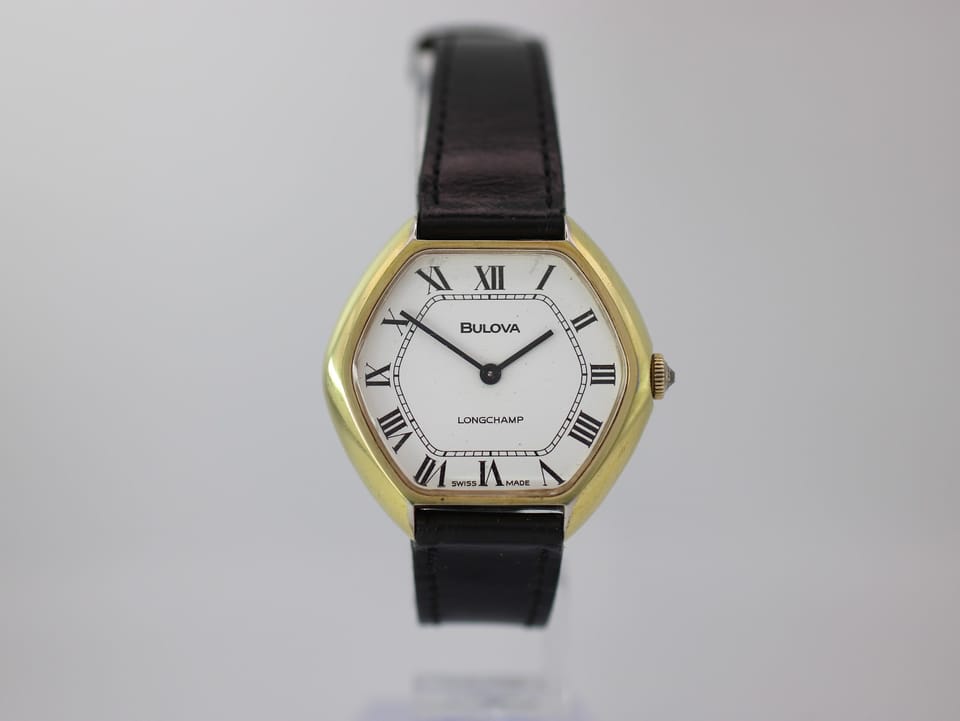
They are the year. From 1950, Bulova stamped a two-character code on the case back, and usually on the movement too. The letter is the decade and the number is the year within it: L for the 1950s, M for the 1960s, N for the 1970s, P for the 1980s and T for the 1990s. So M4 is 1964 and N7 is 1977. Our Bulova Longchamp, a gold-plated octagonal manual wind, has N7 on the back: 1977.
The case and the movement may carry codes a year apart, which is normal. A gap of several years suggests parts from two watches were put together. Before 1950 Bulova used small symbols on the movement instead, and after 1999 the letters started again at A, so the style of the watch decides between, say, 1948 and 2008.
Can a hallmark date a gold watch?
Often, yes, if the case is solid gold or silver and was hallmarked in the UK. A full UK hallmark can include a date letter. Since 1975 all four UK assay offices have used the same letter each year, so one letter means one year. Since 1999 the date letter has been optional, so newer cases may not have one.
This matters for British-sold brands such as Rotary, Accurist, Garrard and Mappin & Webb, whose gold watches were often hallmarked here. The letter tells you the year the case was tested. That is often close to when the watch was finished, but a case can be made and hallmarked before the movement was fitted, so treat it as a strong guide rather than proof of the exact year. Gold-plated and gold-filled cases are not hallmarked, so this only helps with solid metal. Our guide to case materials explains the difference.
How precise are Swiss serial numbers?
Precise to a year or two, for the right decades. The catch is that on most vintage Swiss watches the useful number is on the movement, so the case has to be opened by a watchmaker to read it.
Longines has kept one production register since 1867. Its movement serials run in sequence, and Longines will issue an official Extract from the Archives for watches more than ten years old, which states what its register holds for that serial. That makes Longines the most precise Swiss brand we sell, if you are willing to pay for the extract. Our guide to pre-owned Longines covers the models.
Omega numbered its movements in one long sequence too. Published charts map the number to a year, and the people who compiled them describe the result as accurate to a year or two. Omega has offered archive extracts in the past; check the current position with Omega before relying on one.
Tissot is precise up to 1983 and much harder after it. Published tables cover movement numbers up to 1976 and case-back serials from 1977 to 1983. After that the number no longer dates the watch, and the reference code identifies the model, not the year. Our guide to Tissot reference numbers explains the codes and Tissot's own archive service.
Certina is similar. From the 1950s to 1974 the case back carries a reference number and a seven-digit serial, and published charts turn the serial into a year. Certina dropped the serial around 1974, so later Certinas are dated by model and style instead.
These charts were mostly compiled by collectors, not by the brands. They are reliable guides, not certificates. Remember too that a date tells you when the watch was made, not when it was sold. A watch could sit in a shop window for a year before anyone bought it.
Why are Gucci and Raymond Weil only dated to a decade?
Because neither brand ever published a way to read a date from its numbers, and we will not invent one.
Gucci watches have been made in Switzerland since 1972. The case back carries a model reference, such as 2000L or 9040L, and a separate serial number. The reference tells you the family, and each family was made over a known span of years, so the reference places the watch in a decade. The serial identifies that one watch but has no public date key. If the original papers survive, the purchase date is the closest thing to an exact year. Our guide to Gucci watch model numbers explains the references.
Raymond Weil was founded in Geneva in 1976, so no Raymond Weil is older than that. Later watches carry a serial of one letter and six digits, and some older models have no serial at all. Raymond Weil does not publish a dating table, so we date by the reference family and the design. A Genève dress watch with a 9xxx reference, for example, belongs to the 1980s and 1990s. The guide to Raymond Weil old models lists the families. A warranty card with a dealer stamp gives the purchase date.
Maurice Lacroix is in the same position. The brand made its first watch in 1975, and we know of no published dating table for its serials, so we date by model and style. Most Rotary watches are the same, unless a gold case carries a hallmark.
Casio is a special case. Collector sources disagree about whether an ordinary Casio serial carries a date, and Casio has published nothing, so we do not rely on it. The module number on the back names the electronics inside, and a watch cannot be older than its module. Some solar-powered Casios carry a batch code with a year letter and the day of the year, but the letters repeat every ten years, so the model decides the decade.
Summary: how close each brand gets
This table sums up the brands we sell most often. "Typical precision" is what the evidence usually allows when the numbers are readable and the parts are original.
| Brand | Best evidence | Typical precision | Where to look |
|---|---|---|---|
| Seiko | Serial date code plus calibre | Month and year | Case back: serial and the ####-#### model number |
| Citizen | Serial date code plus movement and wording | Month and year | Case back serial, usually 8 digits |
| Bulova (1950 on) | Letter and number date code | Year | Case back, often the movement too |
| Solid gold or silver, UK hallmarked | Assay office date letter | Year (if a letter was struck) | Hallmark, inside the case back or on the lugs |
| Longines | Movement serial and official archive extract | Year, or exact with the extract | Movement (case must be opened) |
| Omega | Movement serial charts | 1 to 2 years | Movement (case must be opened) |
| Tissot (to 1983) | Movement and case serial charts | 1 to 2 years | Movement, or case back from 1977 |
| Certina (to 1974) | Seven-digit serial charts | About a year | Case back |
| Gucci | Model reference family | Decade | Case back reference, such as 9040L |
| Raymond Weil | Reference family and design | Decade or period | Case back reference, such as 9923 |
| Maurice Lacroix | Model and design | Decade or period | Case back reference |
| Rotary | Model and design, hallmark if gold | Decade, or year if hallmarked | Case back and hallmark |
| Casio | Module number, batch code on some solar models | Decade, sometimes a year | Case back module number |
What do "circa" and a decade mean on our listings?
We use three levels, and we only use the closer ones when the watch gives us the evidence. A single year means a date code, serial or original paperwork points to that year. Circa means the evidence points to a year with a little room either side. A decade means the evidence only supports the era.
A watch dated to a decade may still be from your year; we just cannot prove it from the case back. If the year matters, ask us before you buy. We will read the case back and the movement and tell you what they support, including when the answer is that we cannot narrow it down.
Watches we can date closely right now
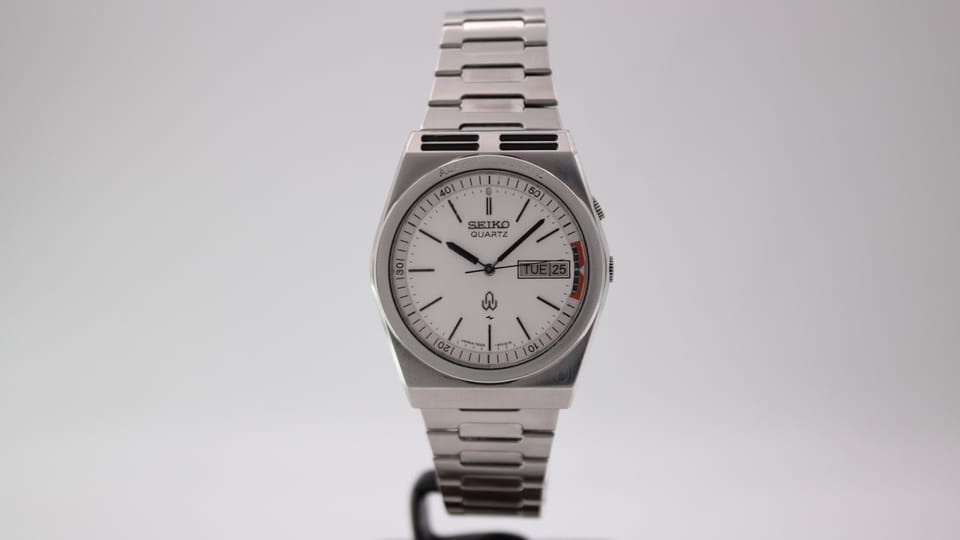
These are in stock at the time of writing, each dated from the code on its own case back: the Seiko 2205-0250 from March 1975, the Seiko 2906-0170 day-date from March 1977, the Bulova Longchamp from 1977, the Seiko 7223-6010 alarm from December 1979 and the Citizen 65-4329, December of a year ending in 9, listed as 1969.
To see everything from your year, open the birth year watch finder. Each year has its own page, such as 1975 or 1977, with the watches dated to that exact year first and the rest of the decade below. If you would rather browse by era, start with the decades.
Frequently asked questions
Can you tell what year a watch was made from its serial number?
For some brands, yes. Seiko and Citizen serials give the month and the last digit of the year, and the calibre fixes the decade. Bulova stamped the year as a letter and a number from 1950. Longines, Omega, Tissot and Certina serials can be matched to a year or two with published charts. Gucci, Raymond Weil and most fashion brands have no public date key, so they are dated to a decade.
How do I find out what year my Seiko was made?
Read the serial on the case back. The first character is the last digit of the year and the second is the month: 1 to 9, then O or 0 for October, N for November and D for December. Then read the first four digits of the model number, the calibre, to find the decade. Serial 534227 on a 2205 calibre is March 1975.
What do the letter and number on a Bulova case back mean?
They are the year it was made. From 1950 the letter is the decade and the number is the year: L is the 1950s, M the 1960s, N the 1970s, P the 1980s and T the 1990s. So N7 means 1977 and M4 means 1964.
Can a Gucci watch be dated to an exact year?
Usually not. Gucci has never published a way to read a date from its serial numbers. The model reference on the case back, such as 9040L, places the watch in the years that family was made, which normally means a decade. Original papers showing the purchase date are the closest you will get to an exact year.
How old is my Raymond Weil?
No older than 1976, when the company was founded. Raymond Weil does not publish a dating table for its serial numbers, so the reference number on the case back and the design are what date it, usually to a decade or a period. A stamped warranty card gives the purchase date.
If a watch is only dated to a decade, could it still be from my birth year?
Yes. Most vintage watches can only be dated to a decade because the evidence was never there or has worn away, so a watch described as 1970s may well be from your year. Ask the seller to read the case back and movement before you buy; at London Watch Market we do this on request.
Does a date code prove a watch is genuine?
No. A date code tells you when a case or movement was made, not that the whole watch is original. Codes can be copied, and parts from different watches can be combined. A calibre that was not made in the year the serial gives, or Bulova case and movement codes several years apart, are signs to look closer.
Search by your birth year
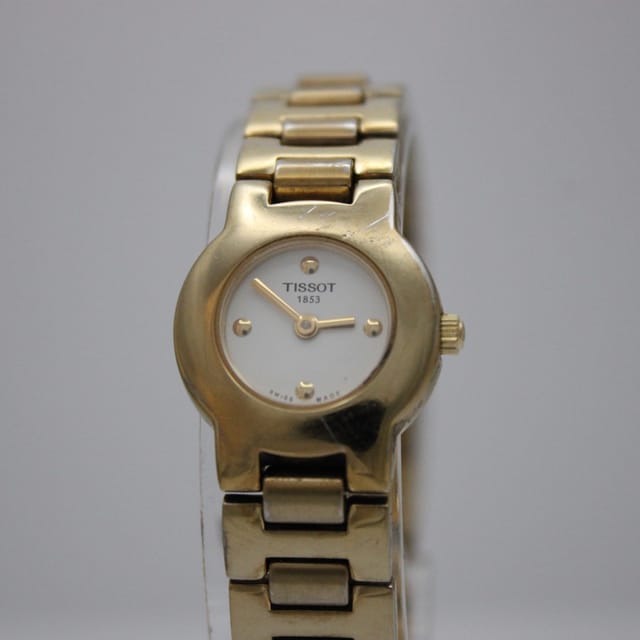 Sale −15%
Tissot G331K
- Movement
- QUARTZ
- Case size
- 21.4mm
- Strap
- Steel
- Condition
- Fair
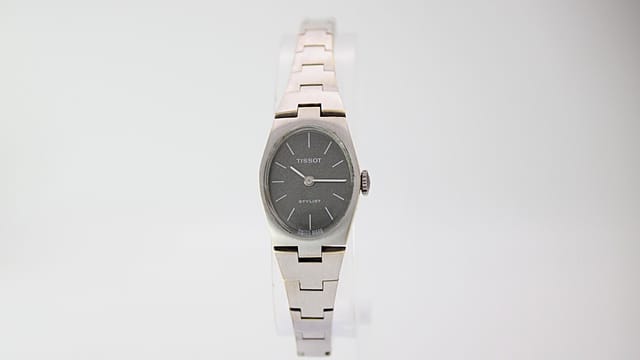 Sale −15%
Tissot Stylist
- Movement
- MANUAL WIND
- Case size
- 17.62mm
- Strap
- Steel
- Condition
- Good
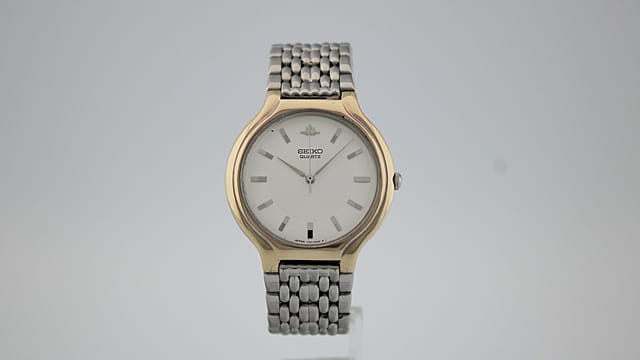
Seiko V701-1T50
- Movement
- QUARTZ
- Case size
- 33.9mm
- Strap
- Steel
- Condition
- Very Good
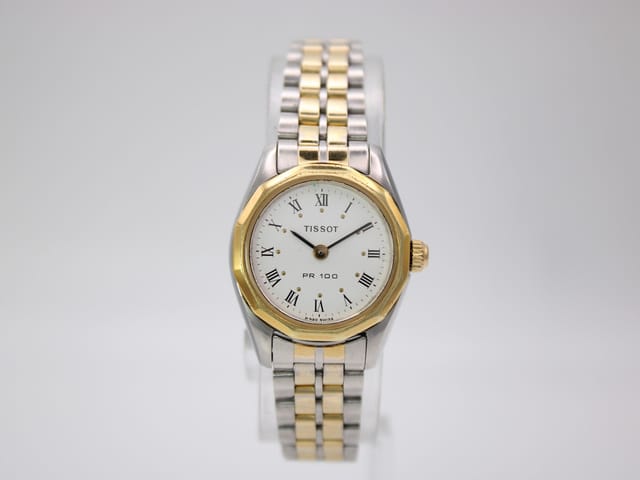 Sale −15%
Tissot Pr 100 P 320/420
- Movement
- QUARTZ
- Case size
- 21mm
- Strap
- Steel
- Condition
- Good