Raymond Weil old models: a guide to the discontinued references
Most of the Raymond Weil watches people ask us about are old models the company no longer makes: the gold-electroplated Genève line, the early Tango, the Othello and Fidelio. Here is how to tell them apart from the case-back and what they are worth.
Raymond Weil is a young house by Swiss standards, founded in Geneva in 1976, and the watches people search for as "old models" are mostly from its first two decades: gold-electroplated dress watches from the 1980s and steel or two-tone everyday watches from the 1990s. None of them is made any more, the company's catalogue today is built around the Freelancer, Maestro and Toccata, and the old references have become a quiet second hand market of their own. This guide is organised the way that market actually works, by the number on the case-back.
Reading the case-back
Every Raymond Weil carries a reference number on the case-back, three or four digits, sometimes followed by a suffix such as -2 for a later series. Two other markings matter. The word Genève identifies the gold-electroplated dress line, and "18K gold electroplated" tells you the case is plated over base metal rather than solid gold, which is true of every gold-coloured Raymond Weil of the era. A serial number sits alongside, but Raymond Weil never published a dating table for it, so the reference and the design are what date the watch.
The Genève 9xxx references
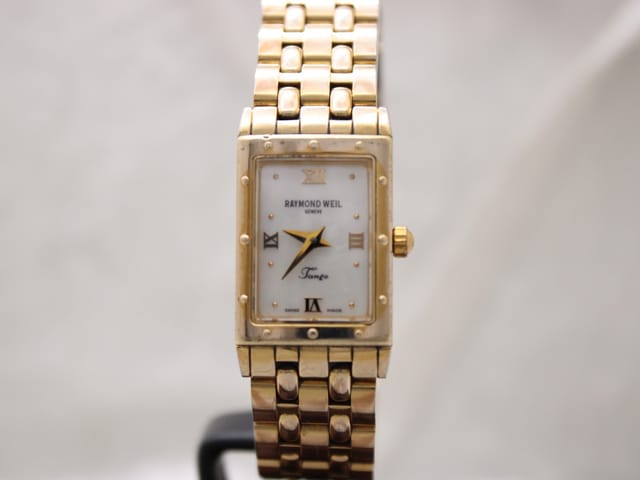
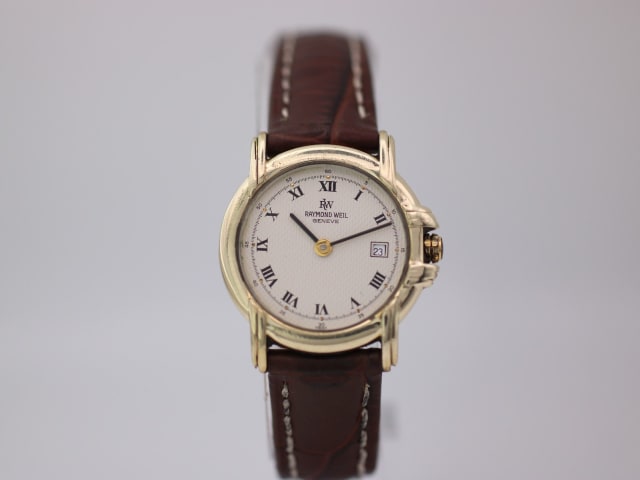
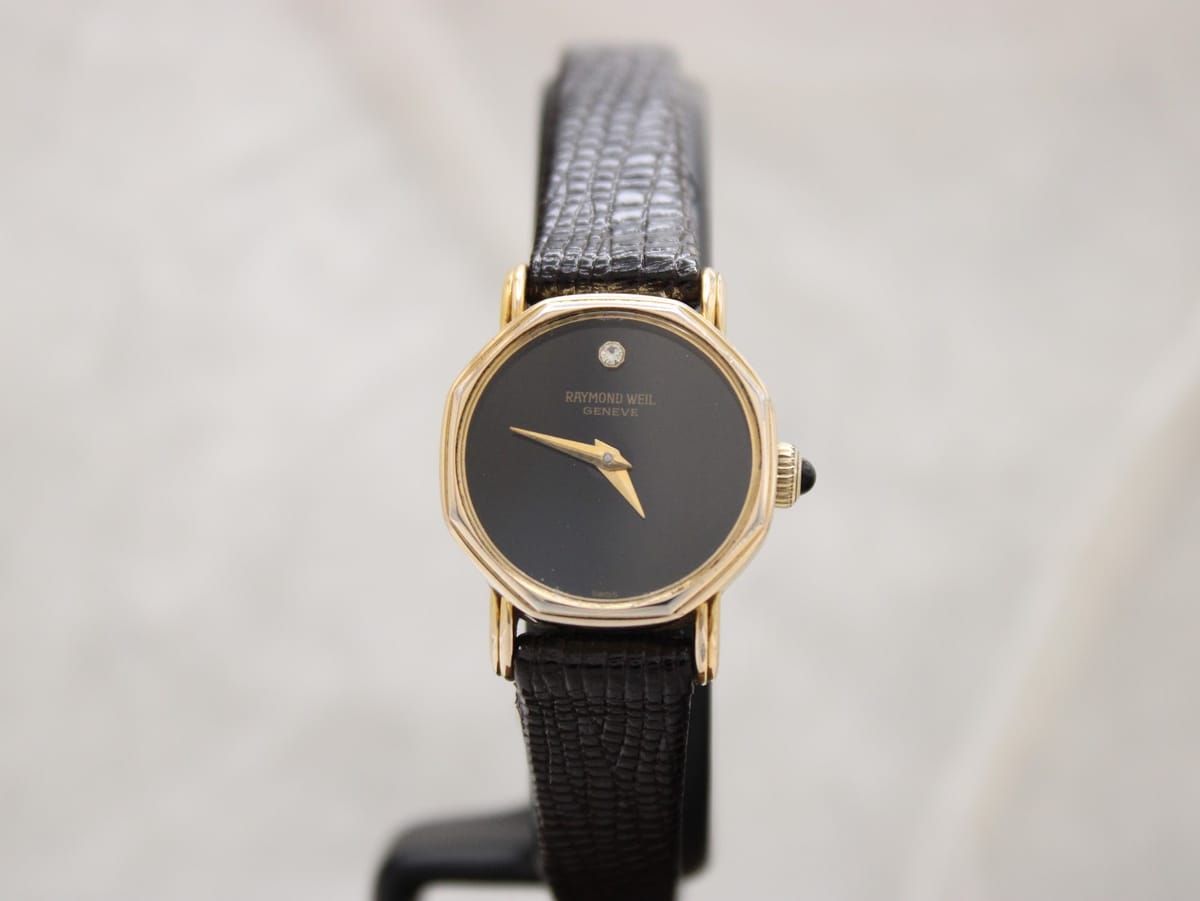
The four-digit references beginning with 9 are the Genève line: slim dress watches, 18k gold electroplated, mostly quartz, on leather straps or plated bracelets. The 9923 is the ladies' reference we handle most often, a small round case with a black or white dial and stone hour markers; the 9124 and 9140 are men's and mid-size versions of the same idea with Roman numeral dials and a date. These were the watches that made the brand's name in the 1980s, and they are the ones most often described as "old Raymond Weil" by the families selling them.
The Tango and the 5xxx references
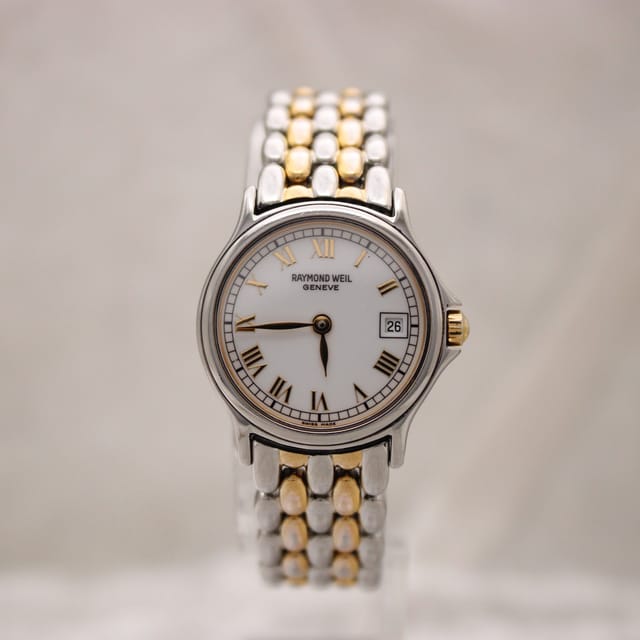
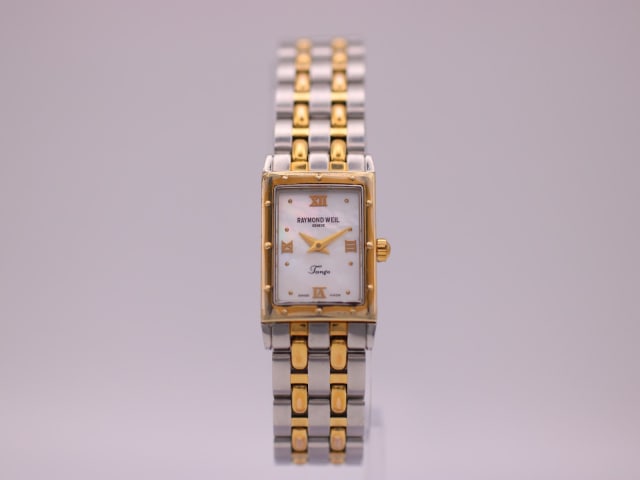
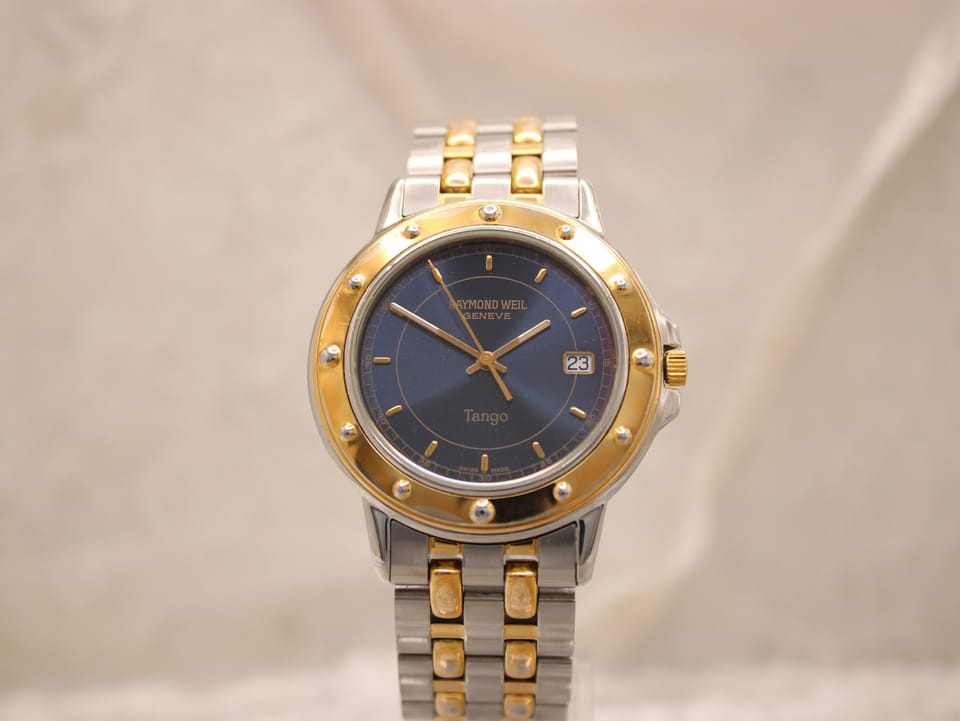
References beginning with 5 are the steel and two-tone everyday line of the 1990s, sold under the Tango name and later the Parsifal for the dressier pieces. The 5360 is the ladies' Tango we see most, a round two-tone case of around 28 to 30mm with a date; the 5971 and 5970 are the larger versions. Unlike the Genève watches these have proper stainless steel cases with gold plating only on the bezel and bracelet centres, so they wear better and are the more practical daily watch today.
| Reference family | Line | Case | Typical era |
|---|---|---|---|
| 9xxx (9923, 9124, 9140, 9920) | Genève dress | 18k gold electroplated | 1980s to 1990s |
| 5xxx (5360, 5971, 5970, 5806-2) | Tango and Parsifal | Steel or two-tone | 1990s |
| 144, 683, 713 | Othello | Ultra-slim, plated | 1980s to 1990s |
| 4802 | Fidelio | Gold plated with set bezel | 1990s |
Othello, Fidelio and the three-digit references
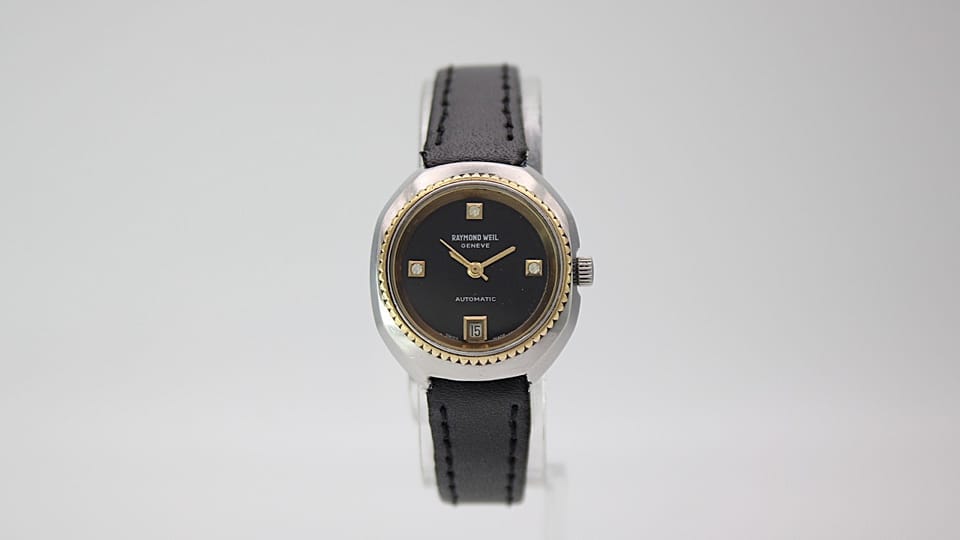
The Othello is Raymond Weil's ultra-thin dress watch, usually a black dial with gold Roman numerals in a plated case only a few millimetres thick; its references are three digits, such as 144. The Fidelio, reference 4802 in the ladies' version we handle, is the jewellery end of the range, with a crystal-set bezel. Both are quartz, both were made in the 1980s and 1990s, and both are more fragile than the Tango because the plating is thin and the cases are slight.
What they are worth second hand
Raymond Weil's old models were mid-priced when new and they are modestly priced now: honest Swiss quartz and automatic dress watches rather than collectors' rarities. Condition of the plating decides most of the value on the Genève and Othello lines, and bracelet condition on the Tango. Our guide to what an old Raymond Weil is worth sets out real sale prices by family, and each of our reference pages shows the price of every example we have handled, in stock and sold.
Every Raymond Weil we sell is inspected and tested in London, honestly graded, and covered by a 14-day return window. If you have one to sell, the reference number on the case-back is the first thing we will ask for.
Frequently asked questions
How do I find the model number on a Raymond Weil watch?
It is engraved on the case-back, usually as a three or four digit number such as 9923 or 5360, sometimes with a suffix like -2. The word Genève on the case-back marks the gold-electroplated dress line. That number is what to search for, and what our reference pages are organised by.
Are old Raymond Weil watches worth anything?
Yes, though not as much as their original prices suggest. They were mid-priced Swiss quartz and automatic watches, and second hand they are valued as good, honest Swiss dress watches rather than as collectors' rarities. Our reference pages show what every example we have handled has been priced at, which is a better guide than any general figure.