
How to wind a vintage manual-wind watch safely
A vintage manual-wind watch needs a gentle daily routine, not a strong hand. Wind it slowly, pay attention to how the crown feels, and stop when you reach clear, firm resistance. Never force another turn.
This guide covers conventional crown-wound vintage wristwatches. Crown positions, winding direction and calendar settings can vary, so instructions for your particular movement take priority.
How do I wind a vintage manual-wind watch safely?
Take the watch off your wrist and hold it securely over a soft surface. This makes it easier to turn the crown straight, without putting sideways pressure on the winding stem.
1. Check the crown position. On most manual-wind watches, winding is done with the crown in its normal, pushed-in position. A screw-down crown must first be gently unscrewed. Do not pull the crown out to wind it.
2. Turn slowly and gently. Most conventional movements wind clockwise, viewed looking directly at the end of the crown. Use small, controlled turns between your fingertips.
3. Feel rather than count. Light resistance and a quiet clicking sound can be normal. As the mainspring fills, resistance increases. Stop when it becomes clearly firm or reaches its natural stop.
4. Do not add one last turn. Never try to push past the stopping point, even if you think the watch needs more power.
5. Set the time and secure the crown. Follow the instructions for your watch. Return the crown to its normal position afterwards, without forcing it.
If the crown feels stiff, gritty or catches before winding normally, stop. That is different from a smooth wind gradually reaching its limit.
How many turns should I give it?
There is no safe universal number for every vintage watch. The movement, how much power remains and the size of each finger movement all affect the count.
A short roll between your fingers is not the same as a complete crown rotation. Counting an arbitrary number can encourage you to keep turning after the watch is already full.
Use the instructions for the movement, wind gently and stop at clear, firm resistance. If you cannot judge the feel confidently, ask the seller or a qualified watchmaker to demonstrate it.
Can I overwind a manual watch?
You can damage it by forcing the crown beyond full wind. But reaching full wind gently is not, by itself, a fault.
In a conventional manual-wind movement, the mainspring stores the energy that runs the watch. It has a winding limit. Once you reach that limit, extra force can damage the spring or winding parts.
You do not need to deliberately leave a healthy watch almost empty to prevent it getting stuck. Equally, do not hunt for the absolute limit with extra pressure. The useful rule is simple: wind gently, then stop when resistance becomes clearly firm.
Do not assume your manual watch has the slipping mainspring arrangement commonly used in automatic watches.
My watch is fully wound but has stopped. Have I broken it?
Not necessarily. A stopped, fully wound watch needs assessment, not more winding.
Owners often describe this as “overwound”, but that description does not identify the cause. Old or deteriorated lubrication, wear, damaged parts or a fault elsewhere in the movement can stop a watch while its spring still holds power.
Do not keep testing the crown, shake the watch hard or try to release the spring yourself. Leave the case closed and contact the seller or a qualified watchmaker. Tell them whether the crown became gradually firm or suddenly jammed, and when the watch last ran normally.
What should I do if the crown feels stuck?
Stop turning it. Never use pliers, extra grip or force.
A crown that will not turn might belong to a fully wound watch, be screwed down, or have a mechanical problem. Those situations require different handling.
If the watch is still running and the crown reached its stop smoothly, it may simply be fully wound. Let it run rather than repeatedly trying to add power.
If it is stopped, the crown is unexpectedly stiff, or you are unsure whether it unscrews, ask for guidance before trying again. Do not force the crown outward either.
How do I restart a watch that has not been worn for a while?
First distinguish a watch that has simply run down from one with an unknown service history.
If a recently serviced watch has been left for a few days, gently wind it using its normal instructions, then set the time. Running out of stored power is normal for a manual watch.
If it has been stored for years, its service history is unknown, or winding feels rough or unusually stiff, have it assessed before regular use. Winding cannot restore deteriorated lubricant or repair worn parts.
If the watch does not start after a gentle wind, do not keep adding force or repeatedly jolt it. Ask the seller or a watchmaker what to do next.
How do I set the time without damaging the watch?
Use the correct crown position and move the hands gently, following the movement’s instructions.
Crown positions are not identical on every watch. Some vintage watches also have unusual date-setting systems, so do not assume the first or second click does the same job on every model.
Advancing the hands forwards is a sensible default when the instructions are unknown. Do not force them backwards or use repeated back-and-forth movements to try to free the watch.
If there is a date or day display, avoid using its quick-set adjustment while the calendar mechanism is engaged around midnight. The restricted hours vary by movement. Check the instructions rather than relying on one universal time window.
How often should I wind it, and is it bad to let it stop?
For everyday wear, once a day at roughly the same time is a practical routine for many vintage manual watches.
Wearing a manual watch does not wind it. Unlike an automatic, it has no rotor to replenish power from wrist movement.
Its running time after winding depends on the movement and condition. Follow the stated power reserve for your watch rather than assuming every vintage watch will run for two days.
Letting it run down between wears is not the same as damaging it. A watch winder cannot wind a conventional manual-wind watch. For long-term storage and servicing, follow advice for the particular movement; occasional winding is not a substitute for maintenance.
How should I care for a vintage mechanical watch between wears?
Keep it dry, protected from knocks and away from strong magnets.
• Store it in a soft pouch or watch box, somewhere dry and away from heat and direct sunlight.
• Do not assume an old water-resistance marking still applies. Unless its present condition and recent pressure test support the intended use, keep it away from water, showers and steam.
• Wipe it with a soft, dry cloth. Do not immerse it or apply household cleaners or oil.
• Keep it away from magnetic clasps, speakers and magnetic charging accessories.
• Remove it for activities involving heavy impact or vibration.
• Arrange servicing based on its movement, history, condition and a qualified watchmaker’s advice.
For more detail, see our guide to caring for vintage watches.
When should I stop using it and ask for help?
Stop if winding or setting becomes difficult, or the watch develops a new running problem.
Warning signs include grinding, sudden stiffness, a loose or slipping crown, repeated stopping despite winding, a large change in timekeeping, or misting beneath the glass. Moisture needs prompt professional attention because corrosion can develop quickly.
If you bought the watch from London Watch Market, contact us with your order details and a description of what happened before trying further adjustments.
Still choosing your first watch? Our guide to watch movements explains manual, automatic and quartz options. You can also browse our manual-wind watches and check the movement and care information on each listing.
The habit to remember: gentle winding, no forced turns, and advice whenever something feels wrong.
Shop manual-wind watches
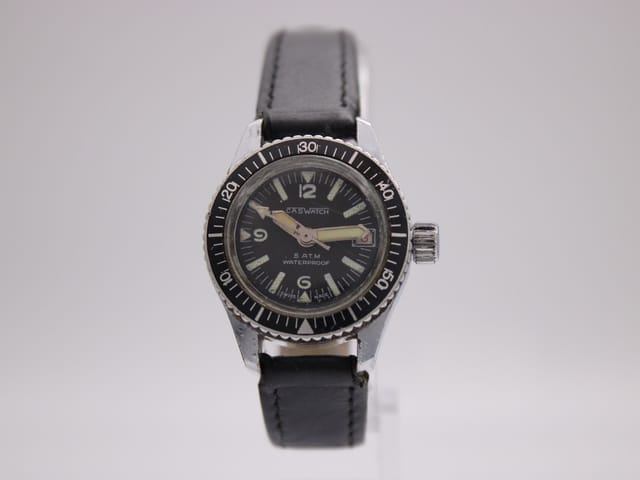
Caswatch
- Movement
- MANUAL WIND
- Case size
- 25.92mm
- Strap
- Leather
- Condition
- Good
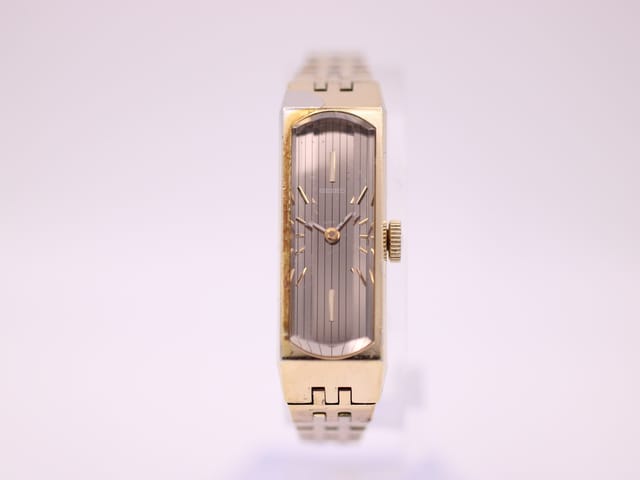
Seiko 1520-367A
- Movement
- MANUAL WIND
- Case size
- 12.6mm
- Strap
- Steel
- Condition
- Good

Bifora
- Movement
- HAND WIND
- Case size
- 17mm
- Strap
- Leather
- Condition
- Very Good

Longines 10906
- Movement
- MANUAL WIND
- Case size
- 19.35mm
- Strap
- Steel
- Condition
- Good