How to date a vintage Seiko by its serial number
Uncover the manufacturing date of your vintage Seiko watch using its serial number and movement calibre, a straightforward method for collectors.
The allure of a vintage Seiko's history
There's something uniquely satisfying about owning a vintage Seiko. Perhaps it's the brand's pioneering spirit, its enduring quality, or the sheer variety of models it has produced over the decades. Each scratch, each faded lume marker, tells a story. For many collectors, understanding a watch's birth year and month is an essential part of appreciating its journey, adding a layer of depth and personal connection.
Thankfully, Seiko provides a relatively clear path to discovering this information. Unlike some other manufacturers, Seiko encoded a watch's precise manufacturing date directly into its serial number, usually found on the case back. However, relying solely on the serial number can sometimes lead you astray. It’s a method that requires a little extra insight and a second piece of crucial information: the movement calibre. Together, these two elements will unlock the secrets of your vintage Seiko's past.
Decoding the Seiko serial number
Locating your Seiko's serial number is the first step. For most vintage models, this will be a six-digit number stamped on the watch's case back, often alongside the model number. Sometimes, on earlier or specific models, it might be seven digits. The key to its age lies in the first two digits.
The very first digit of the serial number tells you the year of manufacture within its decade. For example, if the first digit is '6', your watch was made in a year ending in '6' (1966, 1976, 1986, etc.). The second digit indicates the month of manufacture. This is typically straightforward: '1' for January up to '9' for September. For October, November, and December, Seiko often uses 'O' (or '0'), 'N', and 'D' respectively. So, a serial number beginning with '6Nxxxx' would indicate a watch manufactured in November of a year ending in '6'.

Why the movement calibre is essential for precision
At this point, you might be thinking, "Great, I have the year and month!" However, there's a small catch: Seiko reuses its serial number year digits every decade. This means a serial number starting with '6' could indicate 1966, 1976, 1986, or 1996. This is where the movement calibre comes into play, acting as your crucial compass to navigate the decades.
Every Seiko watch has a movement calibre, a specific number identifying the type of mechanical or quartz movement inside. This calibre number is usually found on the case back, often in a format like 'XXXX-XXXX', where the first four digits denote the movement calibre. By researching the production dates of specific Seiko movements, you can confidently narrow down the decade your watch was produced. The 6139 chronograph is a good example of why this matters: it was made from 1969 until the end of the 1970s, so a 6139 with a serial starting '9' could be from 1969 or 1979, and the dial and case variant are what settle it. Similarly, a 7S26 movement, common in the SKX series, was introduced in the mid-1990s, instantly ruling out earlier decades.
A practical guide to dating your vintage Seiko
Let's walk through the process with an example. Imagine a vintage Seiko with the following details on its case back: Serial number '380023' and Model/Calibre '6309-7040'.
1. Extract the serial number's first two digits: The serial is '380023'. The first digit is '3', indicating a year ending in 3. The second digit is '8', indicating August. So, the watch was made in August of a year ending in '3' (e.g., 1973, 1983). 2. Identify the movement calibre: The model number is '6309-7040', so the movement calibre is '6309'. 3. Research the movement's production span: A quick search reveals that the Seiko 6309 movement was produced roughly from the mid-1970s until the mid-1980s. 4. Combine the information: We know the watch was made in August of a year ending in '3'. Given the 6309 movement's production window, 1983 becomes the most probable year, as these models are commonly found from the late 70s to early 80s. Thus, your watch was manufactured in August 1983.
This methodical approach allows you to confidently pinpoint the exact month and year of your vintage Seiko's creation.
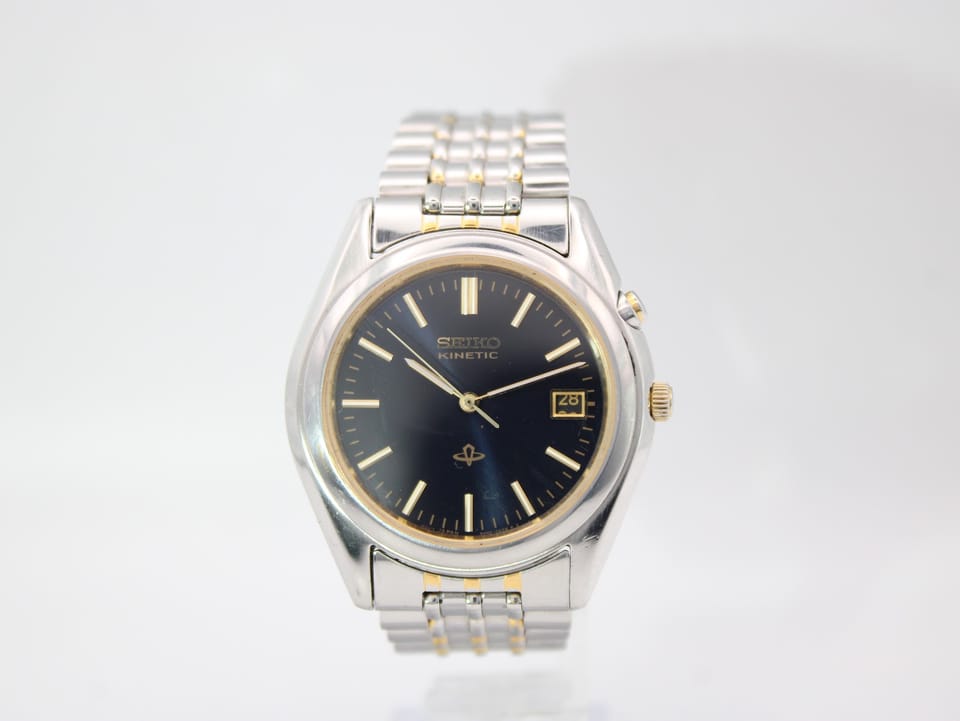
Tips for accurate dating and avoiding common pitfalls
While this method is generally reliable, a few considerations bear keeping in mind. Firstly, ensure the serial number is clear and legible. Over decades, some case backs can suffer wear and tear, making the digits hard to distinguish. If in doubt, try using different lighting angles or a magnifying loupe.
Secondly, always be mindful of watches that may have undergone modifications or repairs. While less common with original vintage pieces, a case back could potentially have been swapped, though this is rare for genuine Seiko serials. For serious collectors, cross-referencing information with online Seiko databases, collector forums, and reputable reference sites can provide additional reassurance.
Connecting with your Seiko's heritage
Successfully dating your vintage Seiko is more than just a technical exercise; it's about connecting with a piece of horological history. Knowing the precise month and year your watch was born brings its story to life, allowing you to appreciate its journey and the era from which it hails. It's a small but significant detail that deepens the appreciation for these incredible machines.
At London Watch Market, we understand this passion for heritage. Every pre-owned and vintage watch we offer is individually inspected by our skilled technicians to ensure its authenticity and functionality. We provide honest and detailed descriptions, allowing you to buy with complete confidence. Enjoy free UK shipping on all orders, alongside our 14-day returns policy, guaranteeing your satisfaction.