The best vintage Seiko watches to buy
Seiko made more distinct references than almost any other manufacturer, which makes choosing one genuinely hard. These are the ones worth owning, by budget.
Seiko produced more distinct references than almost any other manufacturer in history, which is simultaneously the reason to collect the brand and the reason choosing one is genuinely difficult. Thousands of dial variations, dozens of movement calibres, and a market where a £90 watch and a £900 watch can look superficially similar in a photograph.
This is a shortlist rather than a survey: the vintage Seiko references that are actually worth owning, organised by what you want to spend and what you want from the watch. The full brand story is in Seiko: the watch Japan built for everyone, and the calibre numbers are decoded in our guide to vintage Seiko movements.
The vintage Seiko shortlist
Prices are for clean, original, working examples on the UK pre-owned market. Originality of dial and bezel moves them more than anything else.
| Reference | Era | Typical price | Why |
|---|---|---|---|
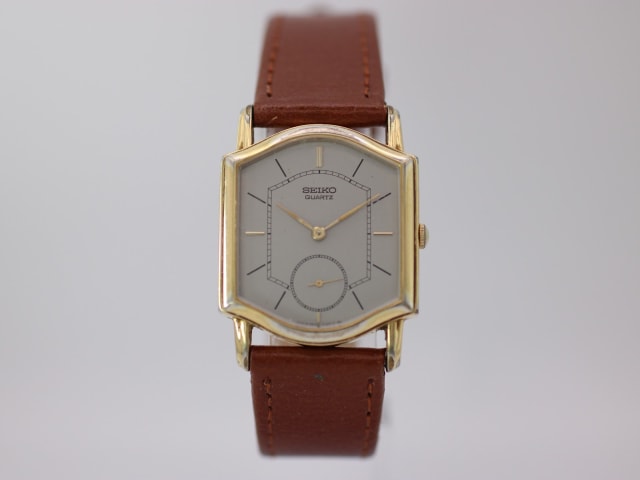
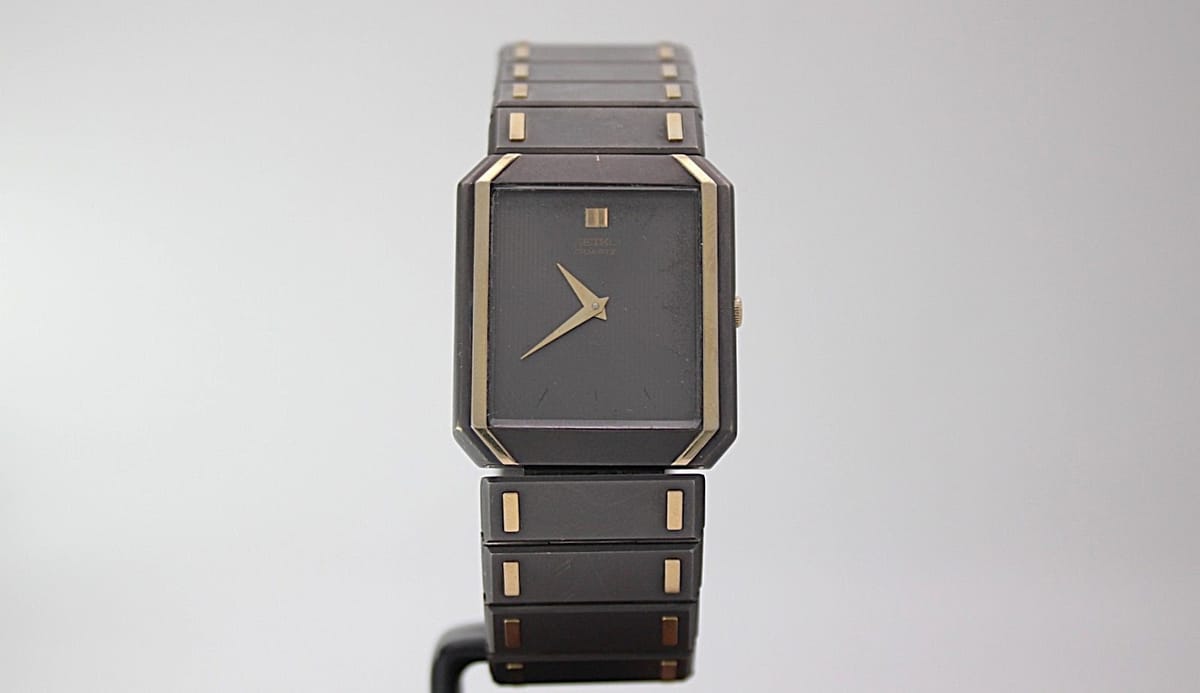
| Seiko quartz dress watch | 1980s | £45 to £90 | Slim, sharp, in-house quartz, almost no upkeep |
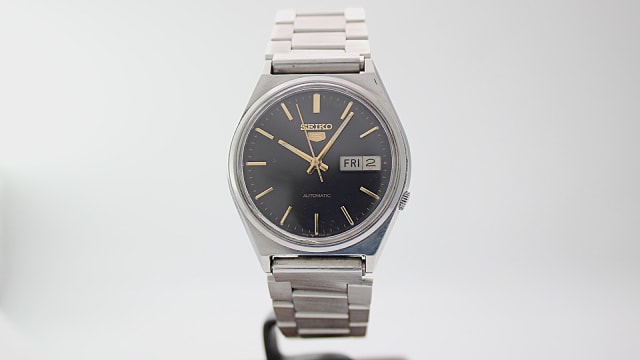
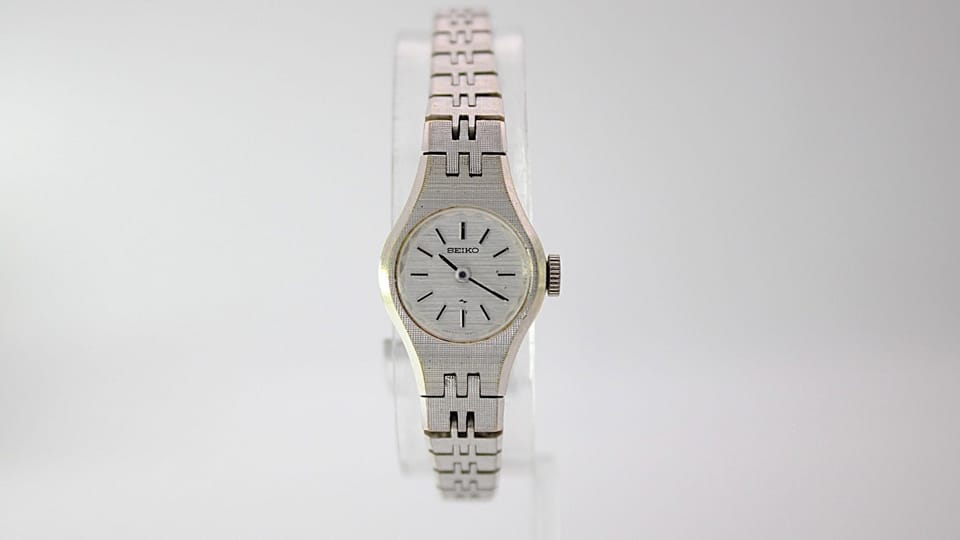
| Seiko 5, calibre 7009 | 1970s to 1980s | £85 to £160 | The default first vintage Seiko. Automatic, day-date, indestructible |
| Seiko 5, calibre 7S26 | 1996 onward | £90 to £170 | The modern Seiko 5. 21 jewels, cheap to service |
| Bell-Matic, calibre 4006 | 1960s to 1970s | £160 to £300 | Mechanical alarm and a wonderfully period look |
| Seiko 6309 diver | 1976 to 1988 | £250 to £450 | The accessible serious vintage diver. Check bezel and dial |
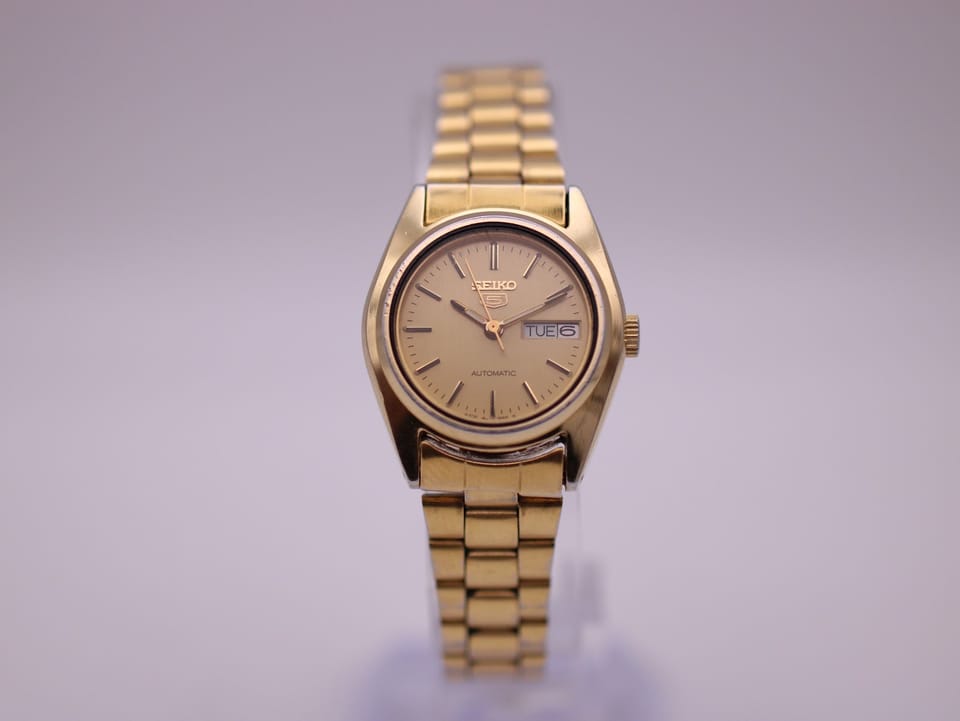
| Seiko dress watch, 6119 / 2906 / 1520 | 1960s to 1970s | £95 to £300 | The overlooked one. Real mechanical watchmaking, and actually findable |
| Seiko 6139 chronograph | 1969 to 1979 | £400 to £700 | Among the first automatic chronographs ever made |
| Seiko 6105 diver | 1968 to 1977 | £1,200+ | The Apocalypse Now diver. Priced accordingly |
If you are buying your first: the Seiko 5
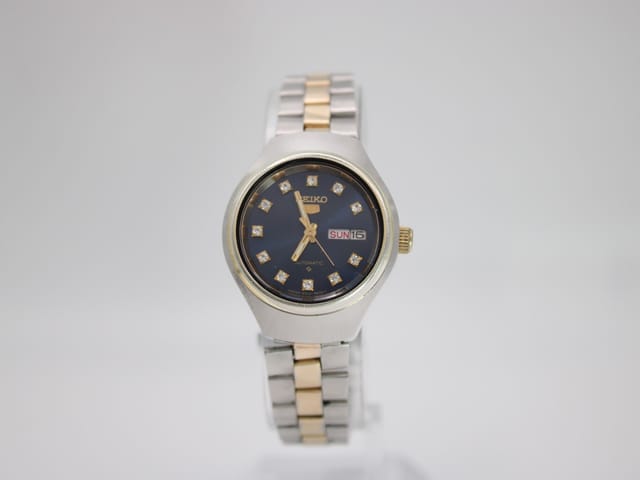
The Seiko 5 has been in continuous production since 1963 and is the most sensible first vintage watch anyone can buy. Named for its five automatic standards, it pairs an in-house automatic movement with a day-date in a range that runs to thousands of variations, from plain field dials to elaborate 1970s patterns.
Look for the 7009 calibre for 1970s and 1980s examples, at £85 to £160, or the 7S26 for anything from 1996 onward at £90 to £170. Neither hacks, meaning the seconds hand cannot be stopped for precise setting, which matters far less in daily use than forum discussion suggests. Both are forgiving, well documented, and cheap enough to service that a watchmaker will not sigh when you bring one in.
If you want a diver: the 6309, carefully
The 6309-7040 and 6309-7049, made between 1976 and 1988, are the most accessible way into serious vintage Seiko diving watches, at £250 to £450 for an honest example. The 17-jewel automatic is robust and still serviceable, the case is properly built, and the water resistance was real when new even though it should not be relied on now.
This is also the reference where buying carelessly costs the most. Bezel inserts, dials and hands are all commonly replaced, and a 6309 with a modern aftermarket insert and a refinished dial is worth a fraction of an original one while photographing almost identically. Look at the dial printing, the lume plots and the bezel font, and buy from someone who will state plainly what is original and what is not.
The 6105-8110, the diver worn in Apocalypse Now, is the reference everyone wants and now sells well into four figures. It is a wonderful watch and it is not an entry point.
The overlooked one: 1960s and 1970s Seiko dress watches
Ask which vintage Seiko is the best buy and most answers name the premium lines, which are genuinely fine watches and which almost nobody actually finds for sale. The far more available answer, and the one we would give, is the ordinary Seiko dress watch of the 1960s and 1970s: hand-wound and automatic pieces on calibres such as the 6119, 2906, 1520 and 17-series, in slim cases with dials that were executed with real care because Seiko was competing on quality at every price at the time.
These sit at roughly £95 to £300 and they are the most underrated corner of the brand. A 1960s hand-wound Seiko in a 35mm case, with an applied-marker dial and a case that has not been polished flat, is a properly good watch for less than the price of a modern fashion quartz, and it is a real mechanical movement you can have serviced indefinitely.
They also turn up. That matters more than it sounds: the celebrated references are celebrated partly because they are scarce, and a recommendation you cannot act on is not much use. Our Seiko collection usually holds a dozen or more of these at any time.
The ones to be careful with
Redials are the main hazard across the whole brand. Seiko dial printing has a particular fineness that reproductions rarely match, and a redialled watch loses both character and a large share of its value however tidy the work looks. Be especially wary of dials that look immaculate on a watch whose case shows fifty years of honest wear, because the two should age together.
Franken watches, assembled from parts of different eras, are the other common problem. Seiko dating is refreshingly straightforward, the first digit of the serial gives the year and the second gives the month, so cross-checking the serial against the movement calibre and the case reference takes minutes and catches most mismatches. We walk through it step by step in how to date a vintage Seiko by its serial number, and the general method for other brands is in how to date a vintage watch.
Finally, assume no water resistance regardless of what the case back says. A 1978 diver rated to 150 metres is not a 150 metre watch today, and the gaskets are the reason.
Why vintage Seiko still makes sense
The market has matured considerably over the past decade, but the fundamentals that made vintage Seiko a good buy have not changed. The movements were made in-house and built to last, parts and documentation are widely available, the community knowledge is extraordinary, and the sheer range means a watch that suits you specifically almost certainly exists.
We hold one of the larger vintage Seiko selections in the UK, each piece bought individually, inspected and wound in London, dated from its serial and calibre, and photographed exactly as it is. Free UK delivery and 14-day returns apply to all of it.
Frequently asked questions
What is the best vintage Seiko to buy?
For a first vintage Seiko, a Seiko 5 automatic with a 7009 or 7S26 calibre at £85 to £170. For something dressier, a 1960s or 1970s hand-wound or automatic Seiko dress watch on a 6119, 2906, 1520 or 17-series calibre, at £95 to £300, which is the most underrated corner of the brand and far easier to actually find than the premium lines. For a diver, an original 6309 at £250 to £450.
How do I tell the age of a vintage Seiko?
The serial number does most of the work. The first digit is the year of manufacture and the second is the month, so a serial beginning 73 means March of a year ending in 7. Cross-checking the movement calibre, which has its own production window, tells you whether that is 1967, 1977 or 1987.
Are vintage Seiko watches reliable?
Yes. Seiko movements were made in-house and built to last, and a well-kept vintage example will usually run accurately for everyday wear. Like any watch several decades old it benefits from an occasional service, and parts remain widely available for the mainstream calibres.
Is a vintage Seiko 6309 worth buying?
It is the most accessible serious vintage diver on the market at £250 to £450, but originality is everything. Bezel inserts, dials and hands are commonly replaced, and a 6309 with aftermarket parts is worth a fraction of an original example while looking almost identical in photographs. Buy from a seller who states plainly what is original.
Are vintage Seikos a good investment?
Some references, particularly early automatic chronographs, original divers and King Seiko, have risen steadily in value. Most vintage Seikos are better bought to wear and enjoy: they offer genuine watchmaking quality for the money rather than a guaranteed return.
What is the difference between a Seiko 5 and a King Seiko?
The Seiko 5 was mass-produced everyday watchmaking, reliable and affordable, and remains the best entry point to the brand. King Seiko was Seiko's premium line, made in far smaller numbers to a much higher finishing standard, with regulated movements and hand-finished cases. The price gap, roughly £120 against £450, reflects that difference honestly.