Gucci watches: the Swiss story behind a Florentine house
Gucci is a fashion house, so its watches are often dismissed as accessories. The Swiss company that actually made them for thirty years tells a different story.
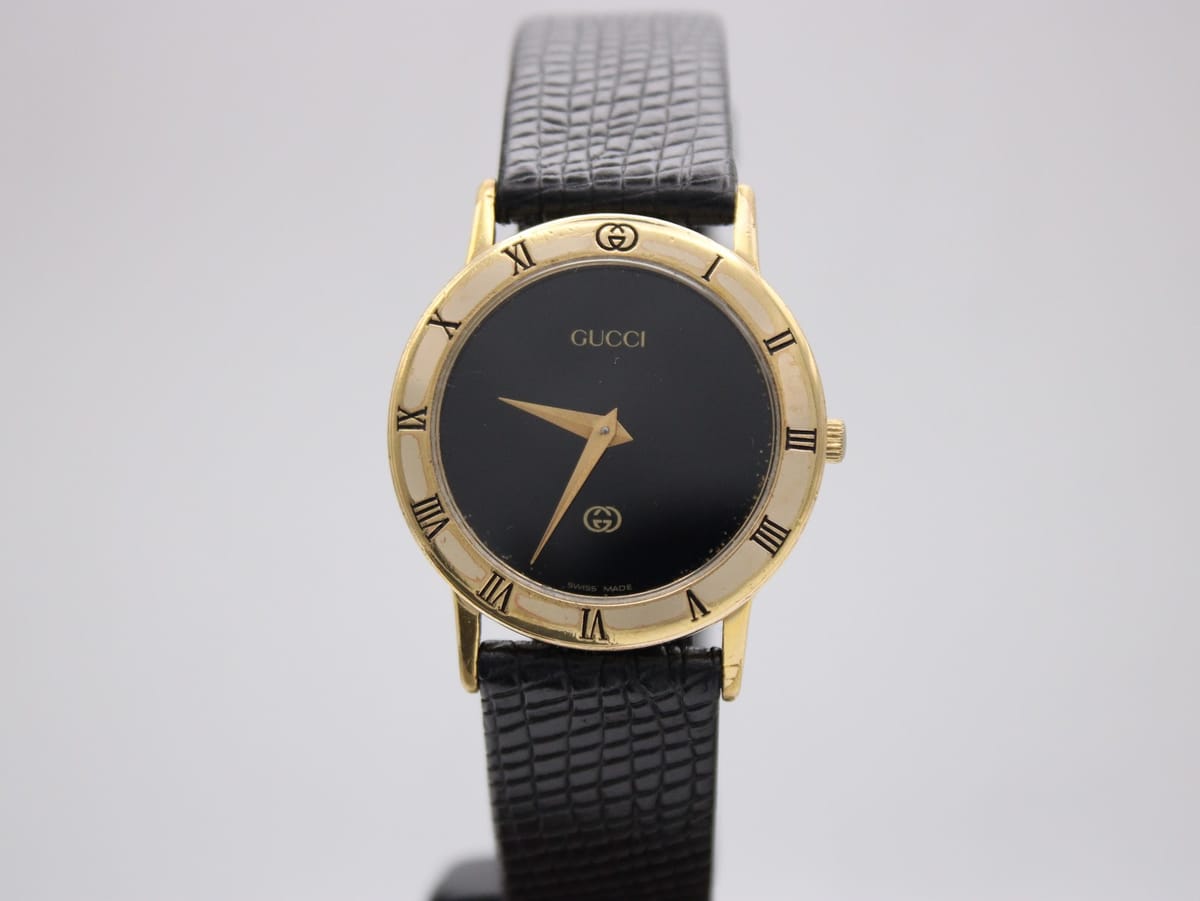
Gucci watches attract a particular kind of dismissal from watch enthusiasts. It is a fashion house, the reasoning goes, so the watches must be accessories with a name on the dial rather than real watchmaking. It is a reasonable assumption and it is largely wrong, and the reason it is wrong is a Belgian-American businessman called Severin Wunderman.
The watches were not made in Florence alongside the handbags. From 1972 they were made in Switzerland, by a dedicated company, to Swiss standards, and for most of the following three decades they were among the most commercially successful watches in the world.
Florence, 1921
Guccio Gucci opened a leather goods shop in Florence in 1921, having spent time working in London hotels and formed a lasting admiration for the luggage of well-travelled guests. The house grew on saddlery and luggage, and its two most enduring visual signatures come directly from that equestrian world: the horsebit motif, and the green-red-green web stripe adapted from a saddle girth.
Both would eventually appear on watch dials, bezels and bracelets, which is precisely why vintage Gucci watches are recognisable across a room. The design language was already fifty years old when the watches began, and it was never invented for them.
1972: the licence that changed everything
In 1972 Gucci licensed its name for watches to Severin Wunderman, who set up production in Switzerland. What began as a side venture became something much larger: by the 1990s Wunderman's operation was producing millions of watches and accounted for a very substantial share of the Gucci name's global business, at points reportedly a majority of it.
This matters for anyone buying a vintage Gucci today, because it explains what you are actually holding. These were Swiss-assembled watches built around Swiss quartz movements, produced by a company whose entire business was watches rather than as an afterthought by a leather house. Wunderman himself was a serious collector in another field entirely, amassing one of the world's great collections of Jean Cocteau's work and later founding a museum for it. He was not a man indifferent to objects.
What a vintage Gucci watch actually is
Almost every Gucci from this era is a quartz dress watch. Of the vintage Gucci watches we handle, over ninety-five per cent are quartz, and that is representative of the market rather than a quirk of our buying. Gucci arrived in watchmaking in 1972, right at the point when the quartz revolution was remaking the industry, and the brand embraced the new technology rather than fighting it.
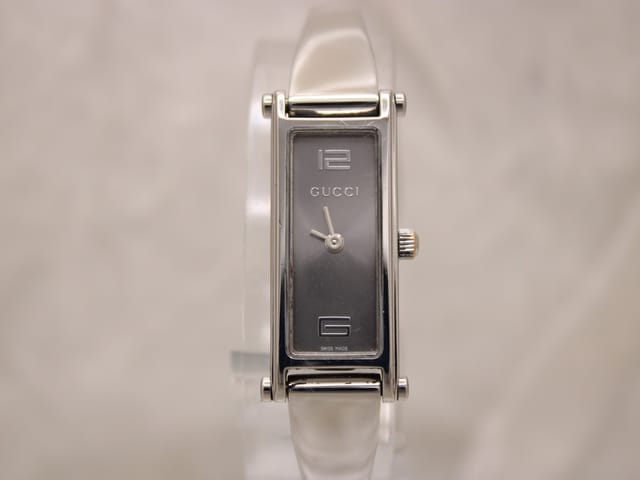
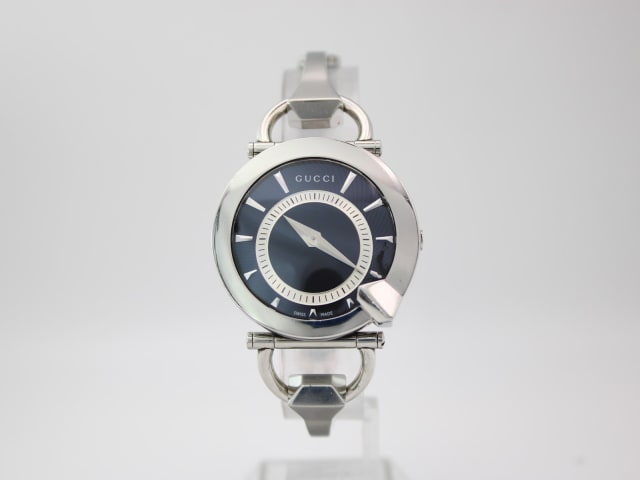
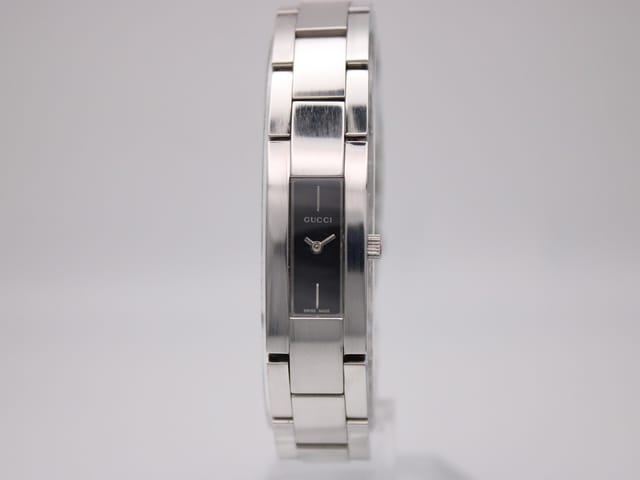
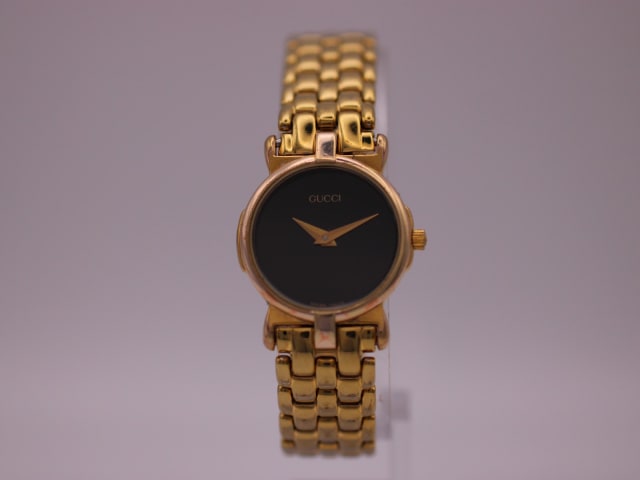
Cases are typically gold-plated over base metal, sometimes steel, sometimes two-tone. Movements are Swiss quartz. Sizes are small by modern standards, frequently 20mm to 26mm for the ladies references and rarely past 33mm for the men's, which is a genuine consideration rather than a criticism. Finishing is good: crisp case lines, well-printed dials, and bracelets that have generally survived four decades better than the fashion-watch reputation would suggest.
Reading the reference numbers
Gucci's numbering is refreshingly logical once you see it. The number identifies the model family and the letter suffix gives the intended wearer: L for ladies, M for men's, G on some gents references. A 2000L and a 2000M are the same design in two sizes.
So a case back reading 3900L tells you the family and that it is the ladies size, and that single code is usually enough to identify a watch that arrives with no papers and no box, which is how most of them arrive. It is a far friendlier system than most Swiss houses of the period managed, and our guide to Gucci watch model numbers covers the decimal variants, where the code is stamped and what each family looks like.
The designs worth knowing
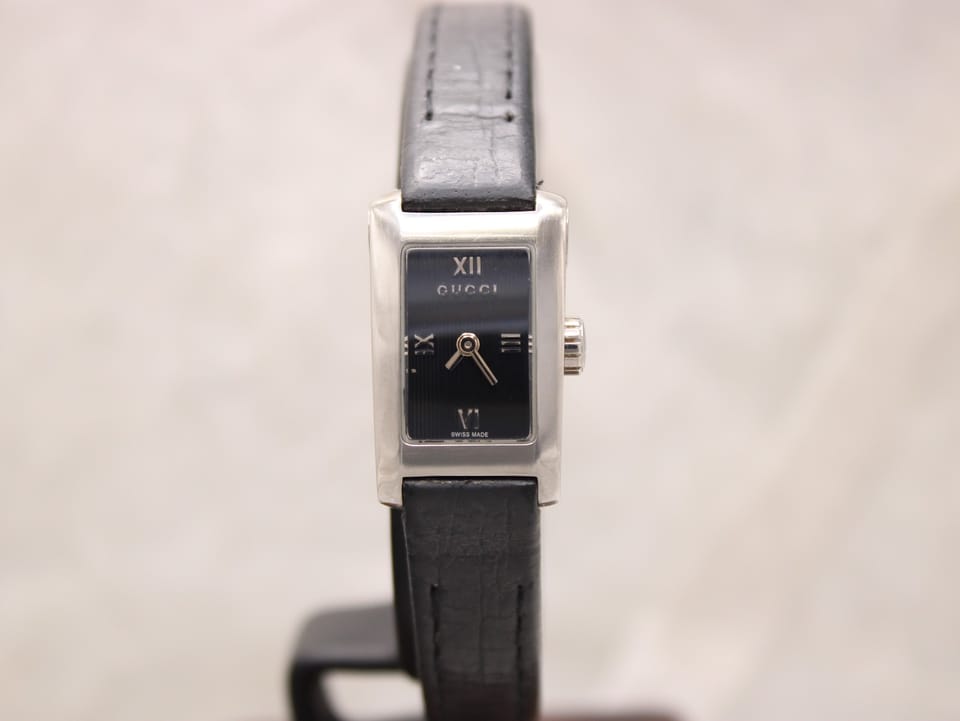
The round gold-plated models on integrated bracelets, the 2000 and 8900 families among them, are the archetypal 1980s Gucci and the ones most people picture. The rectangular and square references, 3900, 1900, 1500 and the 100 series, are the dressier, more architectural side of the range, and several of them look far more like considered design objects than fashion accessories.
The interchangeable-bezel models are the most purely enjoyable thing the brand did. Sold with a set of coloured bezels that twist off and swap, they were an entirely serious answer to the question of how one watch might suit a whole wardrobe, and complete sets with their original bezels are increasingly hard to find. The Othello references sit at the more formal end and tend to command a premium.
Why they are worth taking seriously now
There are two reasons vintage Gucci is interesting at the moment. The first is that small watches are back in fashion after twenty years of ever-larger cases, and Gucci's proportions suddenly look current rather than dated. The second is that the fashion-house prejudice is still doing its work on prices, which means genuinely well-made Swiss quartz dress watches from a house with real design heritage sit at £110 to £250 while lesser objects with more respectable logos cost more.
Our guide to the best vintage Gucci watches to buy covers the specific references, what each typically costs, and the plating wear to watch for. You can also simply browse the vintage Gucci watches we have in stock, which is one of the larger selections in the UK.
Frequently asked questions
Are vintage Gucci watches real Swiss watches?
Yes. From 1972 Gucci watches were produced under licence in Switzerland by a dedicated watch company founded by Severin Wunderman, using Swiss quartz movements. They were not made in Florence alongside the leather goods, and they were built to Swiss assembly standards rather than as fashion accessories.
Are vintage Gucci watches worth buying?
For a design-led dress watch, yes. They are well-made Swiss quartz watches with genuine visual heritage in the horsebit and web-stripe motifs, and the lingering fashion-house prejudice keeps prices at £110 to £250 for most references. They are not mechanical watchmaking and should not be bought as though they were.
What do the numbers on a Gucci watch mean?
The number identifies the model family and the letter suffix identifies the size and intended wearer: L for ladies, M for men's, G on some gents references. A 2000L and a 2000M are the same design in two sizes. The code is usually stamped on the case back and is enough to identify a watch arriving with no box or papers.
When did Gucci start making watches?
In 1972, when the house licensed its name to Severin Wunderman, who established production in Switzerland. The watch business grew to become a very large part of the Gucci name's global trade through the 1980s and 1990s.
Are vintage Gucci watches quartz or mechanical?
Almost all quartz. Gucci entered watchmaking in 1972, exactly as quartz was transforming the industry, and embraced it. Mechanical vintage Gucci watches exist but are uncommon: over ninety-five per cent of the vintage Gucci watches we handle are quartz.