Seiko 5: the world's most sensible automatic watch
The 5 is a promise Seiko made in 1963, and almost nothing explains what it actually was. Here are the five attributes, the calibres worth knowing, and what to check before buying one.
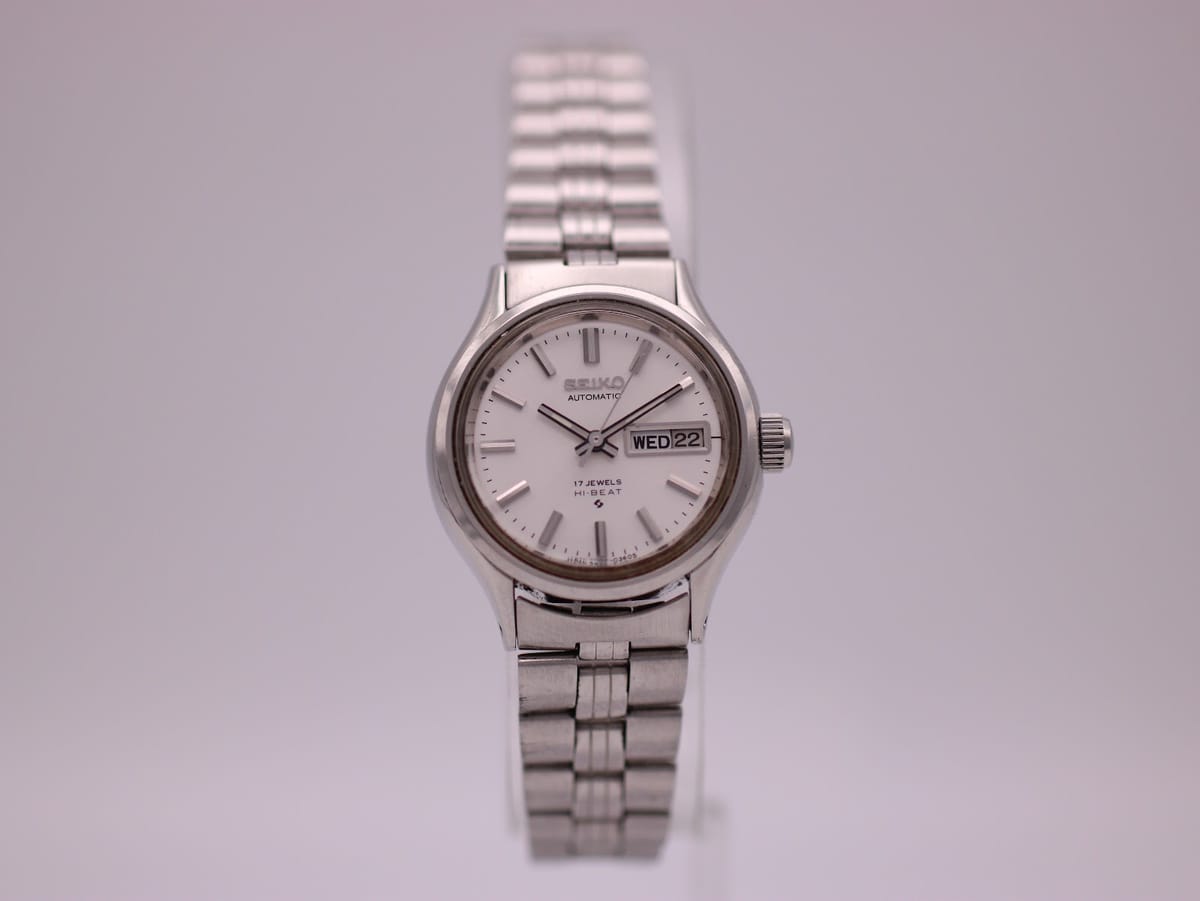
What the five actually stands for
The 5 in Seiko 5 is not a model number, a series number or a jewel count. It is a specification. When Seiko launched the line in 1963 it guaranteed five things in every watch that carried the name, and those five things are the entire design brief: automatic winding, a day and date shown together in a single window, water resistance, a recessed crown set at four o'clock rather than three, and a durable case and bracelet.
Each of the five was chosen for a reason. Automatic winding meant the watch ran on the movement of the wrist, with no daily ritual. The day and date in one window put both pieces of information where a working person actually looks, and in a single aperture rather than two. Water resistance, at a time when it was a premium feature, meant the watch could be worn to wash up and left on in the rain. The recessed crown at four o'clock sat below the line of the wrist bone, so it stopped digging in and was far harder to knock. And the case and bracelet were specified to survive being worn every day rather than kept for occasions.
Almost everything else about a Seiko 5 varies. Dial colours, case shapes, sizes, bracelet styles and calibres all changed enormously across sixty years and thousands of references. Those five attributes are what stayed constant, and they are the reason the line still makes sense to buy today. If a dial says Seiko 5, that is the promise being made.
The watch that put an automatic on an ordinary wrist
The context for 1963 is worth one paragraph. Seiko had spent the post-war decades building volume and capability, and an automatic day-date watch was still, in most markets, a middle-class purchase rather than an ordinary one. The Seiko 5 was the range that changed that arithmetic. It has been in more or less continuous production ever since, which makes it one of the longest-running series in watchmaking, and for millions of people it was simply what a watch was. The wider company story, from the 1881 shop to the Astron, is in our piece on Seiko: the watch Japan built for everyone.
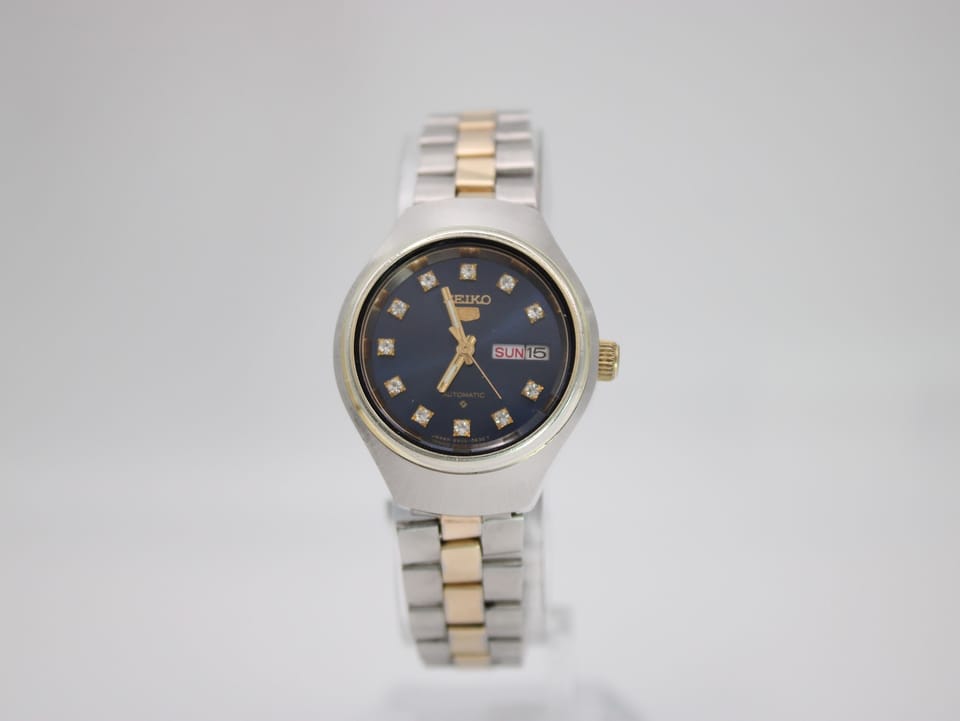
The calibres to know
The calibre number is stamped on the movement and appears as the first half of the reference on the caseback, so a watch marked 7S26-3140 has a 7S26 movement in case 3140. Learning six or seven of these covers most of what you will meet.
One thing the table makes obvious: the mainstream Seiko 5 calibres all run at 21,600 beats per hour, and none of them hacks or hand-winds. That is not a shortcoming so much as a design position. Hacking, which is stopping the seconds hand when the crown is pulled, matters only if you set to a time signal, and hand-winding matters only if the watch has been off the wrist for a day or two, in which case a gentle swing of thirty seconds gets it going. What Seiko bought with those omissions was fewer parts to break and a movement cheap enough to service that it was always worth repairing.
| Calibre | Years | Beat | Hacking / hand-winding | What to know |
|---|---|---|---|---|
| 6119 | About 1966 to 1978 | 21,600 bph | Neither | The Sportsmatic and Actus workhorse, in 17 and 21 jewel forms. Often found in the boldest 1970s case shapes |
| 7009 | About 1977 to the mid 1990s | 21,600 bph | Neither | The default 1970s and 1980s Seiko 5. 17 jewels, simple, extremely well documented |
| 6309 | 1976 to 1988 | 21,600 bph | Neither | 17 jewels. In 6309-8xxx form it is a Seiko 5; the 6309-7040 diver shares the calibre but is not one |
| 7S26 | 1996 to about 2019 | 21,600 bph | Neither | The modern Seiko 5 movement. 21 jewels, made in vast numbers, parts and watchmakers everywhere |
| 7S36 | 1996 to about 2019 | 21,600 bph | Neither | The 23 jewel sibling of the 7S26, used in the sportier models. No practical difference in daily use |
| 2906 | About 1975 to the early 1980s | 21,600 bph | Neither | The ladies' automatic day-date, in a genuinely small case. The one to look for on a woman's Seiko 5 |
| 4206 | About 1980 to the 1990s | 21,600 bph | Neither | The later ladies' 21 jewel automatic day-date, effectively the 2906's replacement |
The families: Sportsmatic, Actus, SNK and SNXS
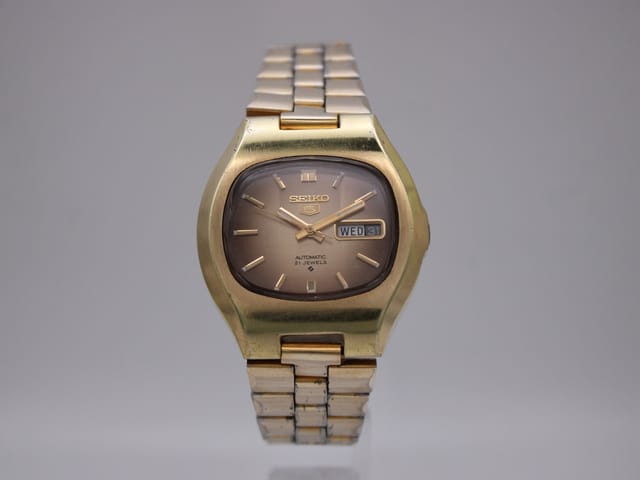
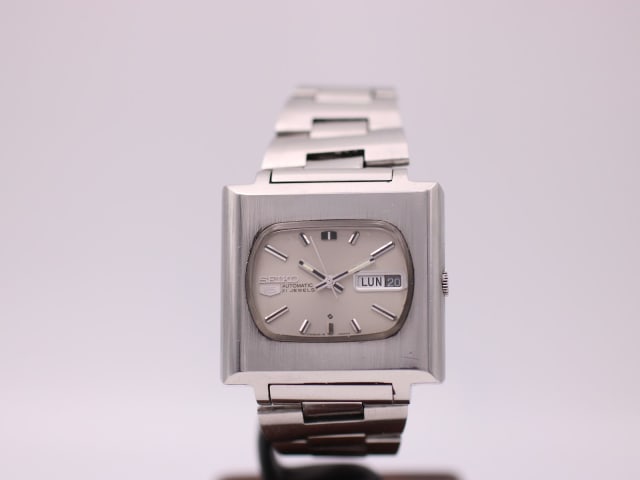
Sportsmatic is the earliest name on the line and the one that reads most clearly as 1960s. These are the watches closest to the original 1963 idea, usually on a 61xx calibre, with applied markers, a slightly domed crystal and a case that feels compact by later standards. Actus followed through the 1970s and is where the design got adventurous: cushion cases, integrated bracelets, sunburst dials in blue, green and grey, and the kind of confident geometry that decade did better than any other. Our current 6119-5490 and 6119-5401 sit in exactly this territory.
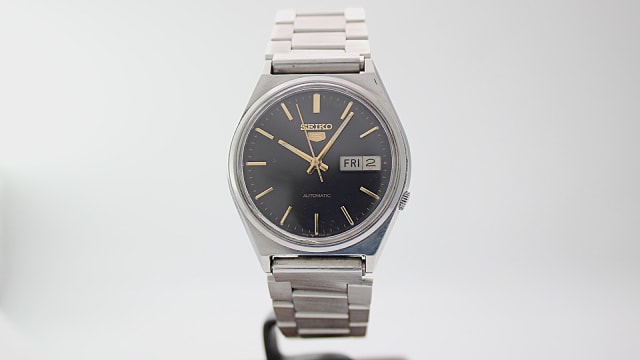
The 7009 generation of the late 1970s and 1980s is the plainest and, for many people, the most wearable. Slimmer cases, restrained dials, and the reference most often recommended as a first vintage automatic. From 1996 the 7S26 took over and produced the SNK and SNXS families that are still the standard answer to what to buy for around a hundred pounds. Our 7S26-3140 is a straightforward example of that era.
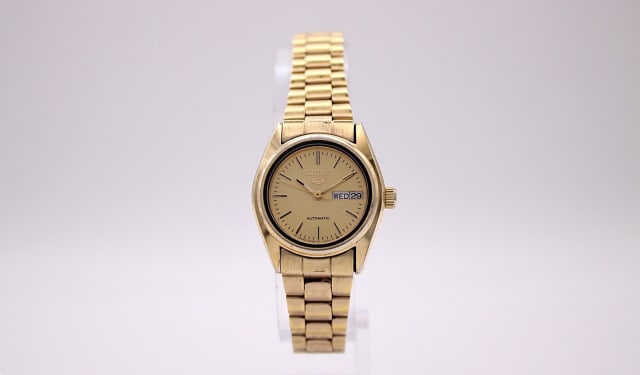
The ladies' side of the range is much less written about and, for that reason, better value. The 2906 calibre gave a genuine automatic day-date in a case small enough to suit a slim wrist, which is something the modern market simply does not offer at this price. We currently have three: a 2906-0330, a 2906-0170 and a 2906-0020. Alongside them sit a 4206-0500 marked Seiko 5 on the dial, and a 6379-5020, a less common calibre from the same family. The whole group is on our vintage Seiko 5 collection page.
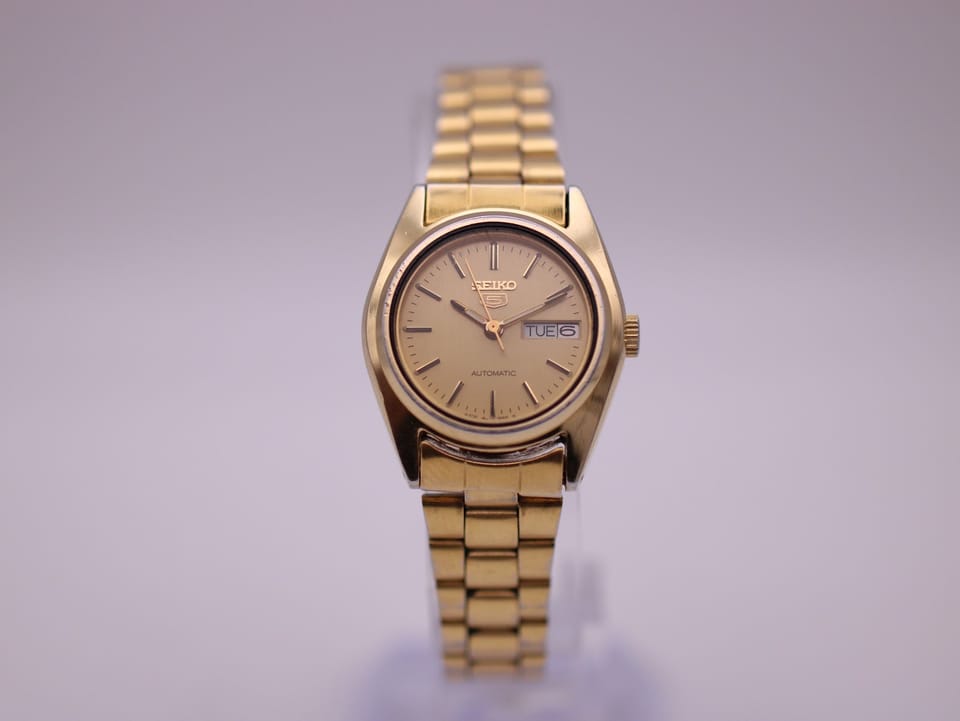
How to date a Seiko 5
Seiko dating is the most straightforward of any major maker, and a Seiko 5 gives you everything you need on the caseback. The serial number is six or seven digits. The first digit is the last digit of the year of manufacture, and the second is the month, running 1 to 9 for January to September and then O, N and D for October, November and December. A serial beginning 74 is April of a year ending in 7.
That leaves the decade, and the calibre supplies it. A year ending in 7 could in principle be 1967, 1977, 1987, 1997 or 2007, and the movement number cuts that list down fast. A 7009 was not made in 1967 and was out of production by the late 1990s, which leaves 1977 or 1987. A 7S26 was not made before 1996 at all, which leaves 1997 or 2007. Where more than one candidate survives, the case reference and the dial style settle it. Read the serial and the calibre together and most Seiko 5s can be dated to one month.
This is also the check that catches a watch assembled from mismatched parts, because the serial, the calibre and the case reference all have to agree on the same era. Our full method, including how it works on brands with less helpful serial systems, is in how to date a vintage watch, and the calibre numbers themselves are decoded in our guide to vintage Seiko movements.
What to check before buying
Start with the dial. Redials are the single biggest hazard in vintage Seiko, and Seiko's original printing has a fineness that reproductions rarely match. Look closely at the Seiko 5 logo, the applied markers and the minute track. Text that sits slightly too thick, markers that have been reset a fraction out of line, or a dial that looks factory-fresh on a case with fifty years of honest wear are all reasons to ask a direct question. A redialled watch is not worthless, but it should be priced and described as one.
Then the day wheel. Seiko 5s were sold worldwide with bilingual day wheels, most often English and Kanji, but also English with Arabic, Spanish or Roman numerals depending on the market. None of these is wrong, and a Japanese domestic day wheel is part of the character rather than a fault. What matters is that the wheel changes cleanly at midnight rather than sticking halfway, and that both languages are legible.
Check the crown really is at four o'clock and recessed into the case, because that is one of the five attributes and it is the quickest way to sanity-check a dial that claims Seiko 5. Then check that the calibre stamped on the movement matches the first half of the caseback reference, and that both agree with the serial number date.
Finally the bracelet. Original Seiko folded-link bracelets stretch with age, and a stretched bracelet sags away from the wrist and catches hair. It is not a fault in the watch, and a good replacement or a leather strap fixes it, but it should be reflected in what you pay. As with any watch of this age, assume no water resistance whatever the caseback says: the gaskets hardened decades ago, and water resistance was a 1970s claim, not a promise about today.
What a Seiko 5 is not
A Seiko 5 is not a King Seiko. King Seiko was a separate and higher-tier line, made in far smaller numbers, with regulated movements and hand-finished cases built to compete directly with the best of Switzerland. The Seiko 5 was mass-produced everyday watchmaking, and it was meant to be. Both are excellent at what they set out to do, and the price gap between them reflects a real difference in how they were made rather than marketing.
A Seiko 5 is also not a Seiko diver, and this catches people out because of the calibre numbers. The 6309 movement appears in Seiko 5 references beginning 6309-8, and it also appears in the 6309-7040 and 6309-7049 divers. The divers are not Seiko 5s. They have a rotating bezel, a screw-down crown at three o'clock, a much thicker case and a genuine diving specification, and they were sold as a different kind of watch entirely at a different price. A shared calibre prefix is not a shared model line, so if a listing calls a 6309-7040 a Seiko 5, the seller has read the movement number and stopped there.
The same logic applies in reverse. A watch is a Seiko 5 because the dial says so and the five attributes are present, not because the movement happens to be one that Seiko also used elsewhere.
What they cost now and where the value sits
A clean, original, running Seiko 5 on a 7009 or 7S26 calibre generally sits between £85 and £170 on the UK pre-owned market. Earlier 6119 Sportsmatic and Actus pieces run a little higher, roughly £100 to £220, because the case shapes and dial colours of that era are what collectors are actually chasing and fewer have survived unmolested. Ladies' models on the 2906 and 4206 calibres typically fall between £70 and £150, which is the clearest value in the whole range.
Within those bands, the things that move the price are originality of the dial first, then the case, then the bracelet. An unpolished case with its brushing and bevels intact is worth noticeably more than a buffed one, and once the sharp edges have been polished away they cannot be put back. Unusual dial colours and the more assertive 1970s case shapes carry a premium over plain silver dials in round cases, which is worth knowing in both directions: if you like the plain ones, you are buying the cheaper end of a range that is otherwise rising.
What a Seiko 5 will not do is make you money. This is a watch to wear. It is the rare piece of vintage that you can put on without thinking about it, that a watchmaker will service for a sensible sum, and that is cheap enough that a scratch is a story rather than a disaster. Every one in our Seiko 5 collection is bought individually, wound and inspected in London, dated from its serial and calibre, and photographed exactly as it is, with free UK delivery and 14-day returns.
Frequently asked questions
What does the 5 in Seiko 5 mean?
It refers to five attributes Seiko guaranteed in every watch in the line from 1963: automatic winding, a day and date displayed together in a single window, water resistance, a recessed crown at four o'clock rather than three, and a durable case and bracelet. It is a specification rather than a model number or a jewel count, and it is the reason the range has stayed recognisable across sixty years of otherwise wildly varied designs.
Are Seiko 5 watches any good?
Yes, on their own terms. The movements were made in-house, built in enormous numbers and designed to be repaired rather than replaced, so parts and knowledgeable watchmakers are still easy to find. A well-kept vintage example keeps good enough time for everyday wear and asks very little of you. It is not a finishing exercise like a King Seiko, and it was never meant to be: it is one of the most durable and best-value automatic watches ever made.
Do Seiko 5 watches hack or hand-wind?
The mainstream vintage calibres, including the 6119, 7009, 6309, 7S26 and 7S36, do neither. The seconds hand cannot be stopped for precise setting and there is no manual winding through the crown. If the watch has stopped, swinging it gently for about thirty seconds starts it, and it then winds itself as you wear it. Both omissions matter far less in daily use than online discussion suggests, and they are part of why the movements are so cheap to service.
How do you tell an original Seiko 5 dial from a redial?
Look at the printing under magnification. Original Seiko dial text is very finely printed and evenly spaced, while redials tend to show slightly thick or soft lettering, a minute track that does not line up perfectly with the markers, and applied markers that have been reset a fraction out of position. Be suspicious of a flawless dial in a case that shows decades of honest wear, since the two should have aged together, and always ask the seller directly.
Are ladies' Seiko 5 watches worth buying?
They are arguably the best value in the range. Models on the 2906 and 4206 calibres give you a genuine automatic day-date in a case small enough to suit a slim wrist, typically at £70 to £150, and the modern market offers very little like it at any price. They have been written about far less than the men's references, which is exactly why they remain underpriced for what they are.