The best vintage Raymond Weil watches to buy
One of the last independent Swiss watch families, and one of the last genuine bargains in Swiss dress watches. Which collections to buy and what each is worth.
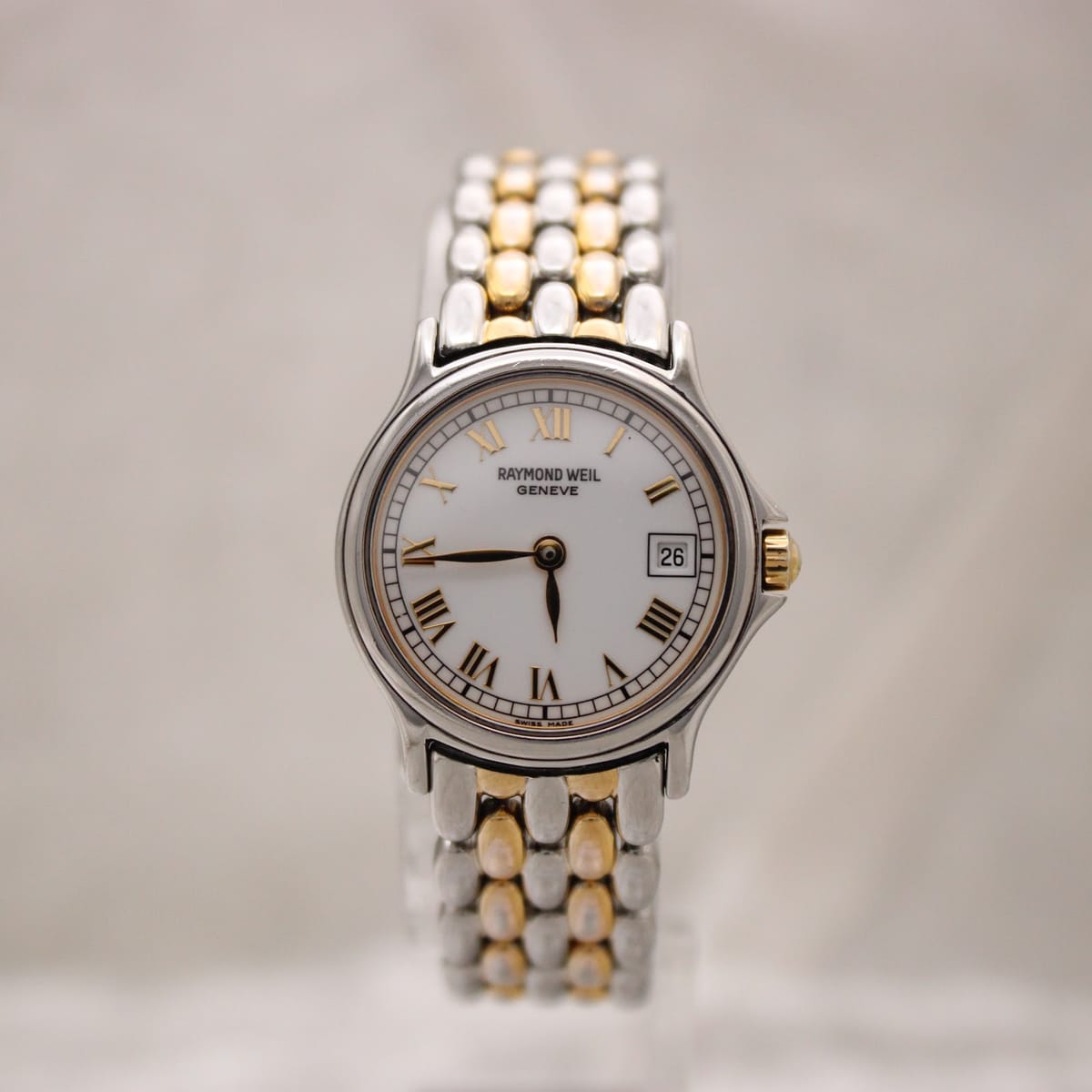
Raymond Weil occupies an unusual position: a Swiss house still entirely owned and run by the founding family, in an industry where nearly every recognisable name now sits inside a conglomerate. The story of how it got there, founded in Geneva in 1976 at the absolute worst moment to launch a Swiss watch brand, is told in Raymond Weil: the independent spirit of Geneva. This is the practical companion to it.
The short answer: a gold-plated Tango or a 9900-series dress watch at £155 to £225. You get Swiss assembly, an ETA-based movement, classical proportions that have not dated, and a level of finishing that would cost considerably more with a better-known name on the dial.
The vintage Raymond Weil references worth owning
Prices reflect what clean, working examples with good plating sell for in the UK. Across the vintage Raymond Weil we handle the range runs £95 to £350, with the typical piece near £195.
| Model | Case | Movement | Typical price |
|---|---|---|---|
| Tango 5360 | Round, gold-plated or two-tone | Quartz | £150 to £250 |
| Tango 5790 | Round, gold-plated | Quartz | £175 to £215 |
| 9900 series (9920, 9923, 9940) | Round and rectangular dress | Quartz | £155 to £225 |
| 5806-2 | Dress, gold-plated | Quartz | £125 to £205 |
| 5560 | Dress, gold-plated | Quartz | £240 to £290 |
| 5817 | Dress, gold-plated | Quartz | £185 to £210 |
| Toccata | Slim rectangular and round dress | Quartz | £150 to £260 |
| Parsifal | Round, integrated bracelet | Quartz or automatic | £220 to £400 |
| Amadeus / Fidelio | 1980s dress, often two-tone | Quartz | £140 to £240 |
| Manual-wind dress models | Slim gold-plated | Hand wind | £150 to £280 |
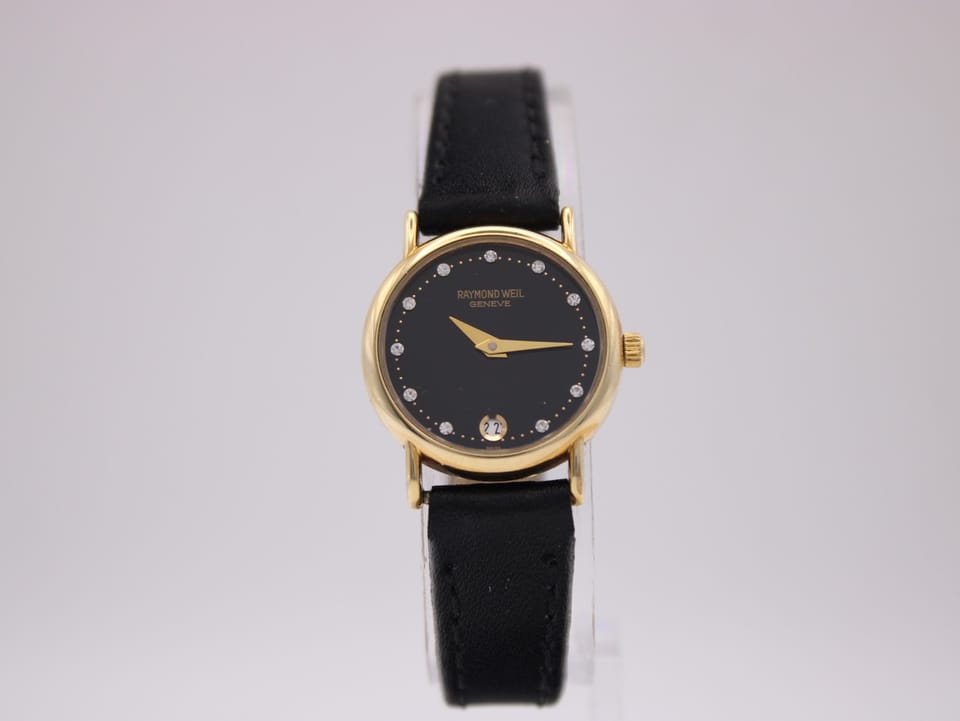
Start with the Tango or the 9900 series
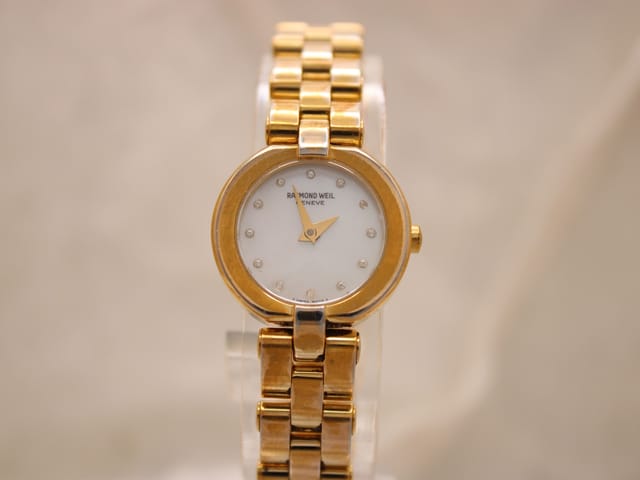
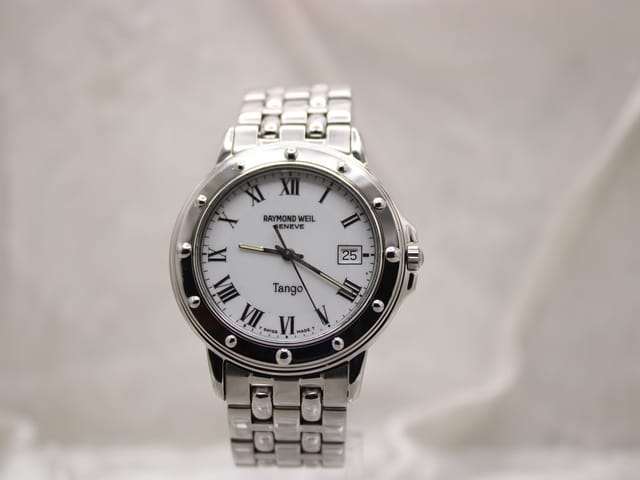
These are the sensible entry points and the two you will see most often. The Tango is Raymond Weil's round dress watch, usually gold-plated or two-tone, with a clean dial and proportions that sit comfortably on almost any wrist. The 9900-series references, 9920, 9923 and 9940 among them, cover much the same ground across round and rectangular cases.
At £150 to £250 both are unremarkable prices for remarkable value: Swiss assembly, ETA-based quartz movements that any independent watchmaker can service, solidly built cases, and dials executed with real care. This is the bracket where Raymond Weil quietly outperforms almost everything else Swiss, and where our guide to the best vintage watches under £500 puts it in context.
If you want something better
The Parsifal is the most substantial vintage Raymond Weil, a round watch on an integrated bracelet with visibly more case work than the dress references, and it runs £220 to £400 depending on condition and whether it is quartz or automatic. It is the reference that most obviously rewards a closer look.
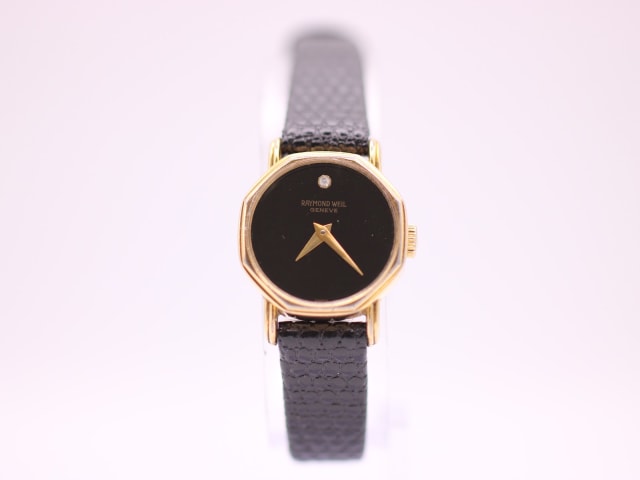
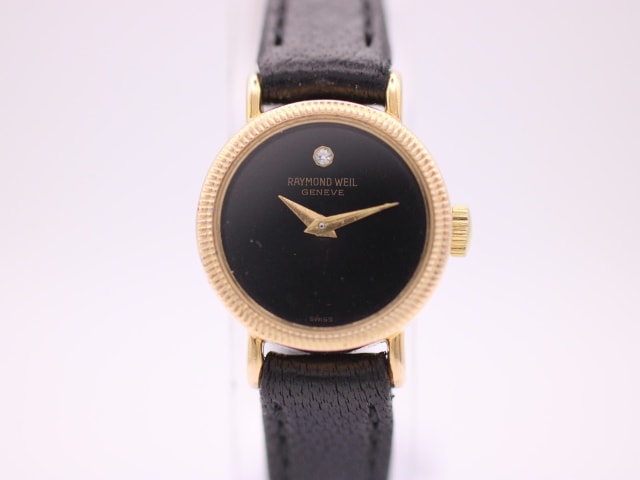
The Toccata is the slimmest and most formal of the collections, and the slim manual-wind dress models are the ones to seek out if you want a mechanical Raymond Weil. Only around one in ten vintage Raymond Weil watches is mechanical, so they take patience to find, but at £150 to £280 a hand-wound Swiss dress watch in good order is a genuinely good buy. Our guide to quartz, automatic and manual movements covers what each is like to live with.
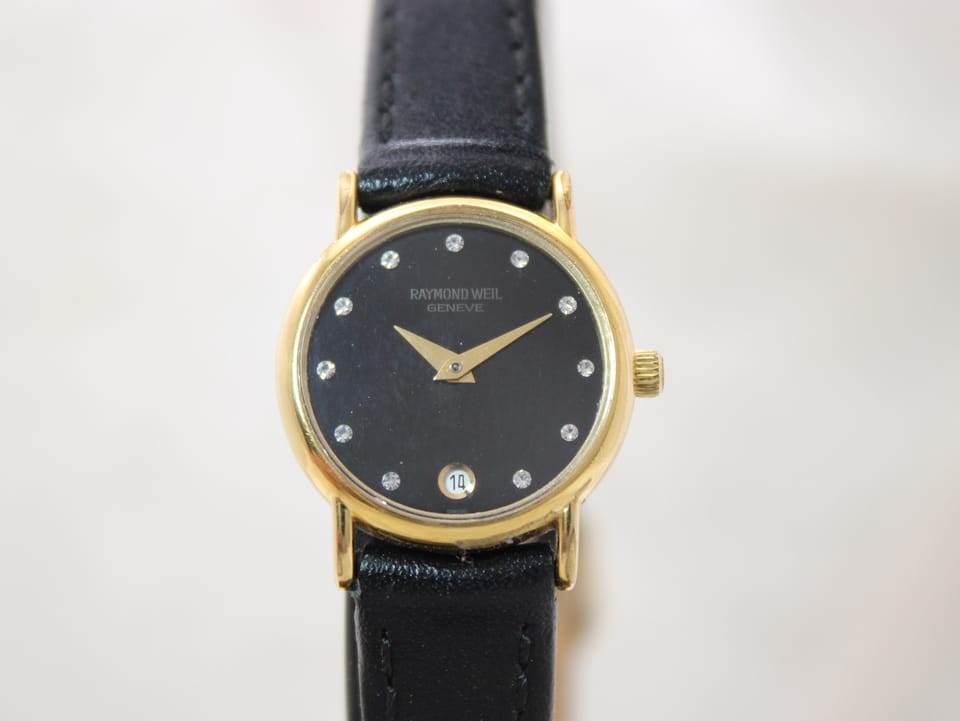
The condition issue that matters most
Plating. Around eight in ten vintage Raymond Weil watches have gold-plated cases, and plating wears at predictable points: the lug edges, the case back rim, the crown, and the bracelet links where they flex. Brassing, where the base metal shows through as a pinkish tone, is the single most common problem in the brand and the one thing that will bother you daily once you notice it.
It is easy to check in photographs provided the seller has shot the lugs and the bracelet rather than only the dial. Replating is possible but rarely economic at this price and tends to soften the crisp case edges that make the designs work, so buying a clean case in the first place is far better value than fixing a tired one.
After plating, check the dial for the fine, even printing Raymond Weil used, since a redial removes both character and value. On quartz pieces, confirm the watch runs: it may only want a battery, but it may equally have a failed coil, and at this price that repair is rarely worth doing.
The music connection, and why it shows
Raymond Weil named its collections after operas, composers and musical forms: Toccata, Parsifal, Amadeus, Fidelio, Don Giovanni, Maestro, Tango. It reads as a marketing conceit until you handle several in a row and notice that the design language really is consistent in the way a body of work is consistent, rather than a series of unrelated products sharing a logo.
That coherence is a large part of why these watches have aged well. The brand's attachment to classical proportion means a 1988 Raymond Weil looks composed today, where a good deal of 1980s design does not. It is also why the collections are worth learning by name: knowing you prefer the Toccata's severity to the Tango's roundness narrows the search far faster than filtering by reference number.
Is a vintage Raymond Weil a good buy?
Yes, and for a straightforward reason: the market prices Raymond Weil below its build quality because the name carries less weight than Omega or Longines, not because the watches are worse made than peers at the same price. You are buying Swiss assembly, serviceable ETA-based movements and genuinely considered design for £150 to £250.
What you are not buying is a collector's investment, and it would be dishonest to suggest otherwise. Buy one to wear. Every one of the vintage Raymond Weil watches we list is inspected and tested in London, given a fresh battery where needed, and photographed as it is, with plating wear shown rather than cropped out.
Frequently asked questions
What is the best vintage Raymond Weil watch to buy?
A gold-plated Tango or a 9900-series dress watch at £150 to £250. Both give you Swiss assembly, a serviceable ETA-based quartz movement and classical proportions that have not dated. If you want something more substantial, the Parsifal on its integrated bracelet runs £220 to £400.
Are Raymond Weil watches good quality?
Yes. Raymond Weil is one of the last independent family-owned Swiss houses, and its vintage pieces use reliable ETA-based movements in solidly built cases with cleanly executed dials. The brand competes on craftsmanship and value rather than prestige, which is precisely why it is undervalued on the pre-owned market.
How much is a vintage Raymond Weil watch worth?
Most sell for £150 to £250 in clean, working condition, with the typical piece around £195. Entry references start near £95 and the better Parsifal examples reach £400. Plating condition affects the price more than any other single factor.
Are vintage Raymond Weil watches quartz or mechanical?
Mostly quartz. Around nine in ten vintage Raymond Weil watches are quartz, with slim manual-wind dress models making up most of the remainder. Mechanical examples are worth seeking out at £150 to £280 but take patience to find.
What should I check when buying a vintage Raymond Weil?
Plating wear first, since roughly eight in ten have gold-plated cases. Check the lug edges, case back rim, crown and bracelet links for brassing where the base metal shows through. Then check the dial for signs of a redial, and confirm a quartz piece actually runs rather than assuming it only needs a battery.
What do the Raymond Weil collection names mean?
They come from music. Toccata, Parsifal, Amadeus, Fidelio, Don Giovanni, Maestro and Tango are all named after operas, composers or musical forms, reflecting the founder's belief that music and watchmaking share the same concerns: precision, passion and making something that outlives its maker.