5% off every watch with code LWM5. See terms

Free UK delivery · Free worldwide tracked shipping
LWMLondon Watch Market
Basket
Pre-Owned & Vintage Timepieces
Since 1881

Vintage Seiko watches.

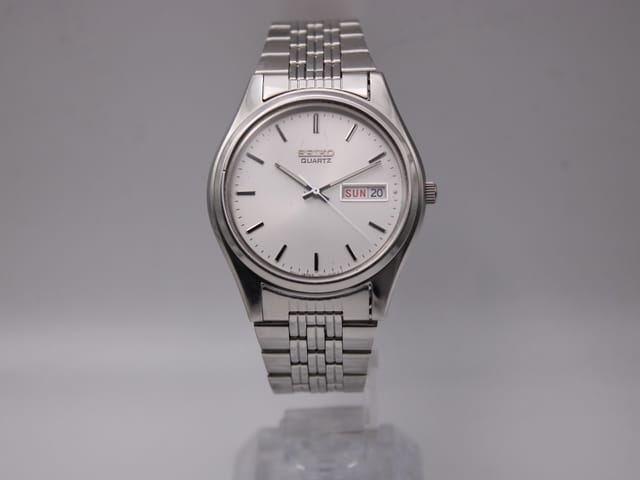
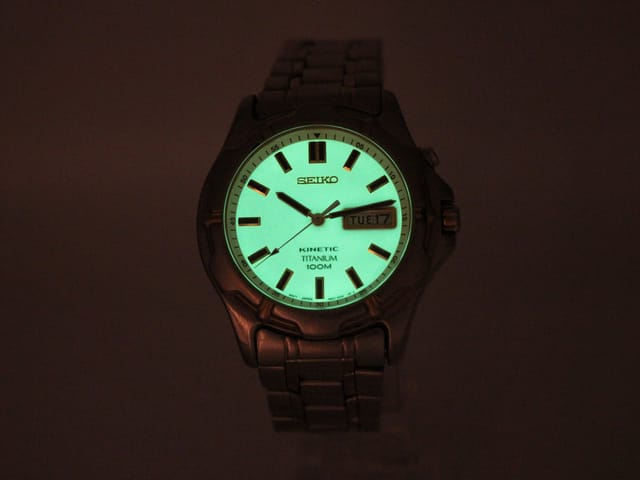
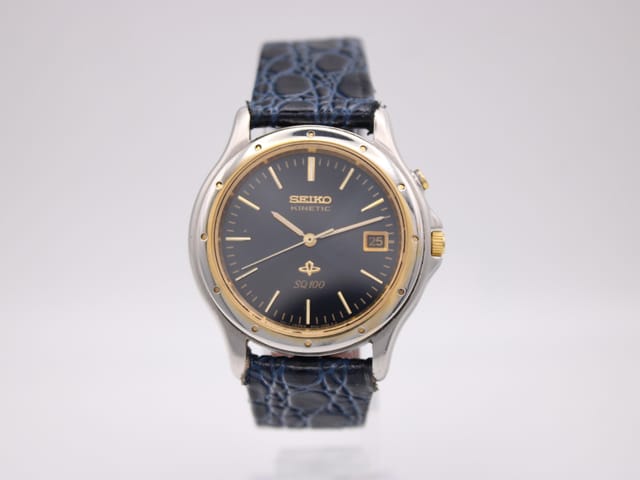
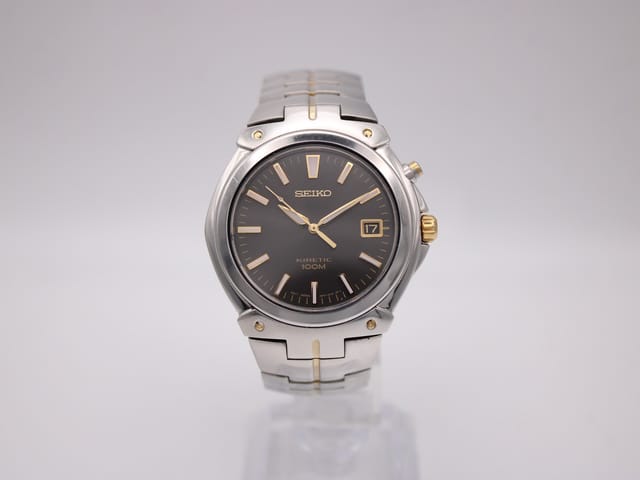
Founded in Tokyo in 1881 by Kintaro Hattori, Seiko became the first Japanese manufacturer to achieve genuine international recognition. The brand pioneered quartz watchmaking with the 1969 Astron, the world's first quartz wristwatch, and later invented the Kinetic movement, which generates power from the wearer's motion. Vintage Seiko pieces are among the most sought-after by collectors worldwide, prized for their exceptional build quality, extraordinary variety of references, and honest value.

173
In our collection
82
Available now
14 days
Returns window

Explore Seiko

Shop Seiko by model reference

A short history of Seiko

Seiko's story begins in 1881, when a 21-year-old Kintaro Hattori opened a watch and clock shop in central Tokyo. Within a decade he had founded the Seikosha factory, and in 1913 the company produced Japan's first wristwatch, the Laurel. The Seiko name itself, which carries the sense of exquisite or successful, first appeared on a wristwatch in 1924.

The decades that followed turned a domestic maker into a global force. Seiko introduced its first automatics in the 1950s, launched the enduring Seiko 5 in 1963, and in 1969 changed watchmaking permanently with the Astron, the world's first quartz wristwatch. Few companies have shaped the modern watch quite so completely.

Why Seiko watches are worth collecting

Part of Seiko's appeal is the sheer range. Over more than a century the company has made dress watches, divers, chronographs, alarm watches and world timers, almost all built around movements produced entirely in-house. That vertical integration is rare, and it is why even inexpensive vintage Seikos tend to keep good time and survive decades of daily wear.

For collectors the result is a field with real depth and honest prices. A vintage Seiko rewards patient study without demanding a large budget, which is exactly why so many enthusiasts trace the start of their collecting back to one.

What to look for when buying a vintage Seiko

Seiko dating is refreshingly straightforward. The first digit of the serial number gives the year of manufacture and the second gives the month, so a little arithmetic will usually place a watch to within a decade. Checking the movement calibre against the reference number confirms the rest.

As with any vintage piece, the dial matters most. Original Seiko dials have a particular quality of printing that reproductions rarely match, and a redial, however tidy, reduces both character and value. Cases can be polished and bracelets replaced, but a genuine, well-preserved dial is worth holding out for.

Notable Seiko models

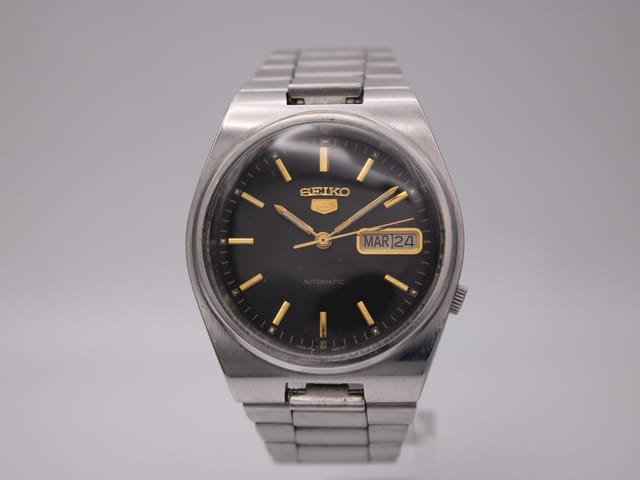
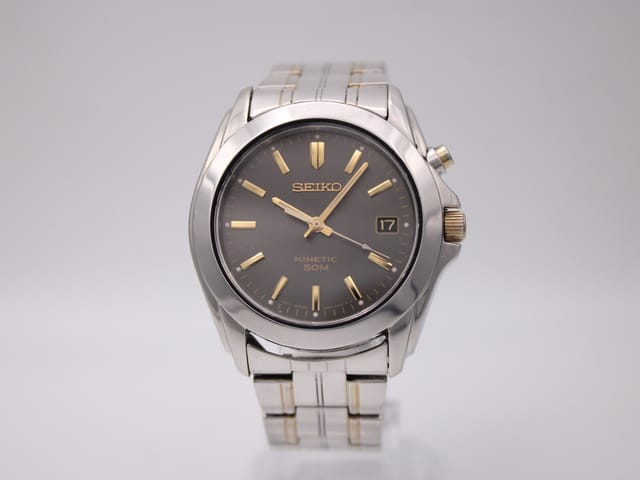
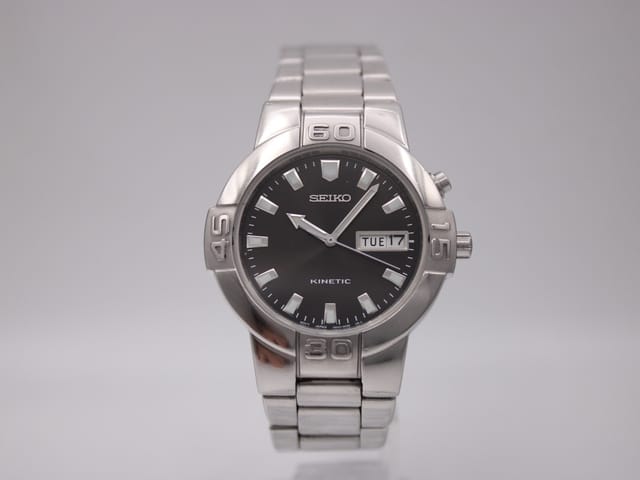
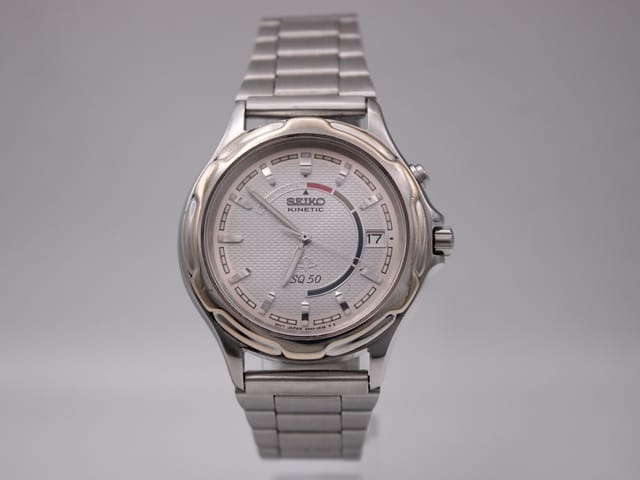
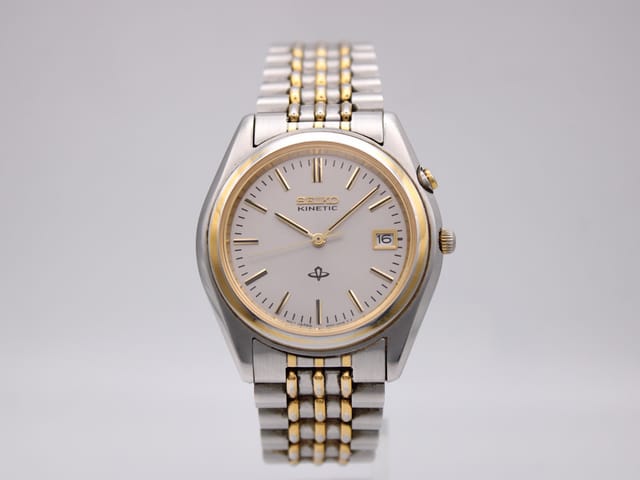
The Seiko 5 remains the natural starting point: automatic, robust, and made in countless variations since 1963. Collectors of chronographs look to the 6139, one of the first automatic chronographs in the world and famously worn in space by astronaut William Pogue. Divers gravitate to the 6105 and 6309, while the Bell-Matic alarm and the early Kinetic pieces each have their own devoted followings.

Buying your Seiko from London Watch Market

Every Seiko we list is individually inspected, wound and timed, then photographed as it actually is, with any wear described honestly rather than hidden. Vintage watches are sold as vintage watches, with their history intact. Each order ships free within the UK and is covered by our 14-day returns, so you can buy a piece you have only seen in photographs with confidence.

Further reading
Buying guide · 9 min readSeiko 5: the world's most sensible automatic watchThe 5 is a promise Seiko made in 1963, and almost nothing explains what it actually was. Here are the five attributes, the calibres worth knowing, and what to check before buying one.Buying guide · 9 min readLED, LCD and ana-digi: a guide to vintage digital watchesRed LED displays, always-on LCDs and the ana-digi watches that put hands and a screen on the same dial. What each era was, what goes wrong with them, and what they cost now.Buying guide · 9 min readThe best vintage Seiko watches to buySeiko made more distinct references than almost any other manufacturer, which makes choosing one genuinely hard. These are the ones worth owning, by budget.

Frequently asked questions

Are vintage Seiko watches reliable?

Yes. Seiko movements were made in-house and built to last, and a well-kept vintage example will usually run accurately for everyday wear. As with any watch that is several decades old, an occasional service keeps it at its best.

How do I tell the age of a Seiko?

The serial number does most of the work. The first digit is the year of manufacture and the second is the month. Reading it alongside the movement calibre and reference number will place almost any vintage Seiko to a specific year.

Are vintage Seikos a good investment?

Some references, particularly early automatic chronographs and divers, have risen steadily in value. Most vintage Seikos, though, are best bought to wear and enjoy: they offer genuine watchmaking quality for the money rather than a guaranteed return.

Do your Seiko watches come with a warranty?

Every watch is inspected before it is listed and covered by our 14-day returns. If anything is not as described when it arrives, you can send it back for a full refund.

Do you sell second hand Seiko watches?

Yes. Every Seiko watch we sell is second hand, and we use "pre-owned" and "vintage" to mean the same thing: someone owned the watch before you. The words differ only in age. Pre-owned and second hand say nothing about when a watch was made, while vintage conventionally means roughly thirty years or older. Our Seiko stock spans both, and every listing states the year where we can confirm it from the caseback, papers or movement, and says so plainly where we cannot.

Are old Seiko watches worth buying?

An old Seiko in honest condition is usually better value than a new fashion watch at the same money, because the depreciation has already happened and you are buying a watch that has proved it lasts. What matters is the individual piece rather than the age: an original dial, a case that has not been over-polished, and a movement that has been serviced or is priced to allow for it. We inspect and test every Seiko watch in London and describe wear in plain English rather than cropping it out of the photographs.

What makes a Seiko watch a classic?

A classic watch is one whose design has stopped dating, and the test is simply time: a shape that looked right thirty years ago and still looks right now. In practice that means restraint, a legible dial, proportions that suit a wrist rather than a trend, and a case shape that was not chasing the fashion of its decade. The classic Seiko designs are the ones that keep reappearing in our stock precisely because people kept them and wore them, which is the most honest evidence a design has lasted.

What is the difference between a vintage and an antique Seiko watch?

Antique conventionally means a hundred years or older, and vintage roughly thirty years or older, so almost everything described as an antique wristwatch is really a vintage one. Wristwatches only became common after the First World War, which is why genuine antique examples are mostly pocket watches. Our Seiko collection is vintage and pre-owned rather than antique, and each listing gives the year or era we have been able to confirm.
Looking for something specific? We're happy to help you find it.

Get in touchAll brands