What is my vintage watch worth?
There is no single answer, and anyone who gives you one without seeing the watch is guessing. Here is what actually sets the price, how to find out yourself, and what a dealer will realistically pay.
This is the most common question we are asked, and the honest answer is that nobody can tell you from a description. Two watches with the same name on the dial, made in the same year, can be worth £80 and £800, and the difference is almost never the thing people expect. It is not the age and it is rarely the brand alone.
What follows is what actually moves the number, how to research your own watch properly, and a straight account of the gap between what a watch sells for online and what someone will hand you for it today. If you would rather skip to that, we buy and part-exchange watches and you can send us photographs for a real figure.
The reference matters more than the brand
The single most useful thing on your watch is not the name on the dial, it is the reference number, usually stamped on the caseback or between the lugs. A brand name tells you a range that might span £50 to £5,000. A reference narrows that to a bracket you can actually research, because it identifies the exact model rather than the maker.
Look on the back of the case for something like Z173K, 2000L, 9923 or 6119-5401. Write it down exactly, including letters and punctuation, and search that instead of the brand. The results will be dramatically more useful, because you will be looking at the same watch rather than the same logo.
If there is no reference, the movement calibre inside serves the same purpose, though you need a watchmaker or a caseback opener to read it. Our guide to dating a vintage watch covers how the serial, calibre and case reference fit together.
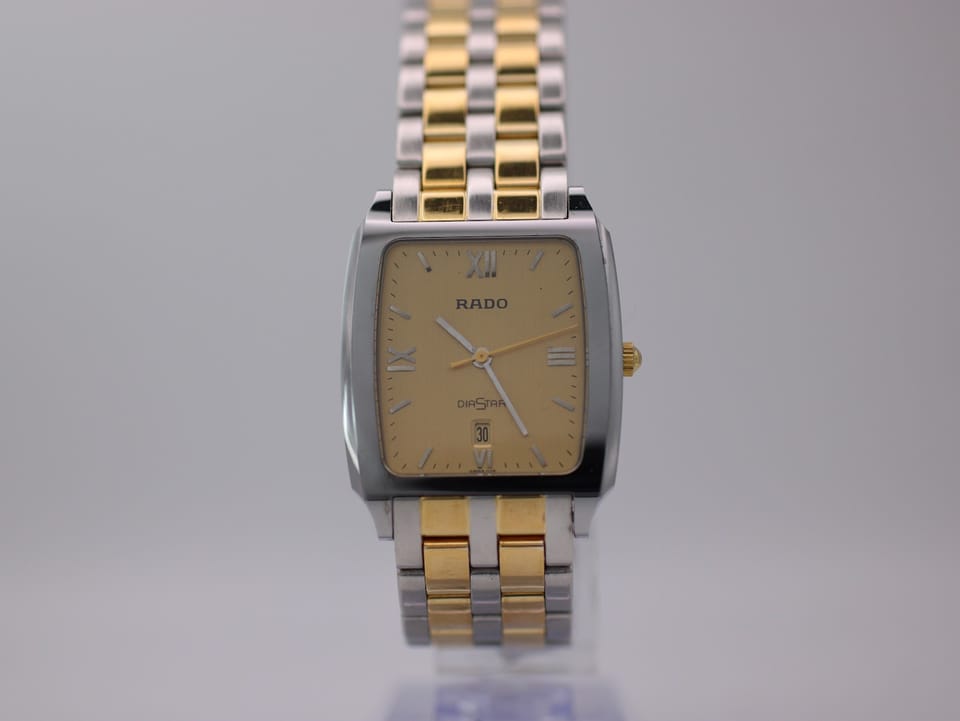
What actually sets the price
In rough order of how much they move the number, for a watch in the range most people are holding.
| Factor | Why it matters | Effect on price |
|---|---|---|
| Original dial | A refinished or replaced dial is the most common and most costly alteration | A redial can halve the value |
| Does it run | A non-runner carries an unknown repair bill the buyer has to absorb | Often 40% to 60% less |
| Case condition | Over-polishing rounds the lug edges permanently; brassing shows plating worn through | 20% to 40% swing |
| Movement type | Mechanical generally carries more than quartz at the same age and brand | Varies widely |
| Service history | Matters more the higher the value, since a service is £80 to £200 | Adds most of its own cost |
| Box and papers | Nice to have, and rarer than people think on 1980s and 1990s watches | 5% to 15% |
| Age on its own | Commonly assumed to drive value, and mostly it does not | Close to nothing |
How to research it properly
The mistake almost everyone makes is looking at asking prices. A listing at £900 tells you what one optimistic seller wants, not what anyone paid. What you need is completed sales.
On eBay, run your search and filter to sold items. That gives you a real distribution rather than a wish list, and the gap between the two is routinely a factor of two or three. Look at ten or fifteen sold examples rather than the highest one, and discount any that are obviously in better condition than yours.
Then be honest with yourself about condition, which is the hard part. Photograph your watch in daylight, straight on, and compare the dial with the sold examples rather than with your memory of it. Marks you have stopped noticing are the first thing a buyer sees.
Two sanity checks. If your watch is a quartz fashion piece from the 1990s, it is almost certainly worth £30 to £150 whatever the brand, because those were made in enormous numbers. And if a famous Swiss name is turning up cheap in your searches, that is usually the market telling you those examples are redialled or not genuine, rather than a bargain.
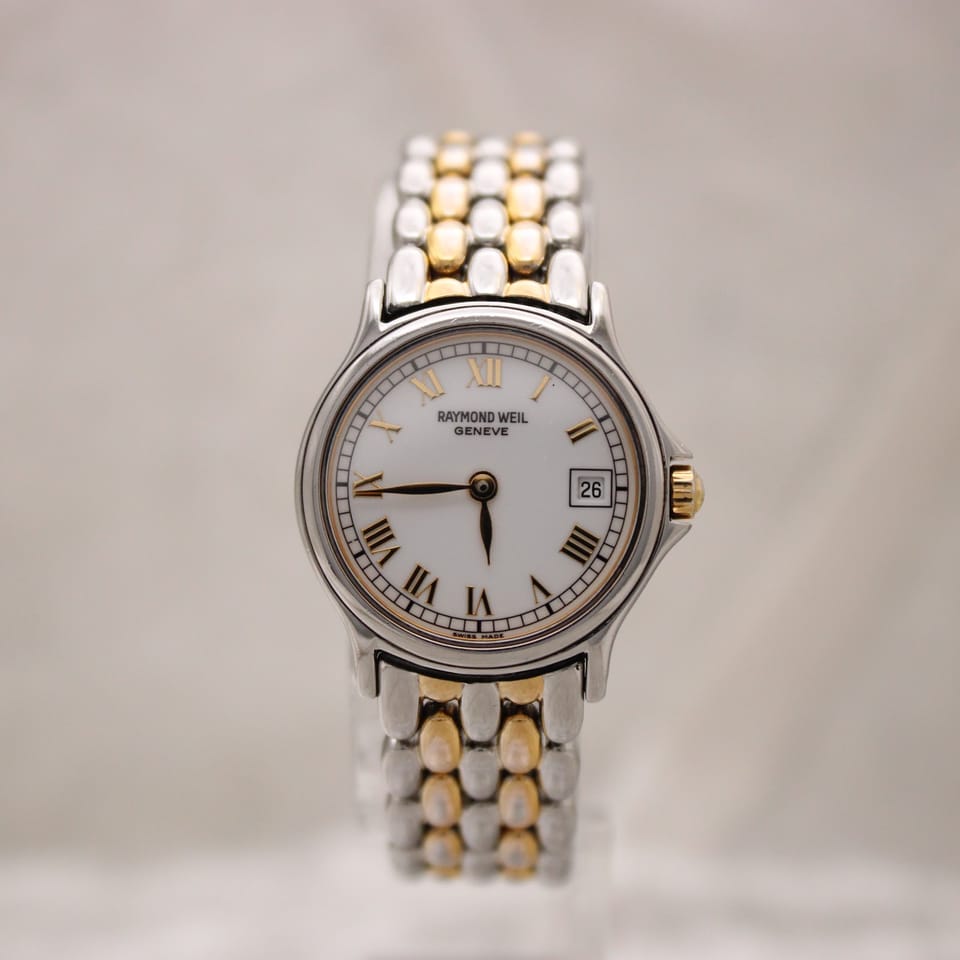
The number most inherited watches land on
It is worth saying plainly, because the expectation gap causes a lot of disappointment. Most vintage watches that come out of a drawer are worth somewhere between £50 and £400. That is not a reflection on the watch or on the person who owned it. It is that the great majority of watches ever made were mid-market pieces made in very large numbers, and those are the ones that survive in quantity.
The genuinely valuable exceptions are narrow and reasonably well known: early automatic chronographs, original divers with untouched dials and bezels, a handful of Swiss references from the 1960s, and anything from the small number of houses whose vintage output is actively collected. If your watch is one of those, the reference search in the previous section will make it obvious quickly, because the sold prices will not be subtle.
A watch can also be worth keeping for reasons that have nothing to do with money. If it belonged to someone, a service at £80 to £200 will usually put it back into daily use for another twenty years, and that is frequently the better outcome.
What a dealer will pay, and why it is less
If you sell to a dealer rather than privately, expect somewhere around half to two thirds of what the watch would eventually fetch on the open market. That is the honest range and it is worth understanding why, because it is not a trick.
A dealer takes on everything you would otherwise carry: the cost of a service if it needs one, the risk that it needs more than it looks like, photography and listing time, the platform fees, the returns, and the money sitting in a watch that might take six months to sell. Those are real costs and they come out of the difference.
What you get in exchange is certainty and speed: one transaction, no listing, no questions from buyers, no risk of a chargeback months later. Whether that trade is worth it depends entirely on how much your time and patience are worth to you. Selling privately genuinely does yield more, and it genuinely is more work.
We buy watches outright and take them in part-exchange against something in the collection, which usually gives you more than a straight sale. If you send clear photographs of the dial, the caseback and the movement where you can, and the reference number, we will give you a real figure rather than a range. Start on our sell a watch page.
Before you sell anything
Do not polish it. This is the one piece of advice worth more than all the rest put together. A vintage case is worth more with honest wear than with rounded, buffed edges, and polishing is not reversible. The same applies to cleaning a dial: patina is value, dirt removal by an amateur is damage.
Do not have it serviced first in the hope of raising the price. A service rarely returns more than it costs at this level, and a buyer who intends to service it anyway would rather choose their own watchmaker.
Do keep the box, papers, spare links and any old receipts, even if they look like nothing. And take the photographs before you approach anyone, because the quality of the pictures affects the offers you get more than almost anything else you control.
Frequently asked questions
How do I find out what my vintage watch is worth?
Find the reference number on the caseback or between the lugs and search that rather than the brand, then filter the results to completed or sold listings rather than asking prices. Look at ten or fifteen sold examples rather than the highest, and be honest about how your watch's condition compares. Asking prices commonly run two to three times what watches actually sell for.
Are old watches worth anything?
Most vintage watches that come out of a drawer are worth between £50 and £400. Age alone adds very little, because the majority of watches ever made were mid-market pieces produced in very large numbers. The valuable exceptions are narrow: early automatic chronographs, original divers with untouched dials, and a small set of collected Swiss references. A reference-number search will show you quickly which category yours falls into.
What affects a vintage watch's value most?
Whether the dial is original, which is the single biggest factor, since a redial can halve the value. Then whether it runs, then case condition, particularly over-polishing that has rounded the lug edges and plating worn through to the base metal. Movement type, service history and box and papers follow. Age on its own has almost no effect.
How much will a dealer pay for my watch?
Typically around half to two thirds of what it would eventually sell for on the open market. The difference covers servicing, the risk of hidden faults, photography and listing time, platform fees, returns, and the cost of holding stock that may take months to sell. You are trading some of the value for certainty and speed. Selling privately yields more and takes considerably more work.
Should I polish or service my watch before selling it?
No to both. Polishing rounds the case edges permanently and reduces value, since honest wear is worth more than a buffed case. A service rarely returns more than it costs on a watch in this range, and most buyers would rather choose their own watchmaker. Keep the box, papers and any old receipts, and take clear photographs in daylight instead.
Do you buy vintage watches?
Yes. We buy outright and take watches in part-exchange against anything in the collection, which usually works out better than a straight sale. Send clear photographs of the dial, the caseback and the reference number through our sell a watch page and we will come back with a real figure rather than a range.