Best vintage Citizen watches: a buyer's guide
Citizen made some of the best-value quartz and automatic watches of the 1970s to 1990s and almost nobody collects them, which is why they are cheap. Here is what to look for, how to read a Citizen case-back, and which ones are worth buying.
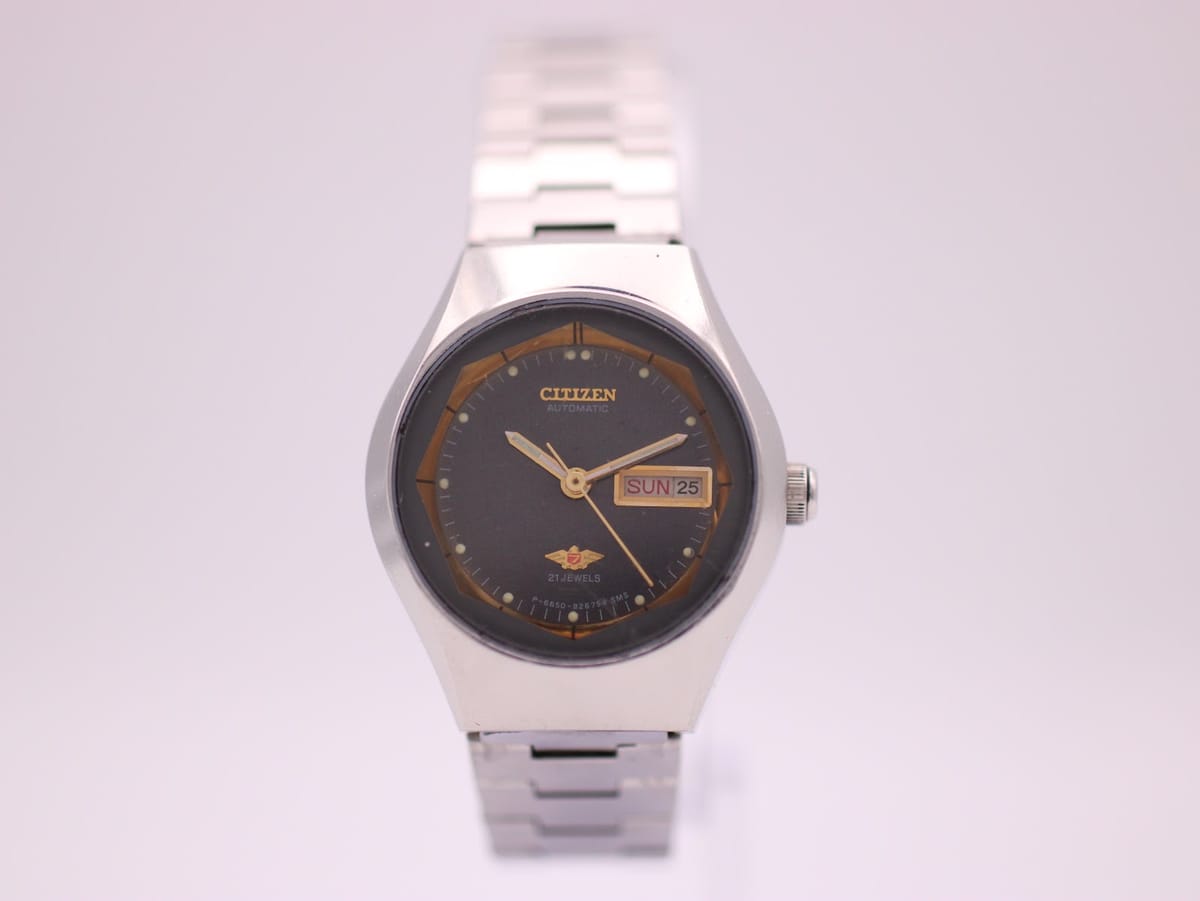
Citizen is the vintage watch market's blind spot. Seiko has a collector culture, model guides and a dating table; Citizen, its great Tokyo rival, made watches of the same quality in the same decades and has almost none of that. The result is that a 1980s Citizen quartz in good order costs less than a service on a Swiss watch, and it will run for years. This guide is about finding the good ones.
What Citizen made, and when
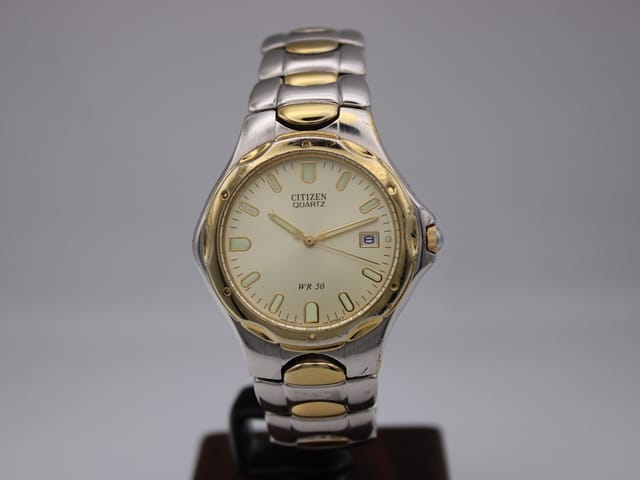
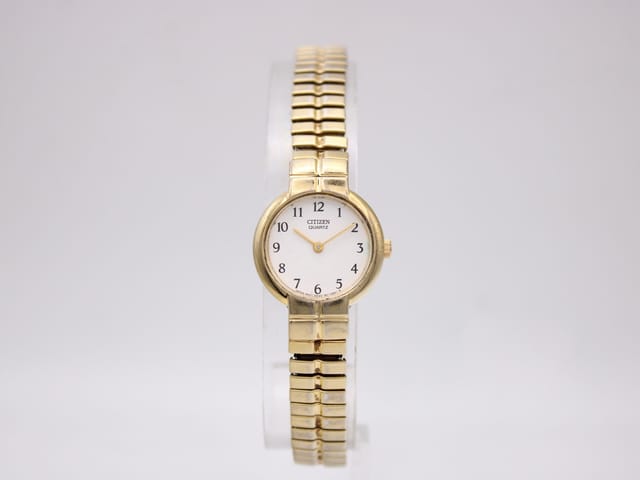
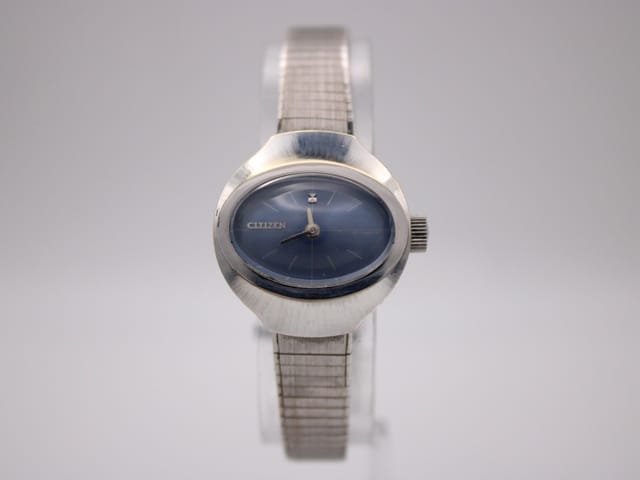
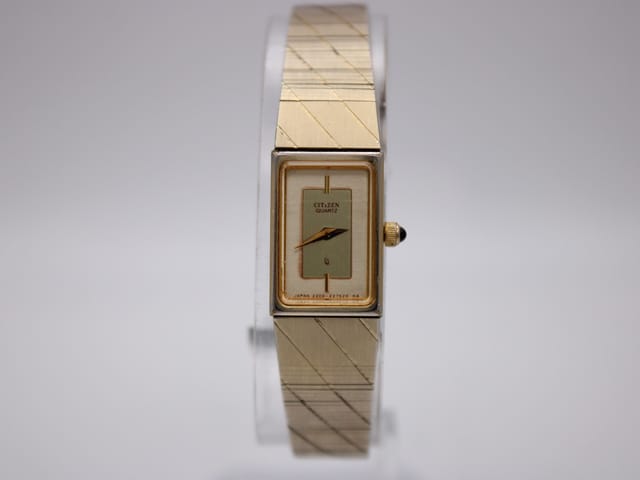
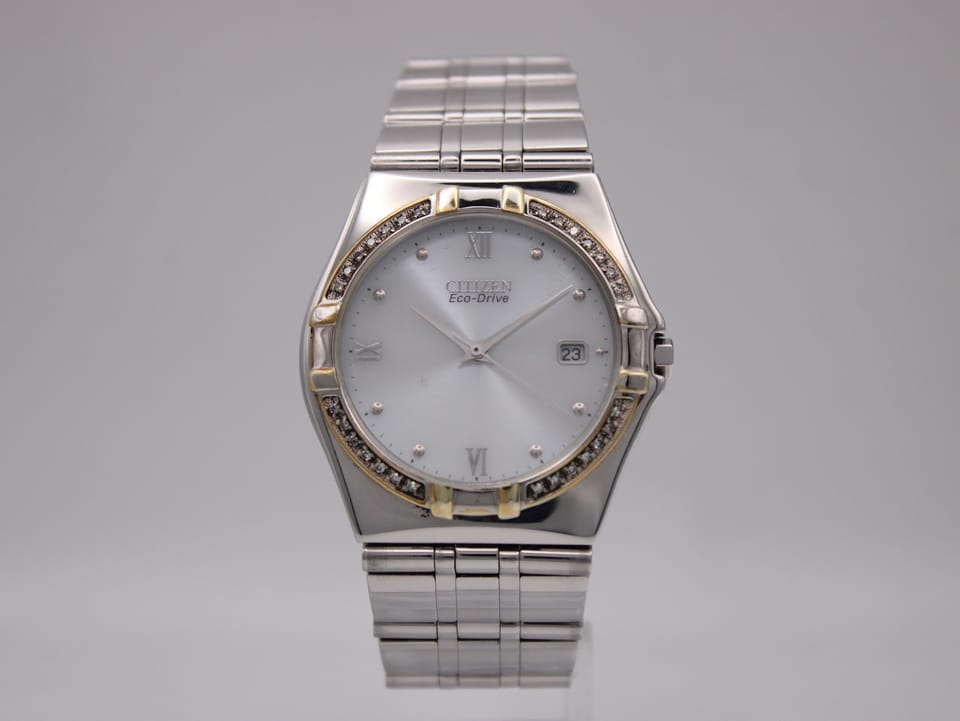
Citizen adopted its name in 1930 and grew into one of the largest movement makers in the world, producing its own calibres throughout. The 1960s and 1970s gave us its mechanical automatics; from the mid-1970s it moved hard into quartz, and it pioneered light-powered movements, sold as Eco-Drive from the mid-1990s onwards. The vintage Citizens we handle are mostly 1980s and 1990s quartz dress and everyday watches, with a smaller number of 1970s automatics and early light-powered pieces.
Reading the case-back
Every Citizen case-back carries a two-part code, such as 1112-S68334, 6110-S64894 or 2200-224167. The first group is the movement calibre, which tells you what is inside and how to service it; the second is the case reference. A separate serial number dates the watch, and Citizen's convention puts the last digit of the year first, so a serial starting 8 means 1978, 1988 or 1998 and the design settles which. Because the calibre is on the outside, it is the most useful thing to search for when researching a Citizen.
| Calibre | Type | Typical watch |
|---|---|---|
| 1112 | Quartz, date | 1980s two-tone dress watch |
| 6110 / 6010 | Quartz, day or date | 1990s steel bracelet watch |
| 2200 | Quartz | 1980s slim dress watch |
| 5920 | Quartz | 1990s everyday steel watch |
| Eco-Drive E-series | Light-powered quartz | Late 1990s onwards |
Which vintage Citizens to buy
For daily wear, the 1980s and 1990s quartz watches on their original steel or two-tone bracelets are the safe buy: accurate, robust and cheap to keep running. The 1970s automatics are the more interesting purchase for anyone who wants a mechanical Japanese watch without paying Seiko prices, and they are getting scarcer in good order. Early light-powered Citizens are the ones with a collecting future, but their rechargeable cells age and a dead cell is a specialist repair, so buy those from a seller who has tested them.
As with any vintage watch, the dial decides the value. Citizen dials of the era were well made and have usually survived; a clean one on a worn case is a better buy than the reverse.

What to check before buying
Ask whether the watch has been tested and, for a quartz, whether the battery is fresh. Check the case-back code is present and matches the description. Look at the bracelet clasp and end links, which are the usual weak point on the steel bracelet watches. Every Citizen we sell is inspected, tested and photographed in natural light, with a fresh battery fitted to quartz pieces and any wear described in the listing. There is a 14-day return window on every purchase.
Frequently asked questions
How do I read the numbers on a vintage Citizen case-back?
Citizen case-backs carry a calibre-and-case code such as 1112-S68334 or 6110-S64894: the first group is the movement calibre, the second identifies the case. A separate serial number gives the production date, with the first digit usually the last digit of the year, so context from the design is needed to fix the decade.
Are vintage Citizen watches worth anything?
Modestly. They were made in huge numbers and sold as sensible everyday watches, so most vintage Citizens are priced as exactly that: reliable, well-engineered and cheap. The exceptions are the early light-powered and technically unusual pieces, which collectors have started to notice.