The best first vintage watch: how to choose
Most people's first vintage watch is bought badly, for understandable reasons. Here is how to choose one you will still be wearing in five years.
Most people's first vintage watch is bought badly, and for entirely understandable reasons. You start from a name you recognise, find that the name costs more than you want to spend, and end up with either a compromised example of something famous or a random piece chosen because the photographs looked nice. Both routes usually end with the watch in a drawer within a year.
The better approach is to work backwards from how you will actually wear it. Answer four questions in order, and the field narrows from thousands of watches to a handful you can choose between with confidence.
First: how much maintenance do you want?
This matters more than brand, era or looks, and almost nobody considers it first. A mechanical watch, whether automatic or manual, wants a service every five to eight years at £80 to £200, will gain or lose a few seconds a day, and will stop if you leave it off for two days. A quartz watch needs a battery every two or three years, keeps time to within seconds a month, and will still be running when you find it in a drawer next spring.
Neither is better. But if the honest answer is that you want to put a watch on and forget about it, buying a 1970s automatic because that is what serious collectors buy is how a watch ends up unworn. Our guide to quartz, automatic and manual movements covers what each is genuinely like to own.
Second: what size actually suits you?
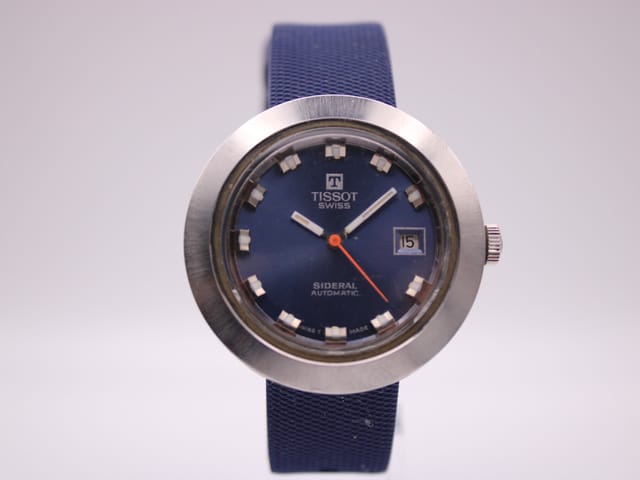
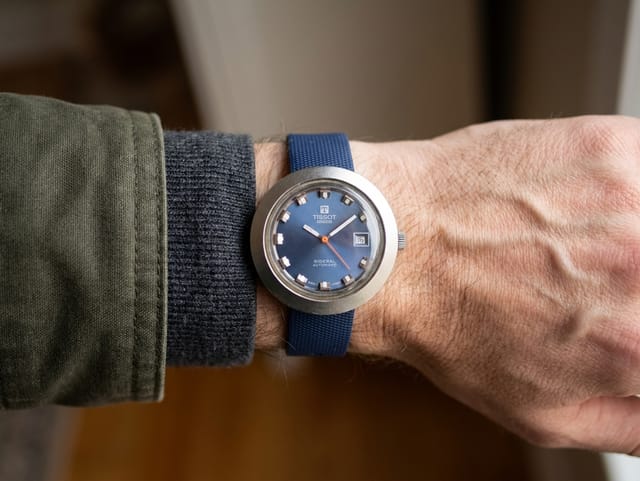
Vintage watches are smaller than modern ones, and this catches people out constantly. A 1960s dress watch is often 33mm to 35mm across; a 1970s sports watch might reach 38mm. Modern watches routinely run 40mm to 44mm, so a vintage piece that looks substantial in a photograph can arrive feeling like a different category of object.
That is not a fault. Smaller cases sit better under a cuff and are a large part of why vintage watches look the way they do. But measure a watch you already own and wear happily, then compare, because case diameter is the single most common reason a first vintage purchase gets returned.
Third: what will you wear it with?
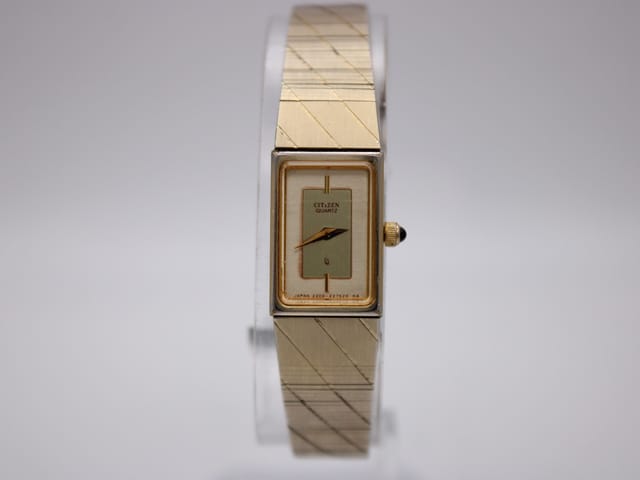
Be honest about the wardrobe rather than the aspiration. A slim gold-plated dress watch is a beautiful thing and completely wrong for someone who lives in a jumper and jeans. A chunky steel diver on a bracelet is equally wrong under a suit sleeve.
If you want one watch that covers most of a life, look for a mid-size steel case, a plain silver, cream or black dial, and a leather strap you can swap. That describes a very large share of the good Japanese and Swiss watches of the 1960s and 1970s, and it is why they are still wearable now.
Fourth: what should you spend?
For a first vintage watch, somewhere between £80 and £250 is the right bracket, and there is no shame in the lower half of it. Below £80 the choice narrows to pieces that will need work. Above £250 you are spending money to answer questions you have not yet formed an opinion on, and a first watch is partly a way of finding out what you actually like.
| Budget | What it buys | Best for |
|---|---|---|
| Under £80 | 1980s and 1990s quartz dress watches, Lorus, Casio, entry Citizen | Trying vintage with almost no commitment |
| £80 to £200 | Seiko 5 automatics, Citizen 8200 automatics, Swiss quartz from Tissot and Rotary | The sweet spot for a genuine first vintage watch |
| £200 to £500 | Swiss mechanical dress watches, better Seiko references, early Longines and Certina | A second watch, once you know what you like |
| Over £500 | Vintage Omega, mechanical chronographs, sought-after Seiko divers | Collectors buying a specific reference on purpose |
The four watches that answer most people's brief
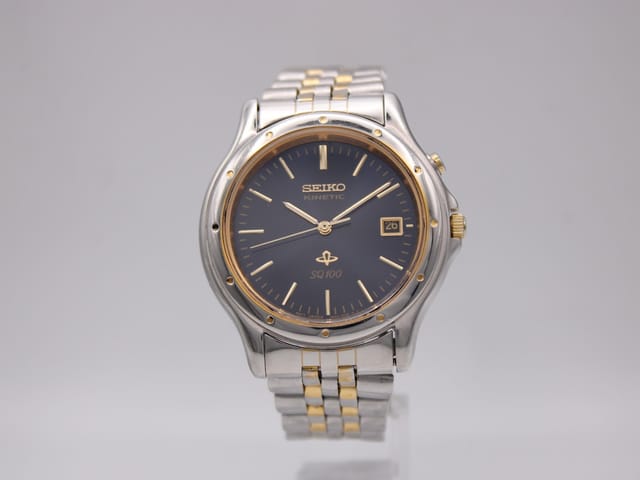
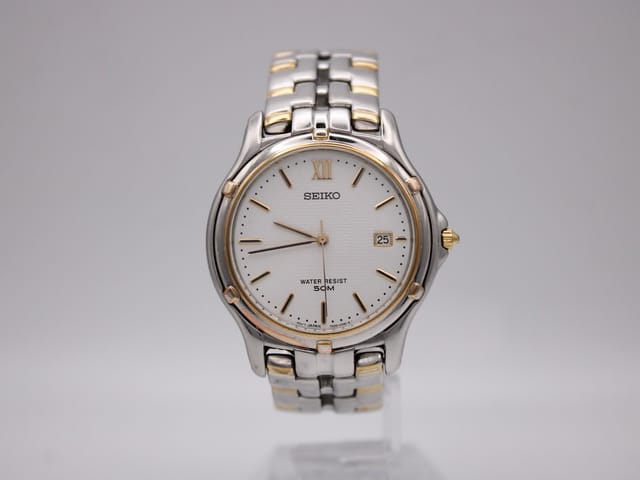
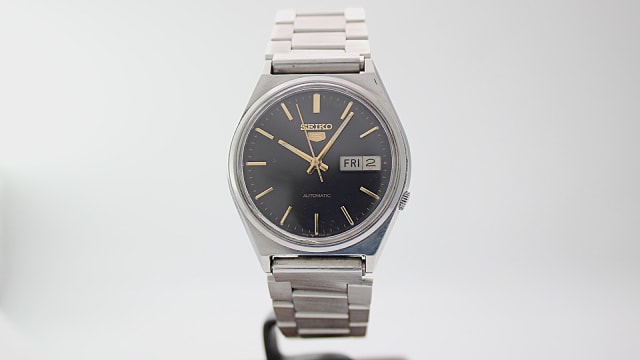
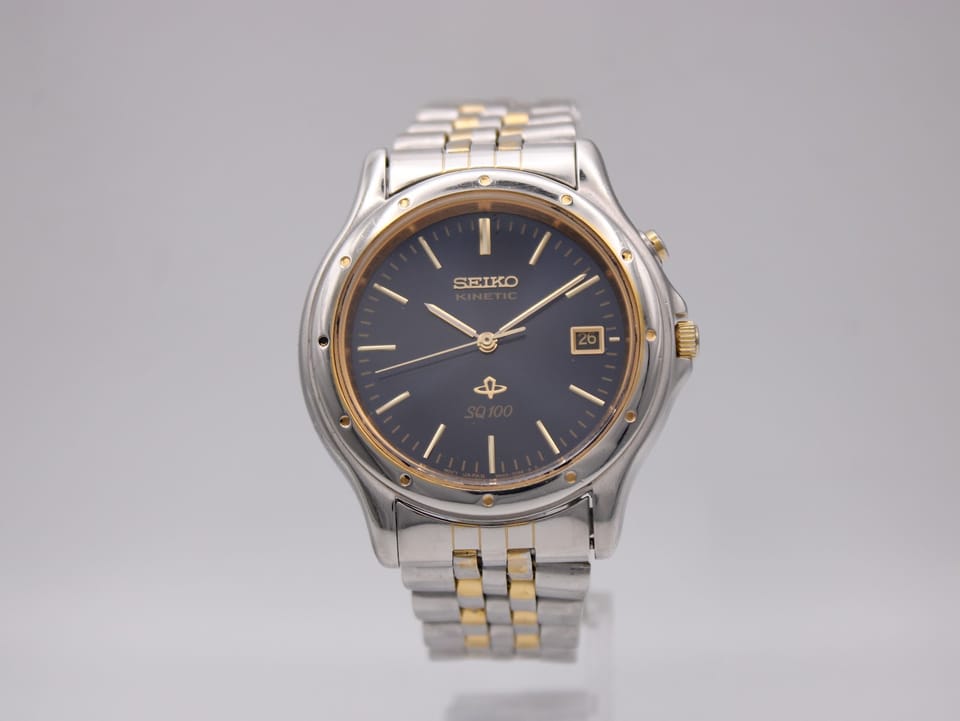
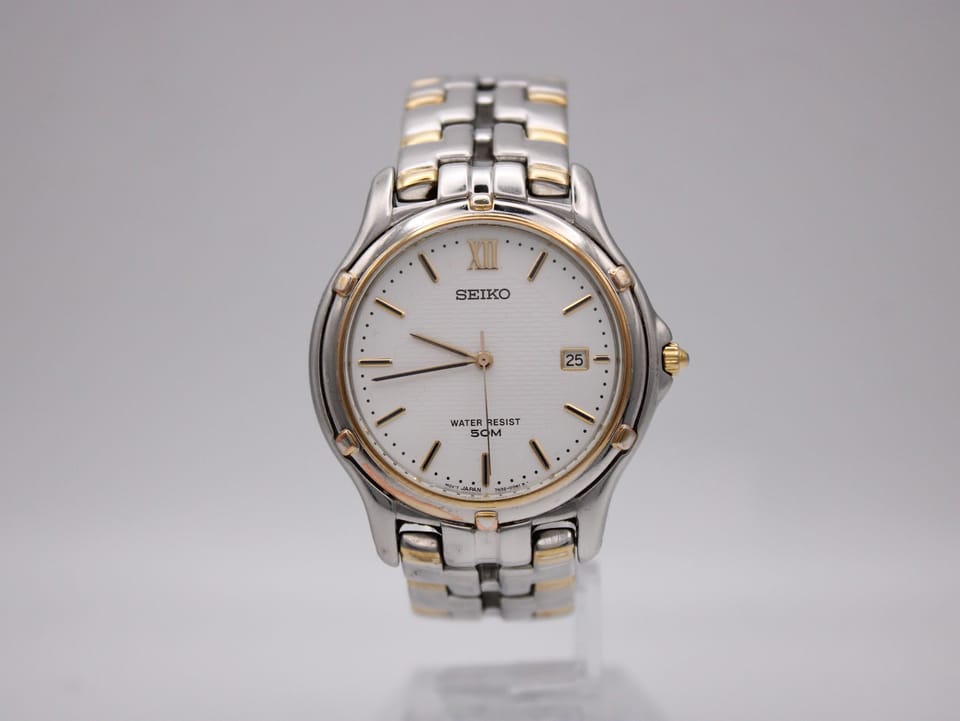
A Seiko 5 automatic from the 1970s or 1980s, at £85 to £160, is the default recommendation and deserves to be. In-house automatic movement, day-date, thousands of dial variations, parts everywhere, and it holds its value if vintage turns out not to be for you.
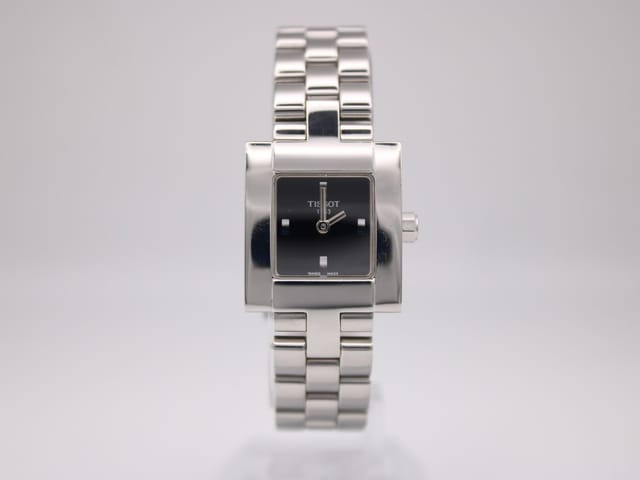
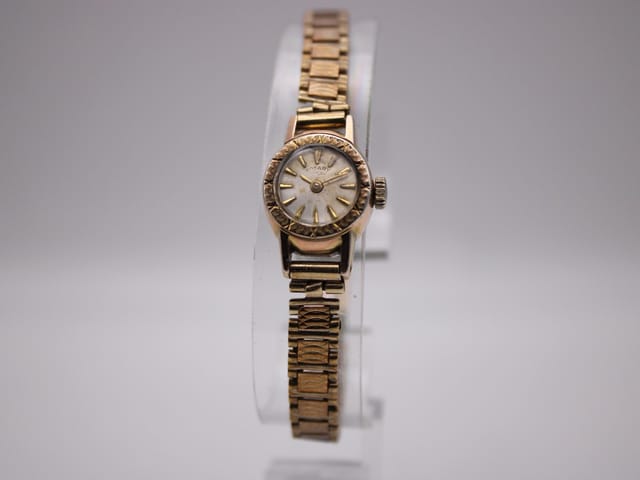
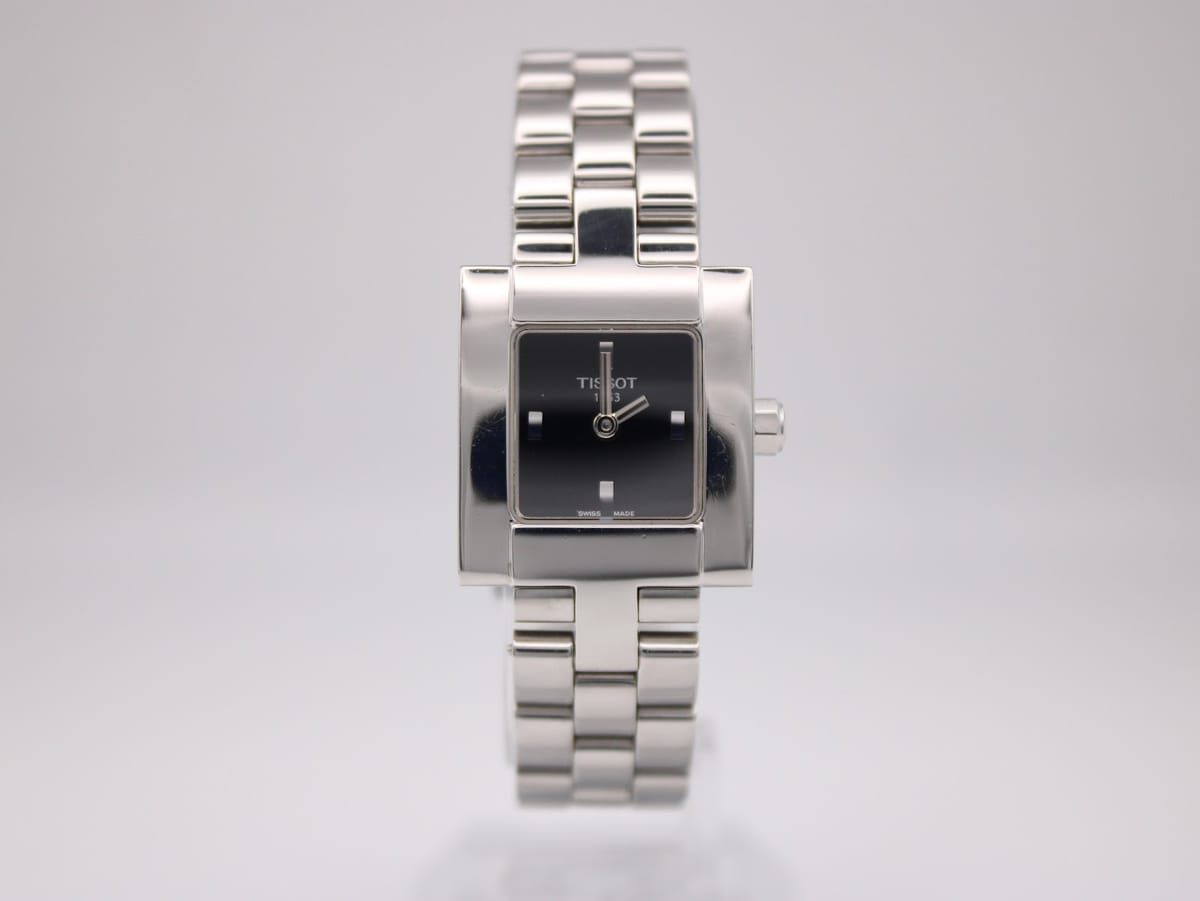
A Citizen automatic from the same era, at £70 to £130, is the same watch for slightly less money with a fractionally less obvious name on the dial. A Tissot quartz dress watch at £90 to £180 gives you a genuine Swiss house from 1853 with no mechanical upkeep at all. And a Rotary gold-plated dress watch at £50 to £110 is the most elegant thing available for the money, if a slim case and a warm gold tone is what draws you.
The full breakdown, with movement details and what to avoid, is in our guide to the best vintage watches under £200.
What to check before you buy
Buy the dial. It is the one part that cannot be authentically restored, and a redial, however neat, removes both character and value. Original dials have a particular quality of printing that reproductions rarely match, and honest ageing is far more desirable than something that looks suspiciously fresh for its age.
Confirm the watch runs, ideally on video. Ask when it was last serviced and treat 'not known' as a cost to budget for rather than a dealbreaker. Assume no water resistance whatever the dial says, because gaskets harden with age. And check the seller describes wear rather than hiding it, since a listing that mentions no flaws on a fifty-year-old object is not telling you the whole story. Buying a vintage watch online safely goes through this in detail.
One last thing
Buy the watch you keep coming back to, not the one you can most easily justify. Everything above is there to stop you making an expensive mistake, but within a sensible bracket and honest condition, the piece worth owning is the one you find yourself looking at again. A watch that gets worn every day at £120 is a far better purchase than an admired one at £400 that stays in its box.
Every watch we list is inspected and tested in London, photographed as it is, and covered by free UK delivery and 14-day returns, so a first vintage watch can be tried on your own wrist before you commit to it.
Frequently asked questions
What should my first vintage watch be?
For most people, a 1970s or 1980s Seiko 5 automatic at £85 to £160. It has an in-house automatic movement with a day-date, is cheap to service, comes in thousands of dial variations, and holds its value well. If you would prefer no mechanical maintenance, a Swiss quartz dress watch from Tissot or Rotary at £50 to £180 is the easier alternative.
How much should I spend on my first vintage watch?
Between £80 and £250. Below £80 the choice narrows to watches that will need work fairly soon. Above £250 you are making decisions about references and eras before you have formed a view on what you like, which is what a first watch is partly for.
Are vintage watches too small to wear now?
They are smaller than modern watches, typically 33mm to 38mm against a modern 40mm to 44mm, and this is the most common reason a first vintage purchase disappoints. Measure a watch you already wear happily and compare before buying. Many people find they prefer the smaller proportions once they adjust.
Should a first vintage watch be quartz or automatic?
It depends entirely on how much upkeep you want. Automatic means a service every five to eight years, a few seconds a day of drift, and a watch that stops if unworn for two days. Quartz means a battery every two or three years and near-perfect accuracy. Neither is more legitimate than the other, and a quartz watch you actually wear beats an automatic in a drawer.
Is it safe to buy a vintage watch online?
Yes, from a seller who inspects and tests stock, photographs the actual watch rather than a stock image, describes wear plainly and offers returns. The risk sits with untested, sold-as-seen listings where the whole burden of judgement falls on the buyer.