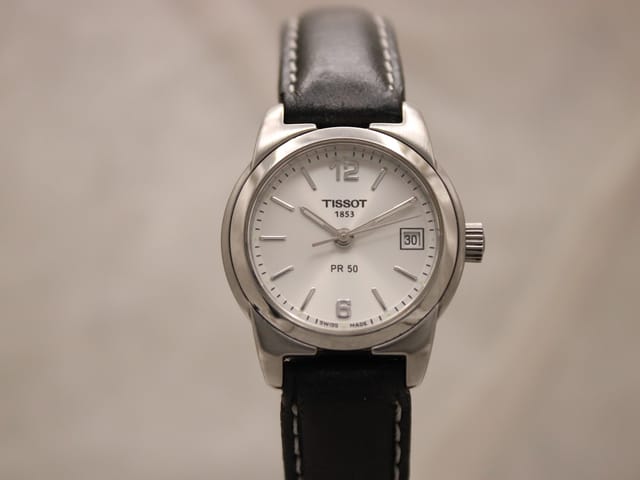
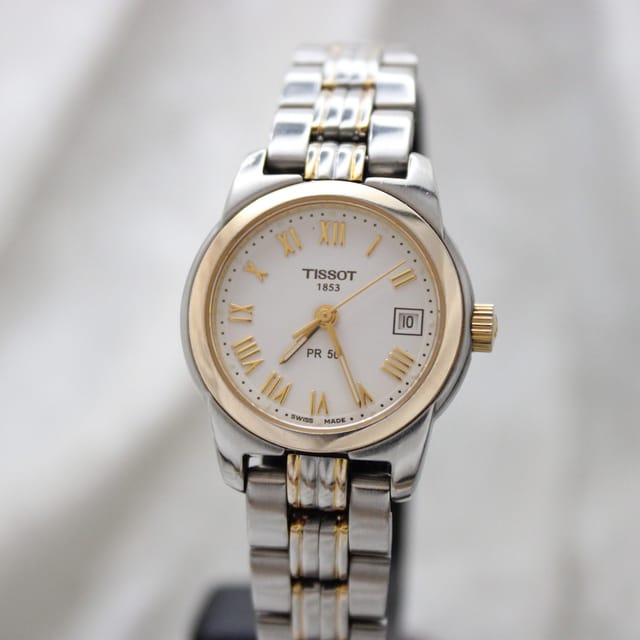
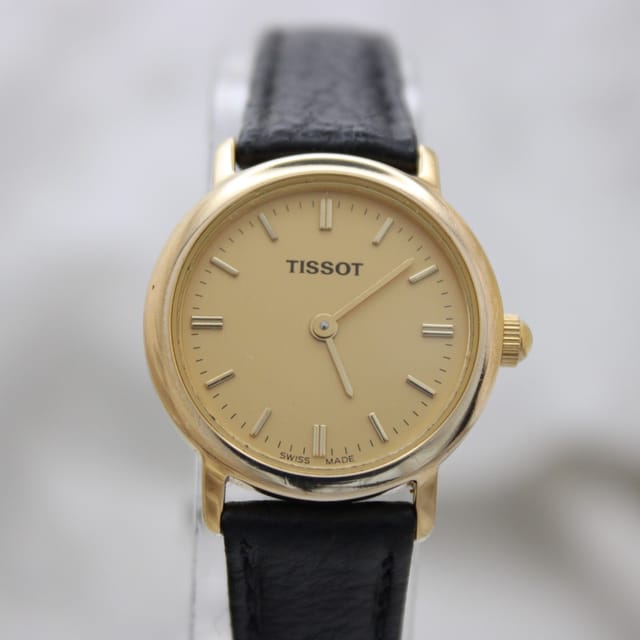
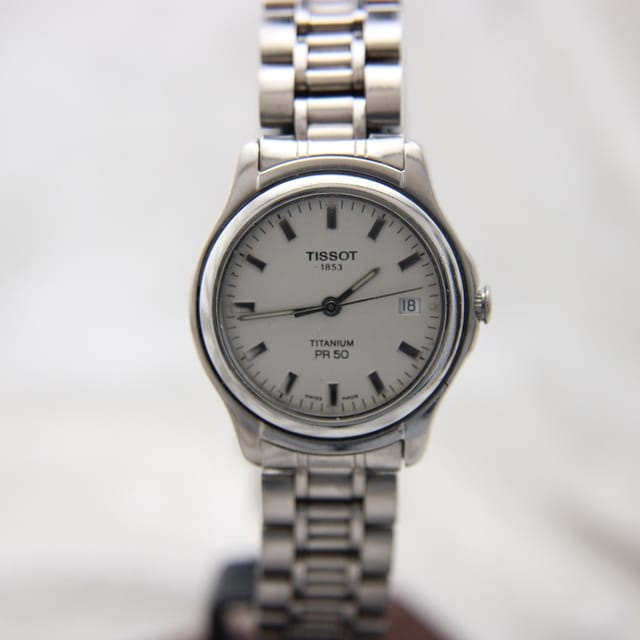
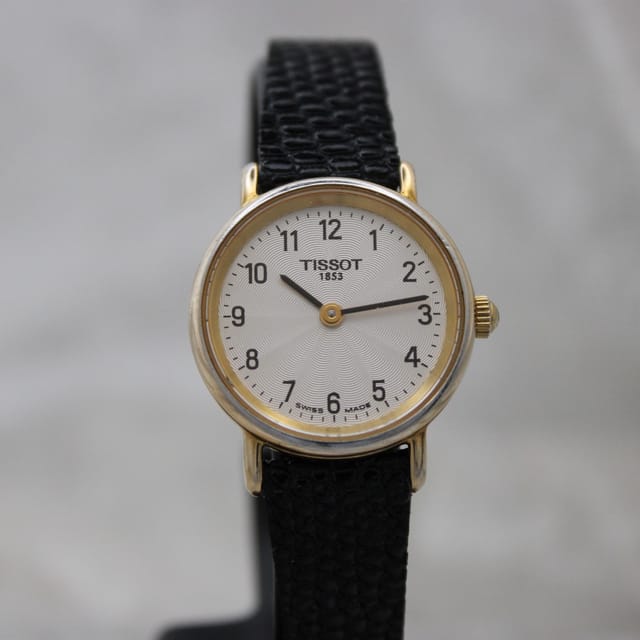
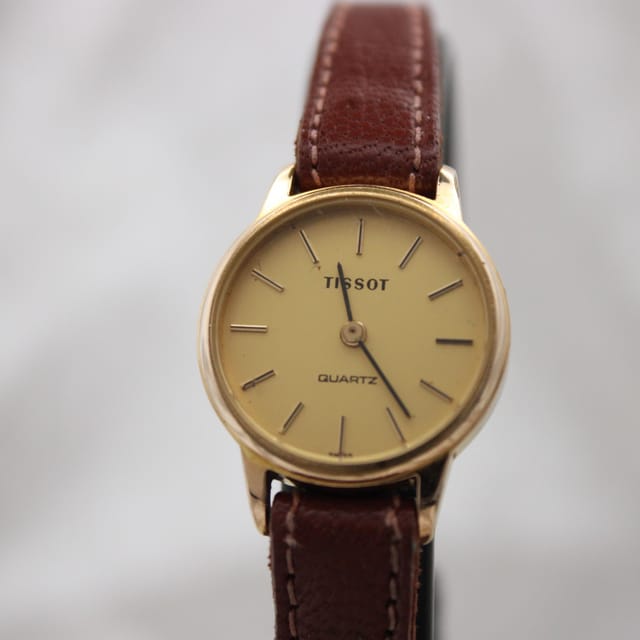
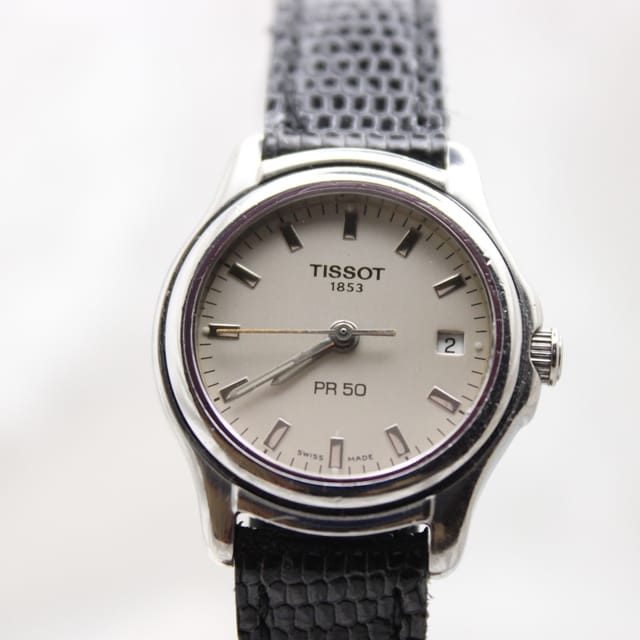
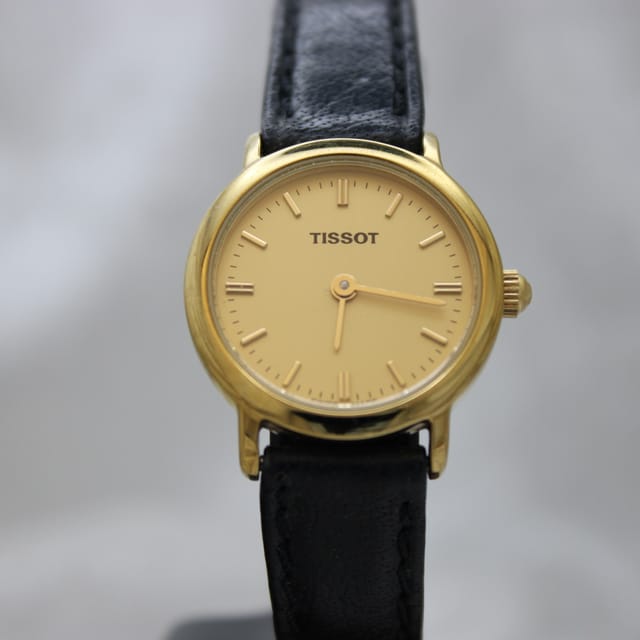
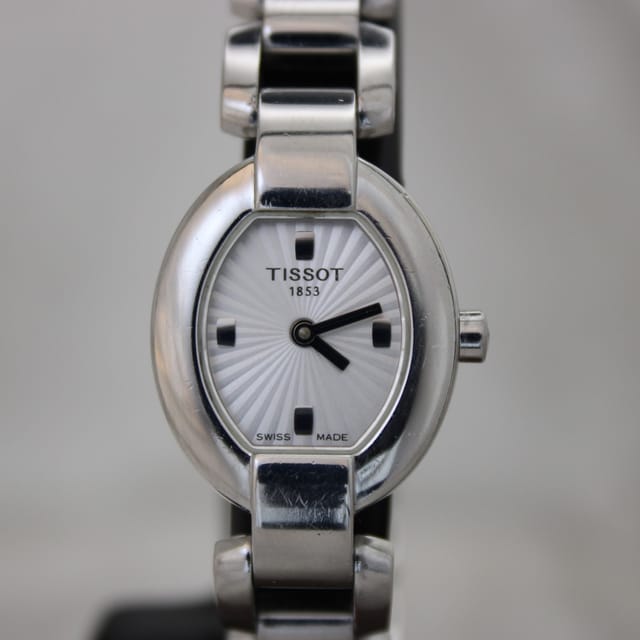
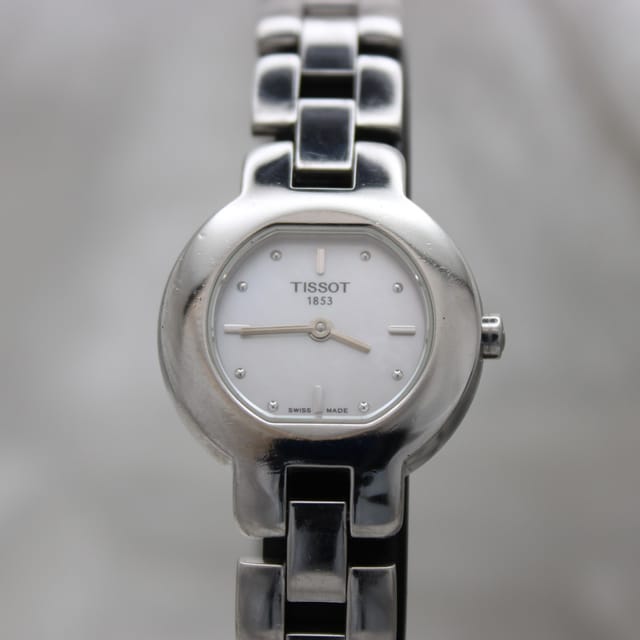
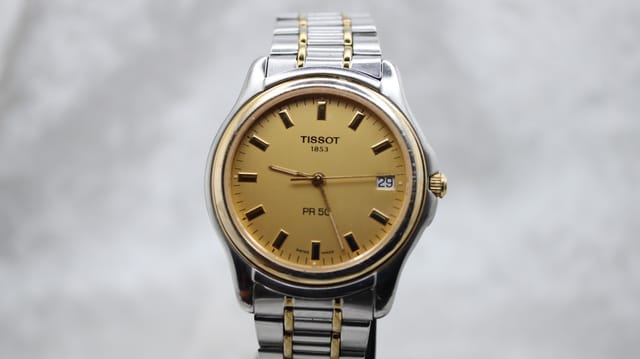
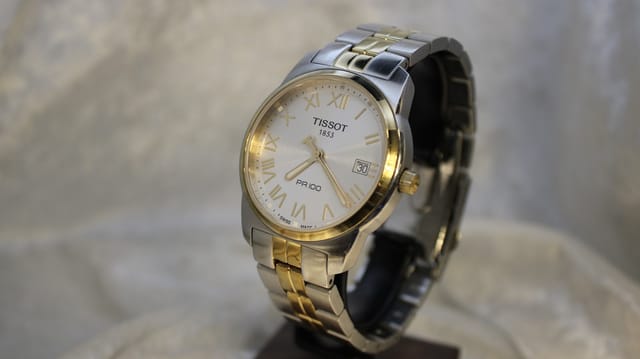
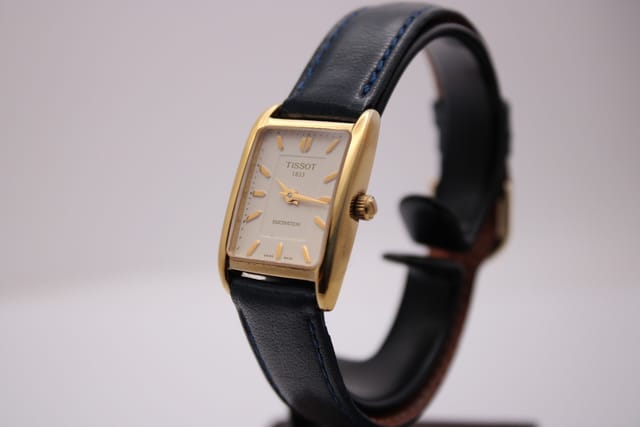
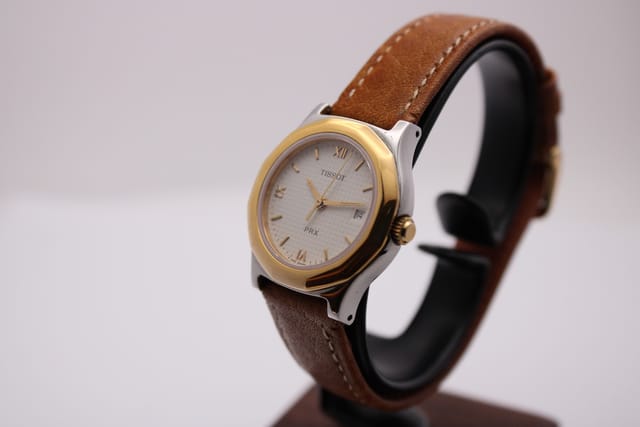
Vintage Tissot watches.
Established in Le Locle in the Swiss Jura in 1853, Tissot is one of Switzerland's most storied mid-range manufactures. The brand has a rich history of technical firsts, including an early anti-magnetic wristwatch around 1930 and experiments with plastic movements in the 1970s. Tissot's vintage pieces combine Swiss precision with accessible elegance, making them perennial favourites for collectors seeking quality without the premium of a prestige marque.
Frequently asked questions
Are vintage Tissot watches good quality?
Yes. Tissot used properly made Swiss movements and honest finishing throughout its history, and a well-kept vintage example offers genuine mid-market quality at a very fair price.
Is Tissot a luxury brand?
Tissot has always been positioned as accessible Swiss quality rather than outright luxury. That is precisely why its vintage pieces offer such good value today.
How old is my Tissot?
Tissot dating is less systematic than some brands, but the case and movement references together with the serial number will usually place a watch to a range, and Tissot's own archive can help with older pieces.
Do your Tissot watches come with a warranty?
Every watch is inspected before listing and covered by our 14-day returns. If it is not as described on arrival, you can return it for a full refund.
Do you sell second hand Tissot watches?
Yes. Every Tissot watch we sell is second hand, and we use "pre-owned" and "vintage" to mean the same thing: someone owned the watch before you. The words differ only in age. Pre-owned and second hand say nothing about when a watch was made, while vintage conventionally means roughly thirty years or older. Our Tissot stock spans both, and every listing states the year where we can confirm it from the caseback, papers or movement, and says so plainly where we cannot.
Are old Tissot watches worth buying?
An old Tissot in honest condition is usually better value than a new fashion watch at the same money, because the depreciation has already happened and you are buying a watch that has proved it lasts. What matters is the individual piece rather than the age: an original dial, a case that has not been over-polished, and a movement that has been serviced or is priced to allow for it. We inspect and test every Tissot watch in London and describe wear in plain English rather than cropping it out of the photographs.
What makes a Tissot watch a classic?
A classic watch is one whose design has stopped dating, and the test is simply time: a shape that looked right thirty years ago and still looks right now. In practice that means restraint, a legible dial, proportions that suit a wrist rather than a trend, and a case shape that was not chasing the fashion of its decade. The classic Tissot designs are the ones that keep reappearing in our stock precisely because people kept them and wore them, which is the most honest evidence a design has lasted.
What is the difference between a vintage and an antique Tissot watch?
Antique conventionally means a hundred years or older, and vintage roughly thirty years or older, so almost everything described as an antique wristwatch is really a vintage one. Wristwatches only became common after the First World War, which is why genuine antique examples are mostly pocket watches. Our Tissot collection is vintage and pre-owned rather than antique, and each listing gives the year or era we have been able to confirm.