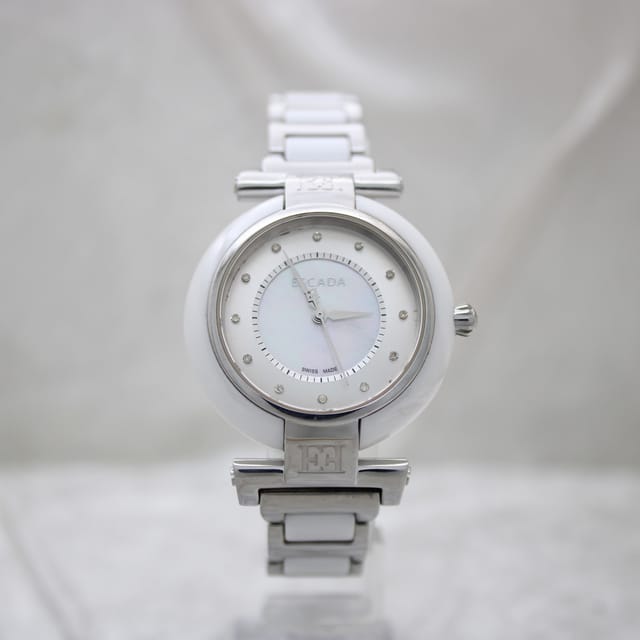
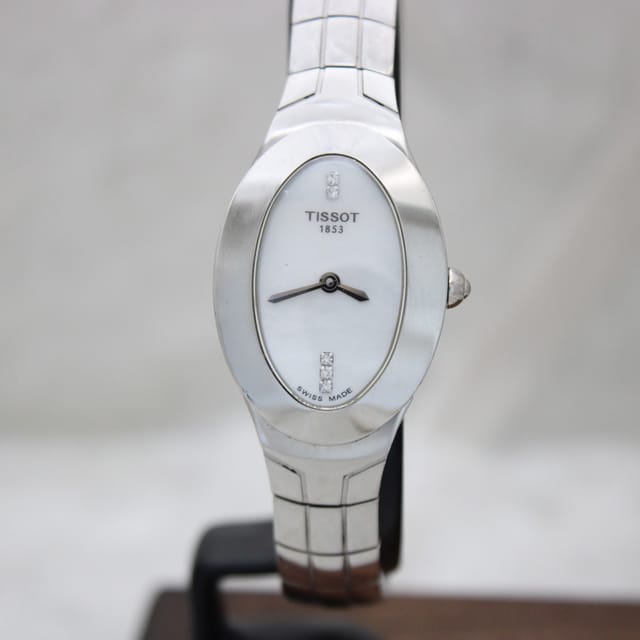
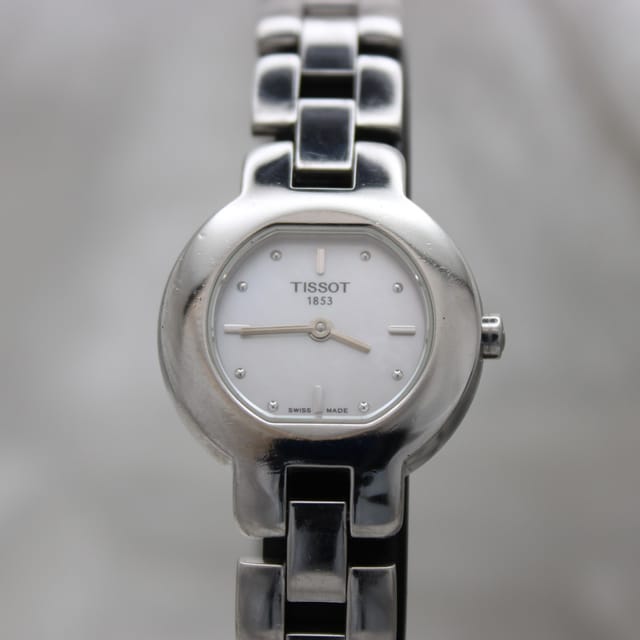
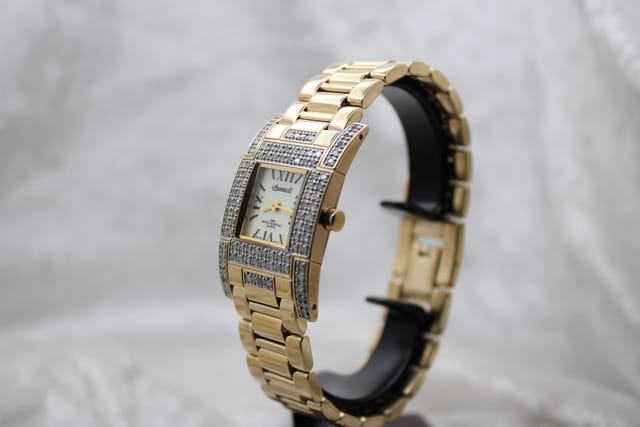
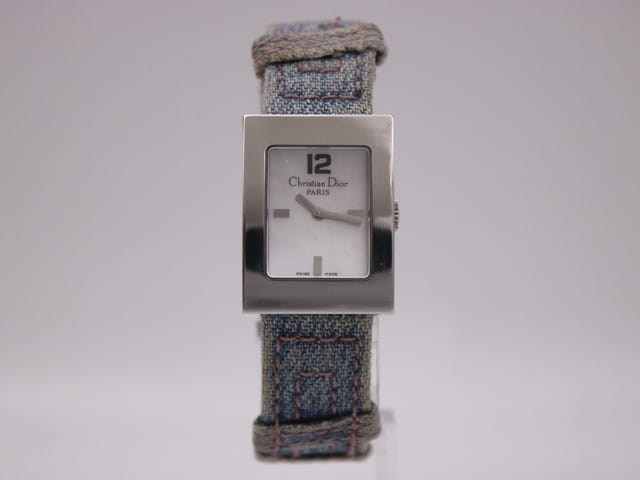
Vintage mother of pearl watches.
Nacre, the material behind every mother of pearl dial, is cut from shell instead of mixed from a tin of pigment, and that origin is why no two dials in this collection look quite the same. Raymond Weil and Tissot are the strongest presences here, leaning towards ladies' dress and cocktail pieces. A dial like this is bought as much for how it catches the light as for the time it tells, and that is best judged with the watch in hand rather than from a description alone.
Frequently asked questions
Is mother of pearl a real material or a printed effect?
Real. A mother of pearl dial is a thin slice of nacre, the iridescent inner shell layer, fitted to the watch as the dial surface itself rather than a printed or painted imitation of the look. That is also why no two dials are identical.
Why does a mother of pearl dial look different from every angle?
This is normal behaviour for the material, not a fault, so do not expect a mother of pearl dial to look identical in a photo taken under a single light. If a specific shade matters to you, more pink or more grey in the surface for example, ask us and we can describe it against a plain background or take an extra photo in natural daylight.
Is mother of pearl fragile?
It is a natural material and a little more delicate than a painted metal dial, so we would avoid knocks and abrasive cleaning. We check dial condition on every piece and describe any chips or wear honestly in the listing.
Are mother of pearl watches only made for women?
In this collection, yes, almost entirely. The dials turn up on ladies' dress and cocktail watches far more often than on men's pieces, which reflects the long-standing use of the material rather than a rule we apply ourselves.