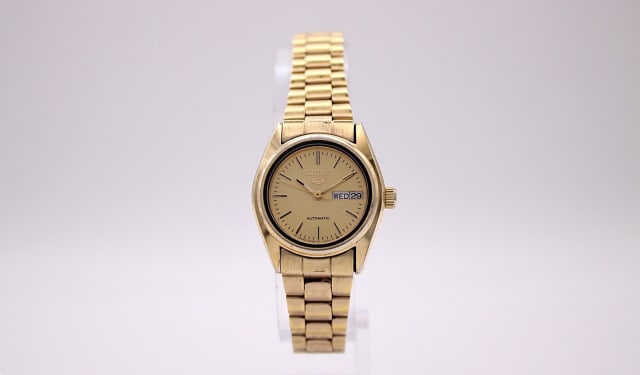
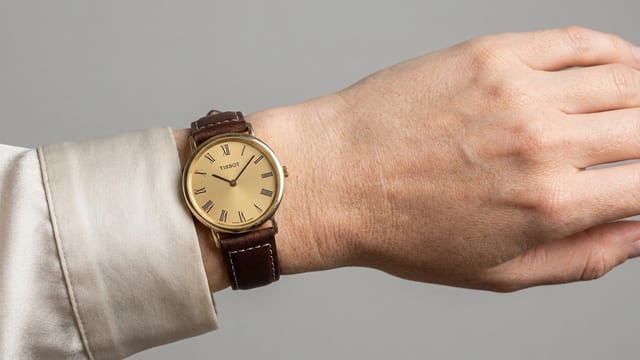
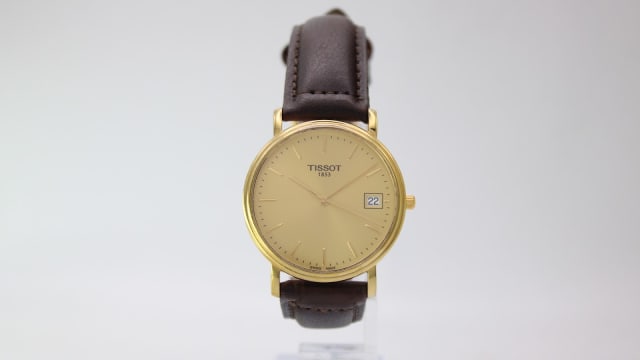
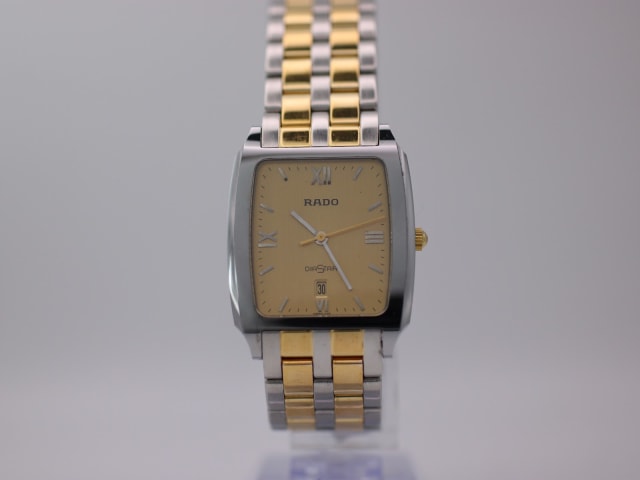
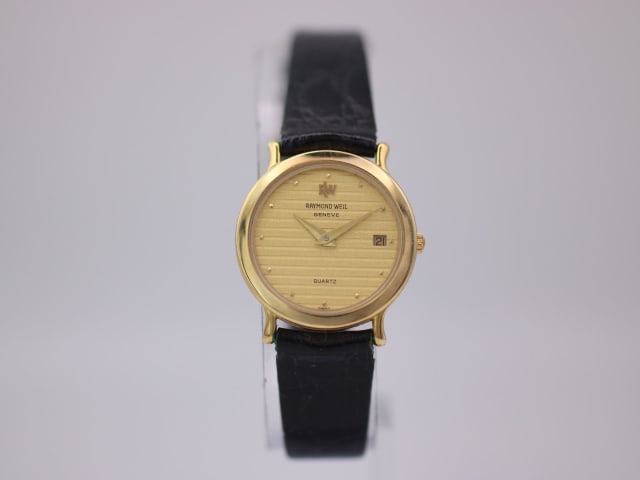
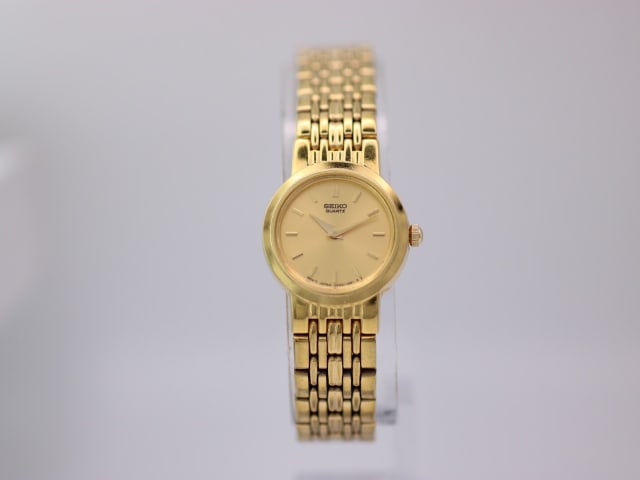
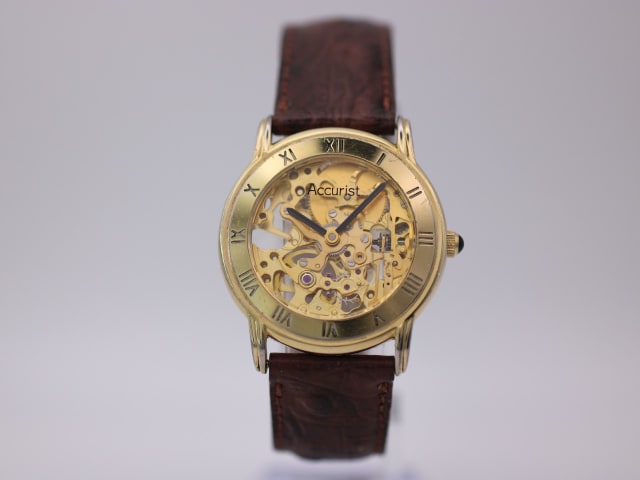
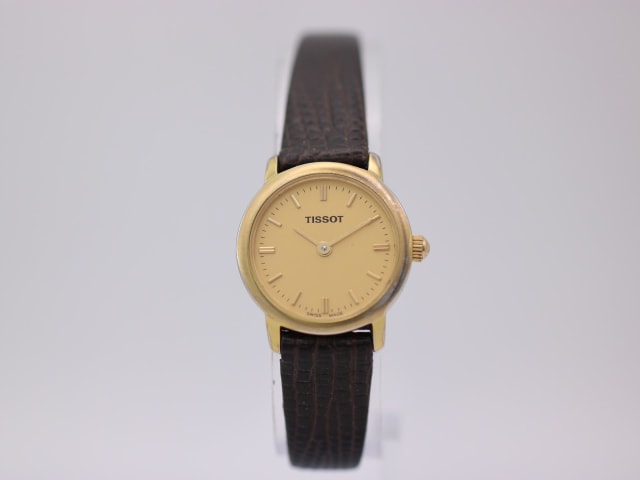
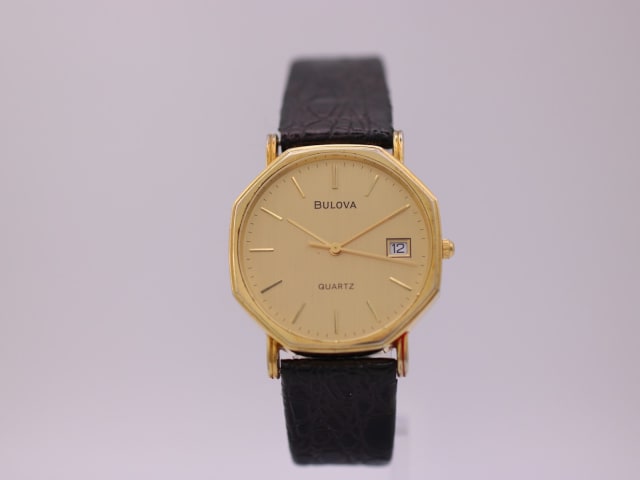
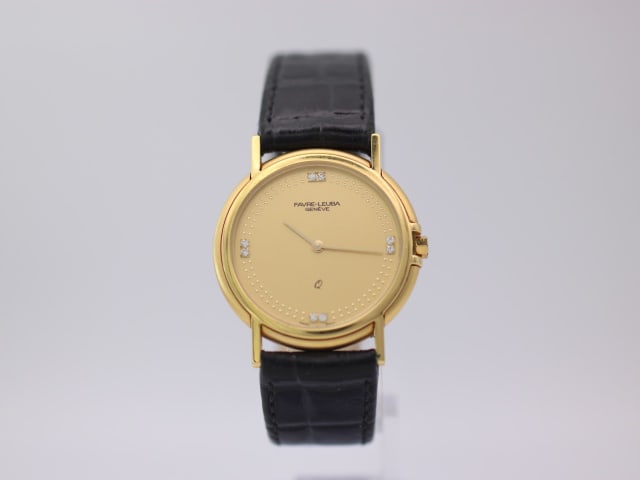
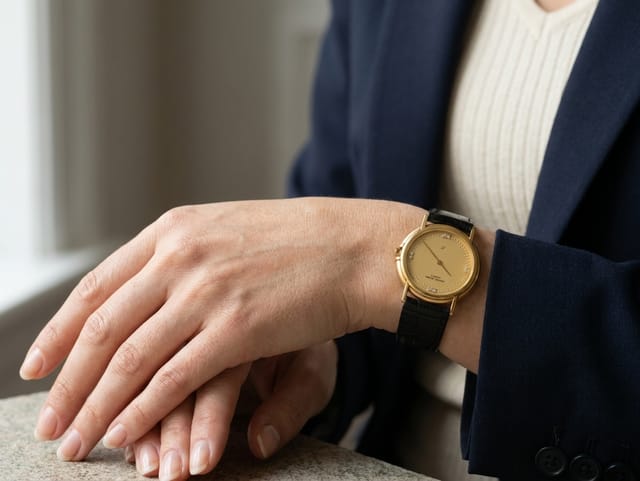
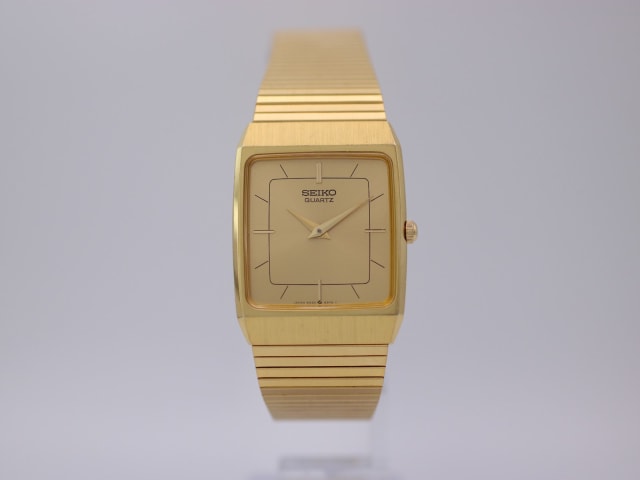
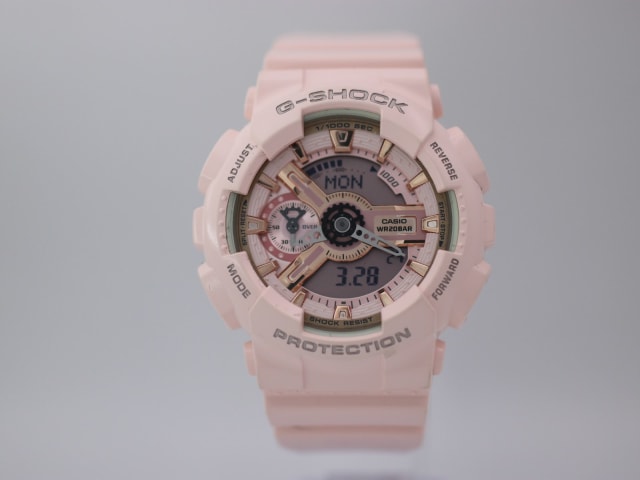
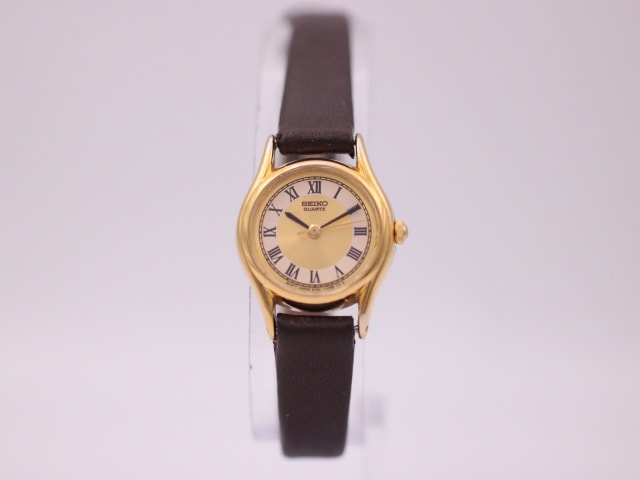
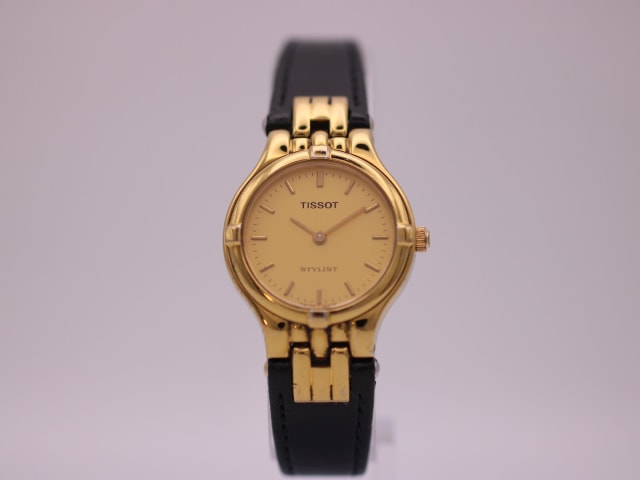
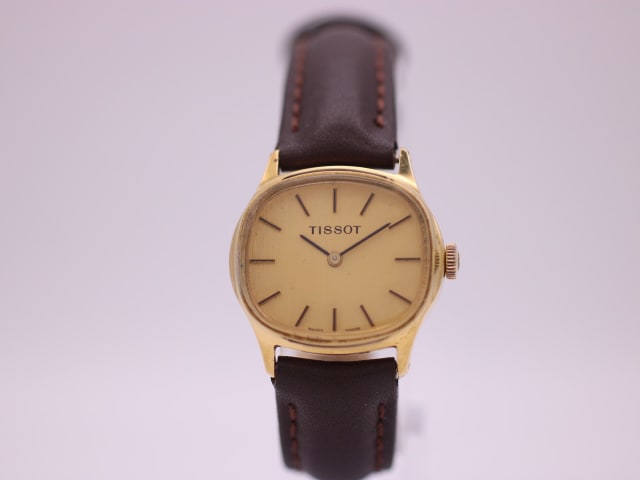
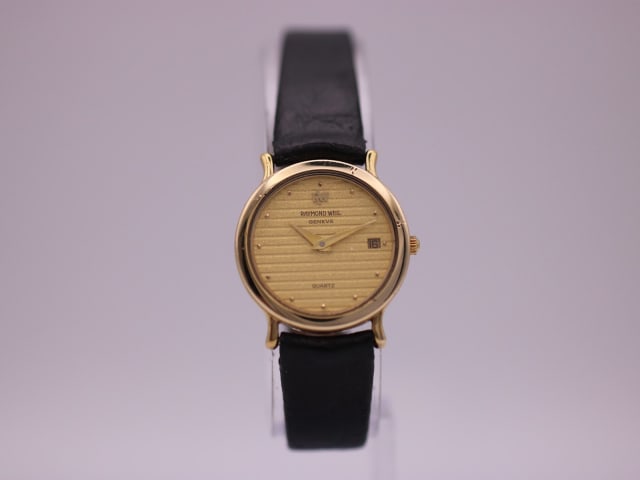
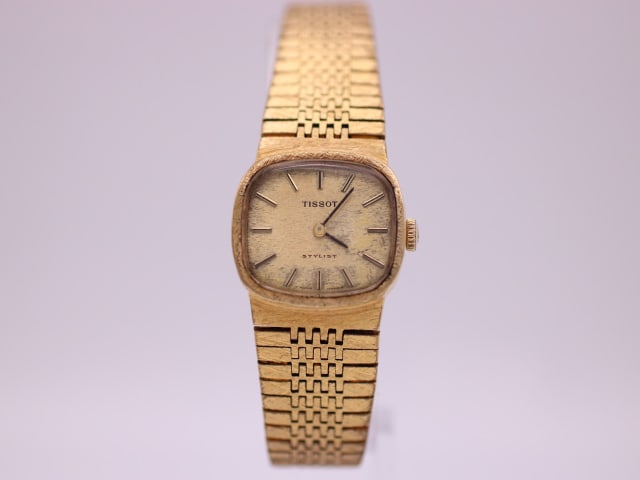
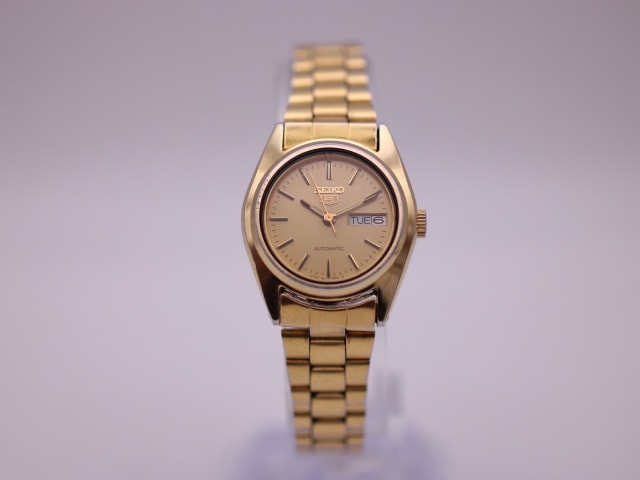
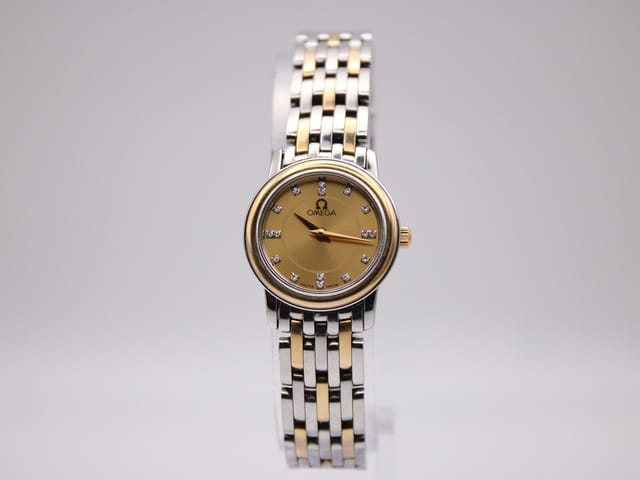
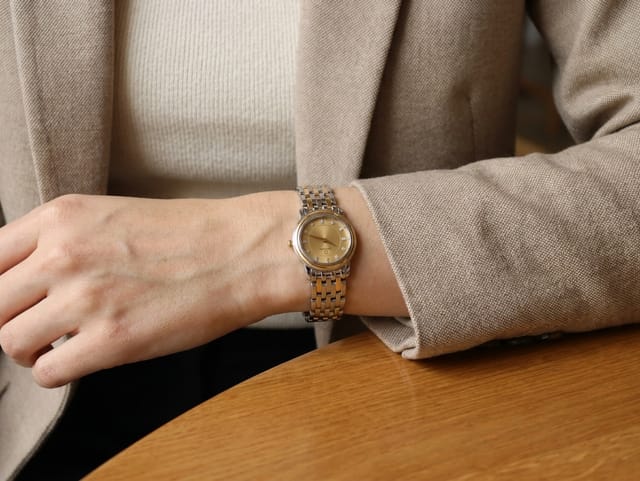
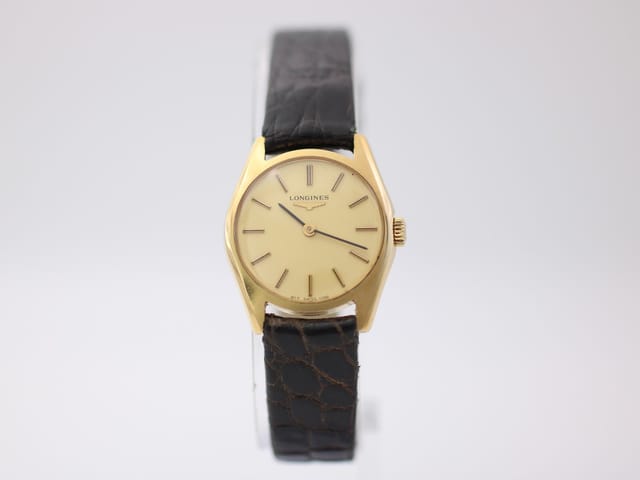
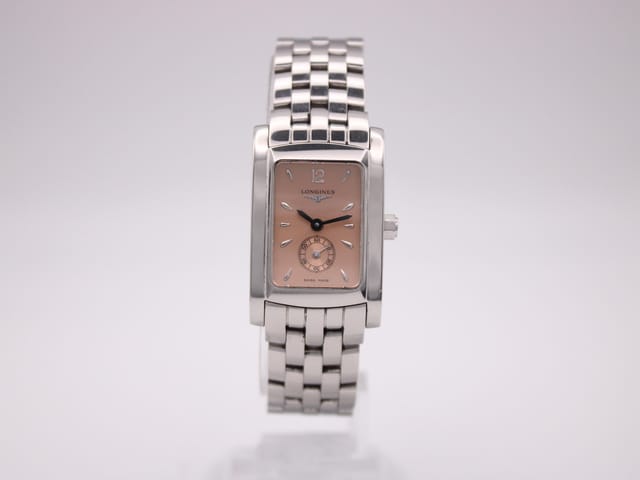
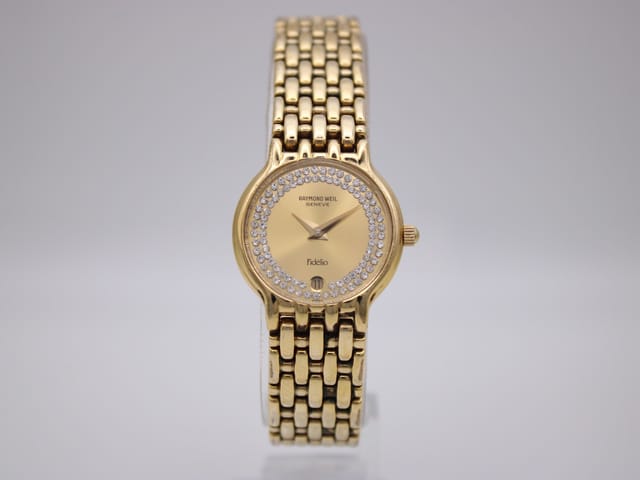
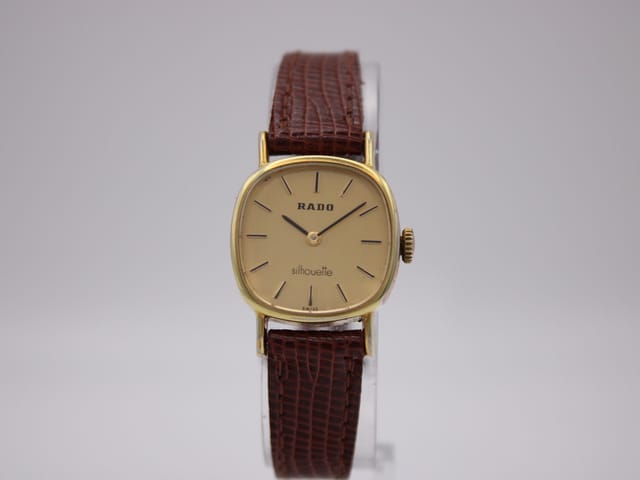
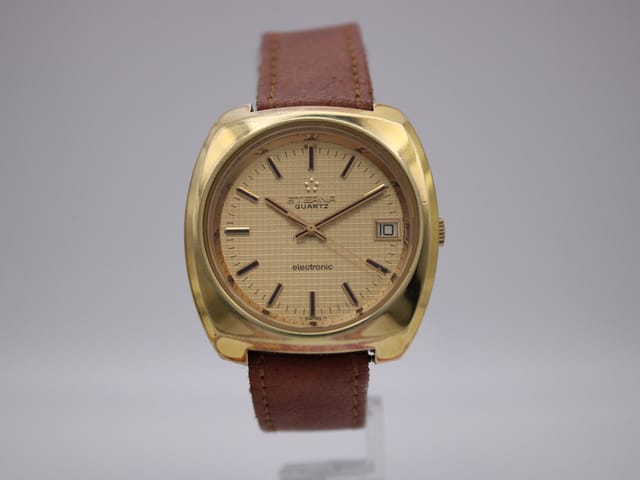
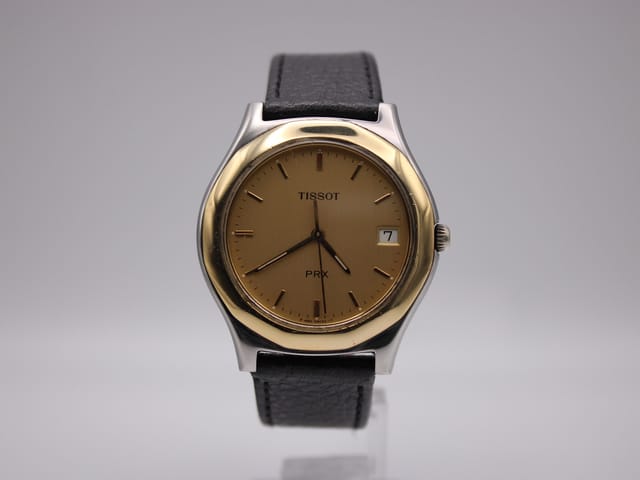
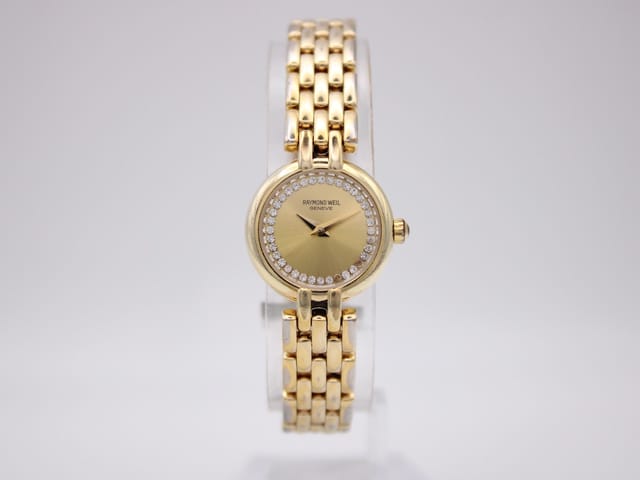
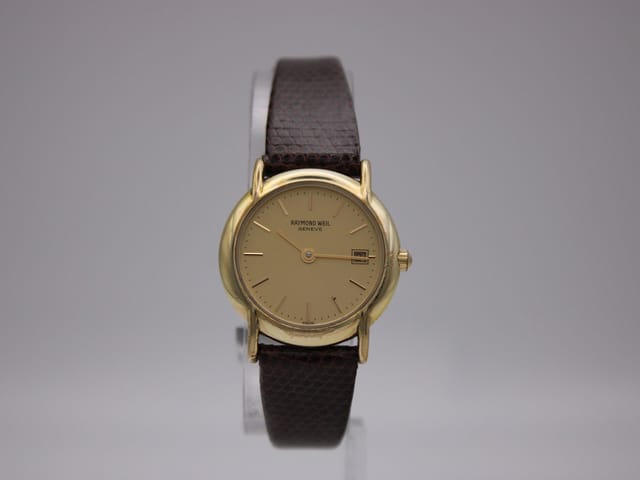
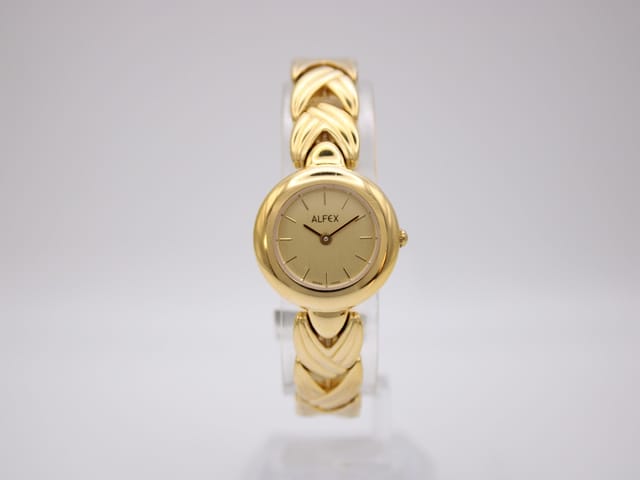
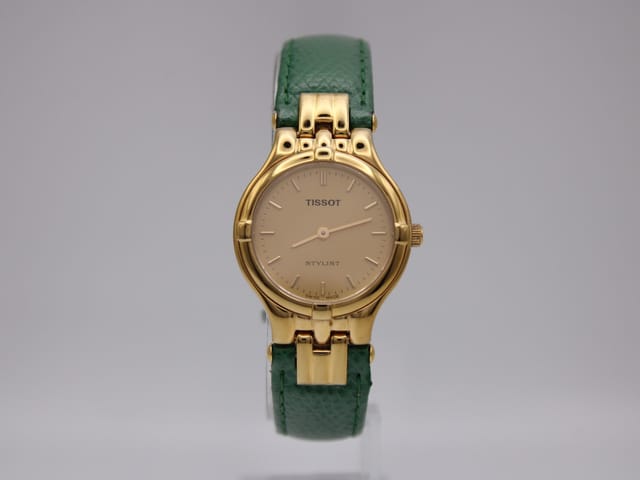
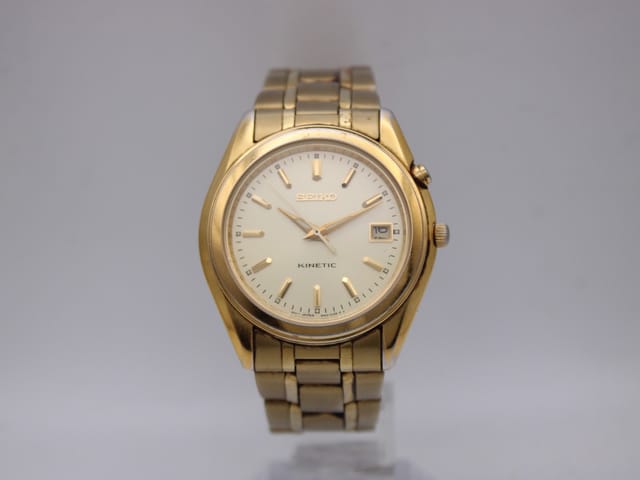
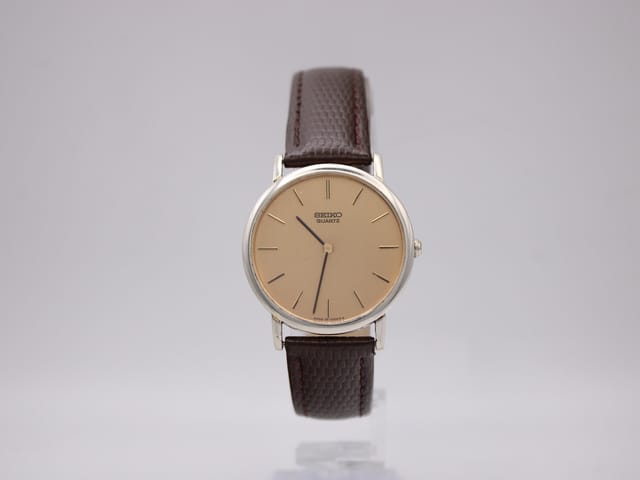
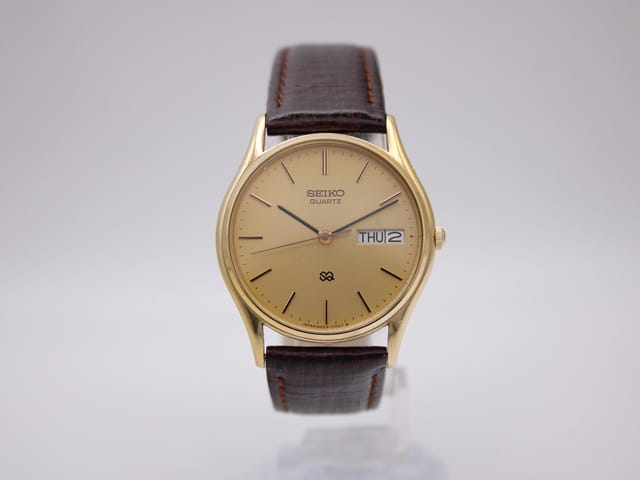
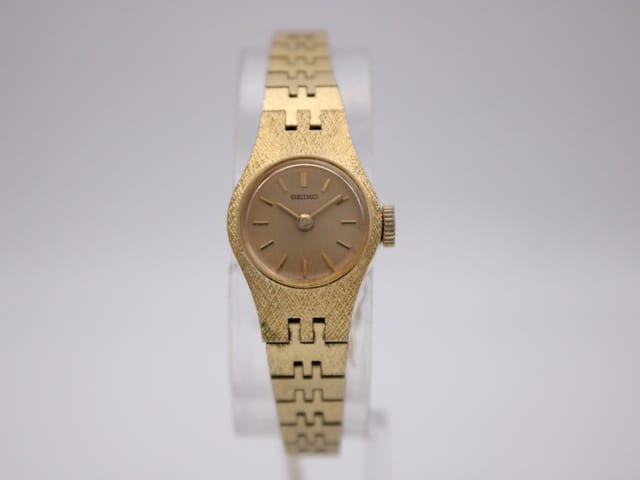
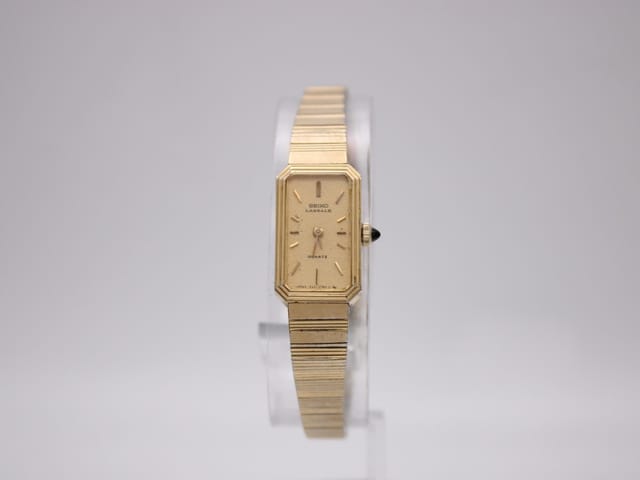
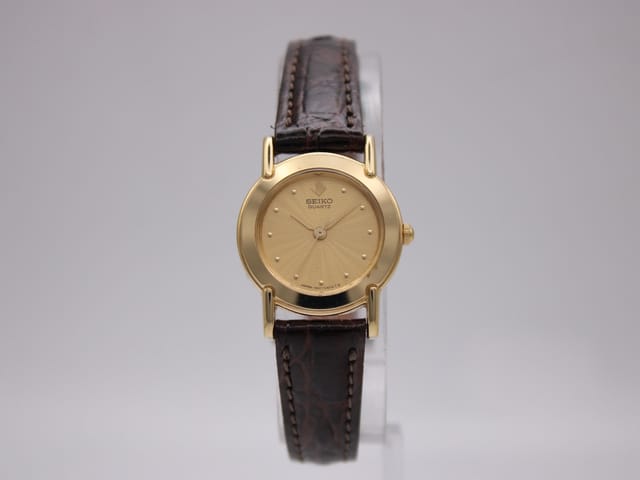
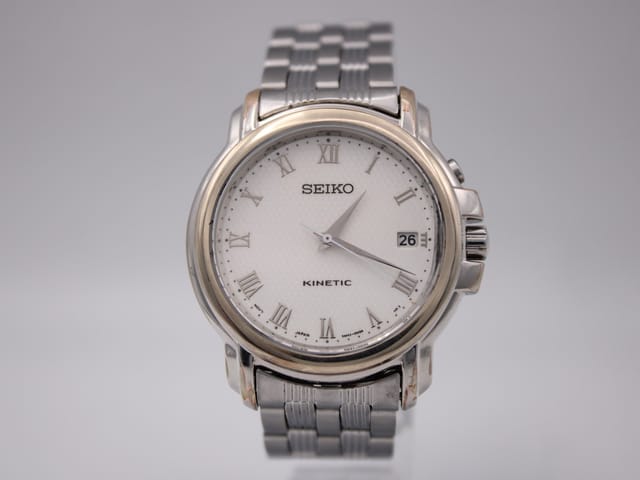
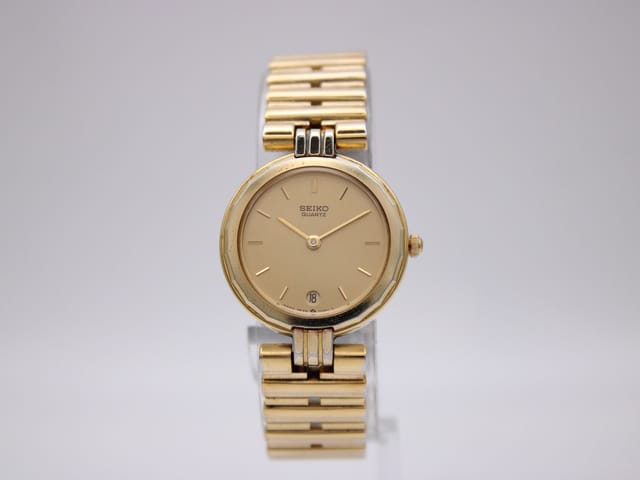
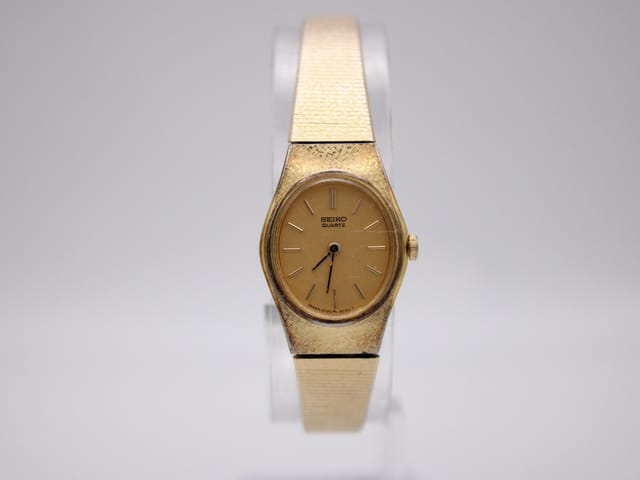
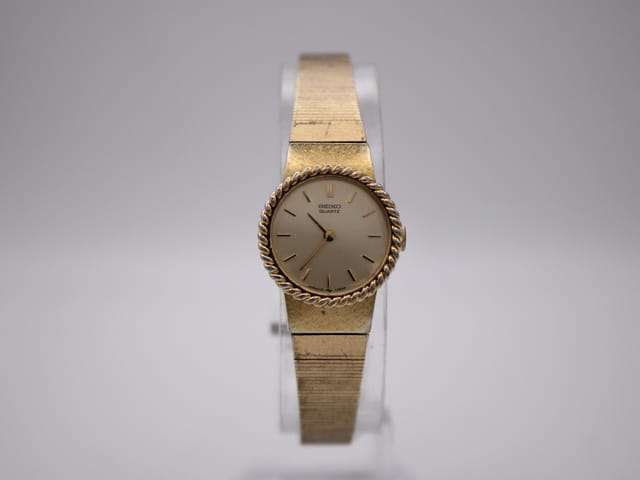
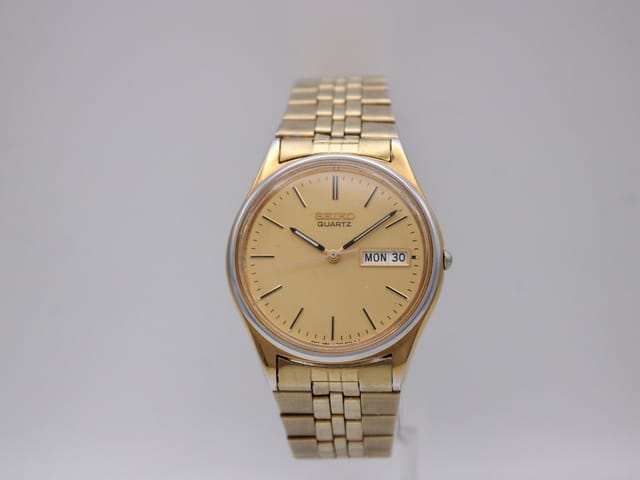
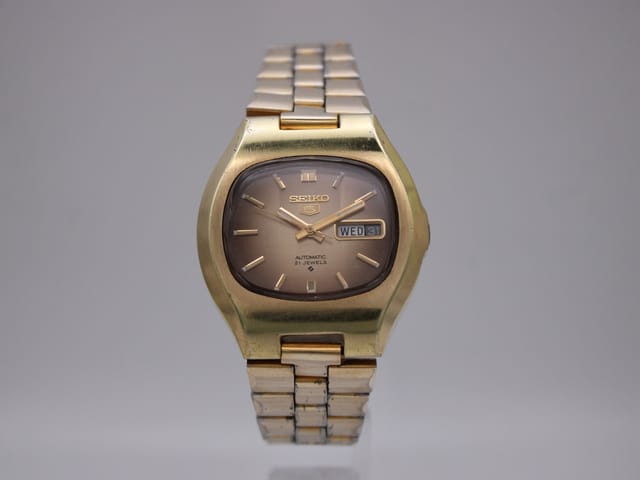
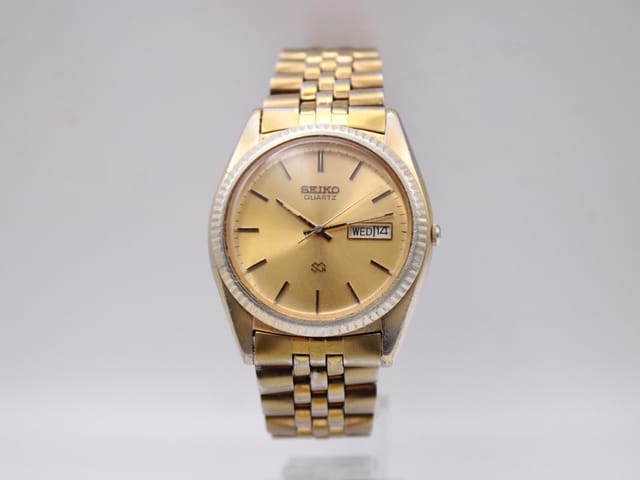
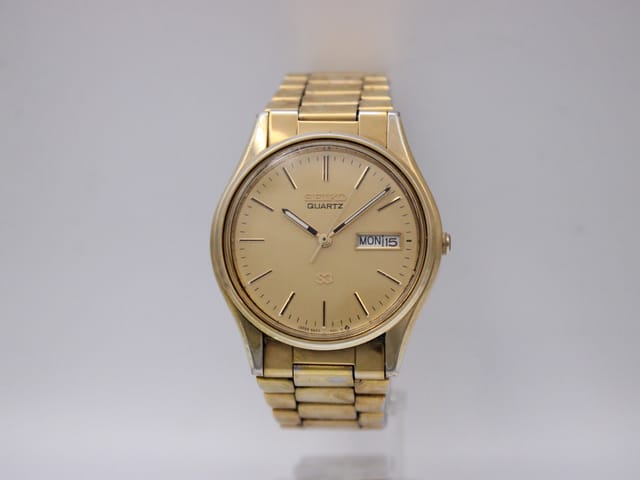
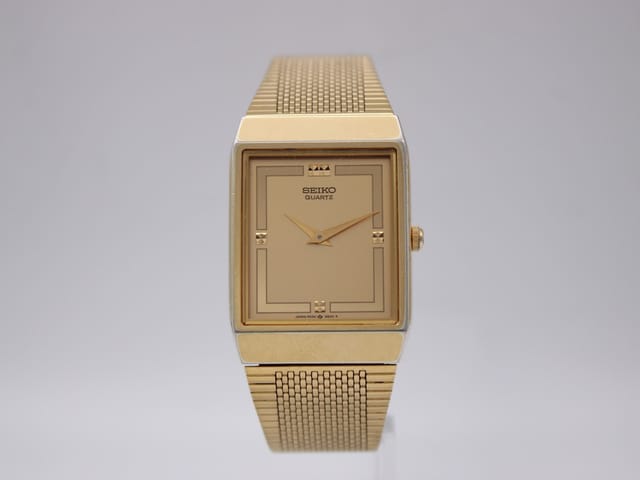
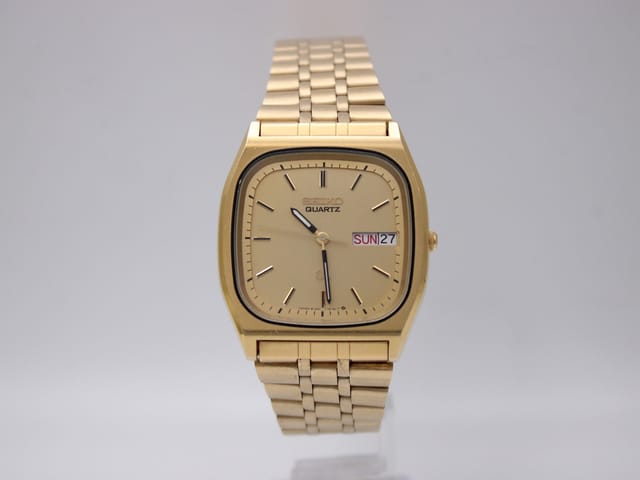
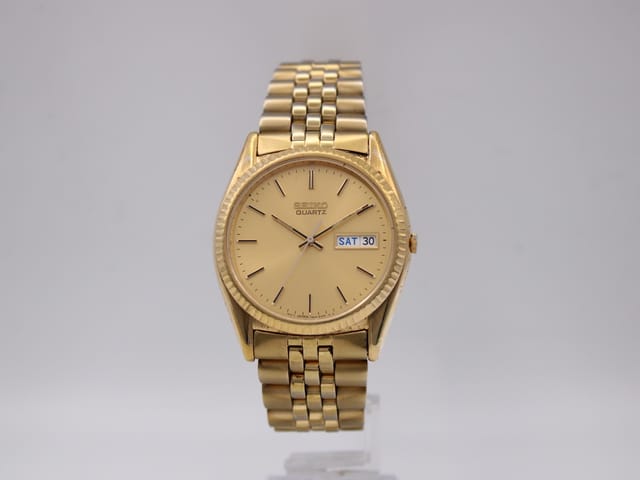
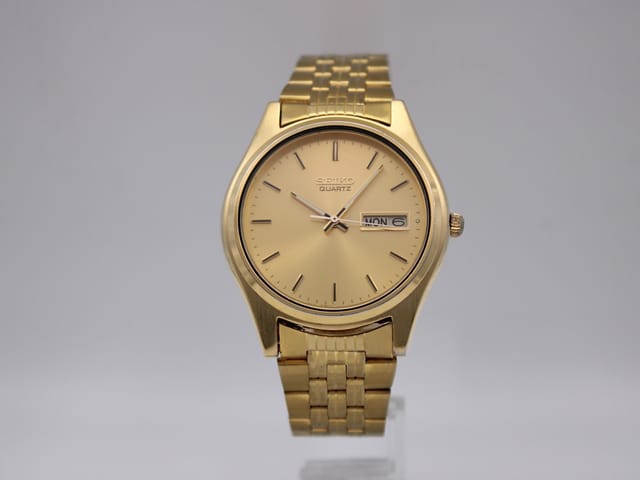
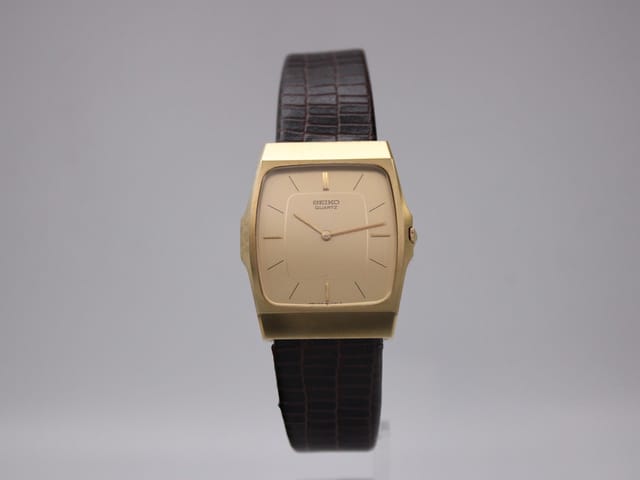
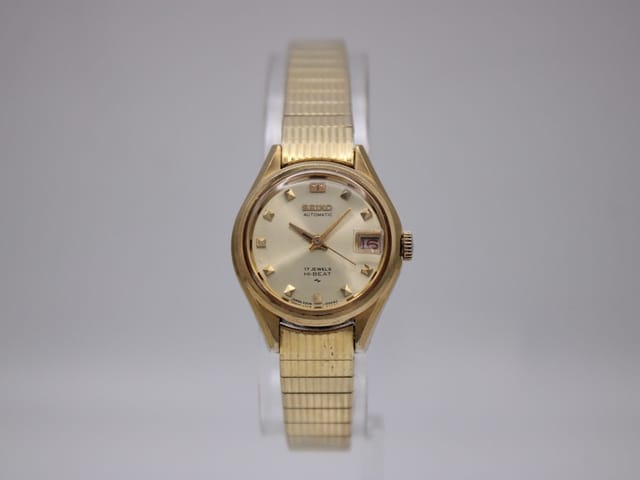
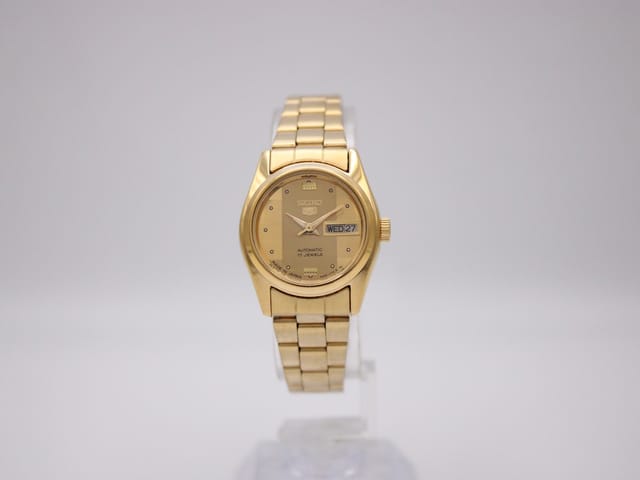
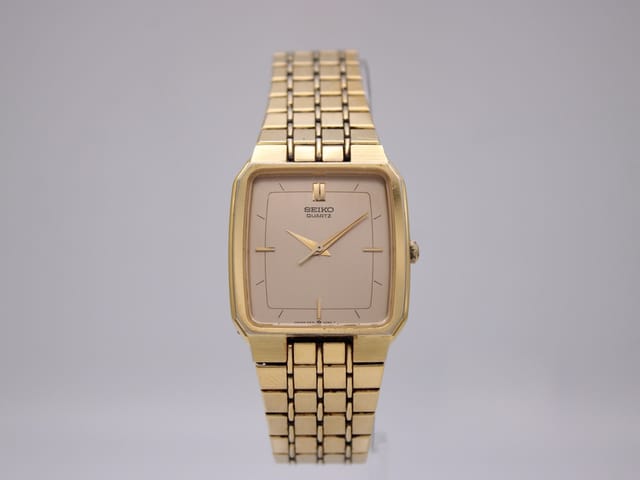
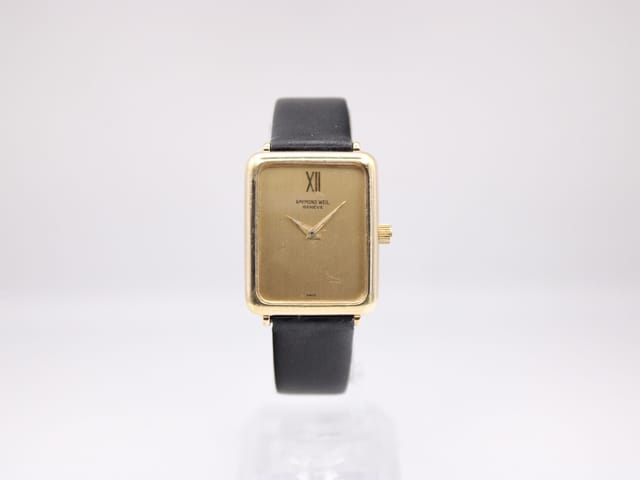
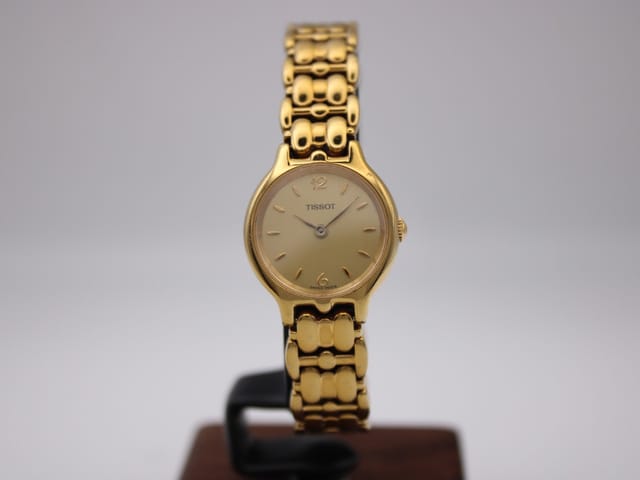
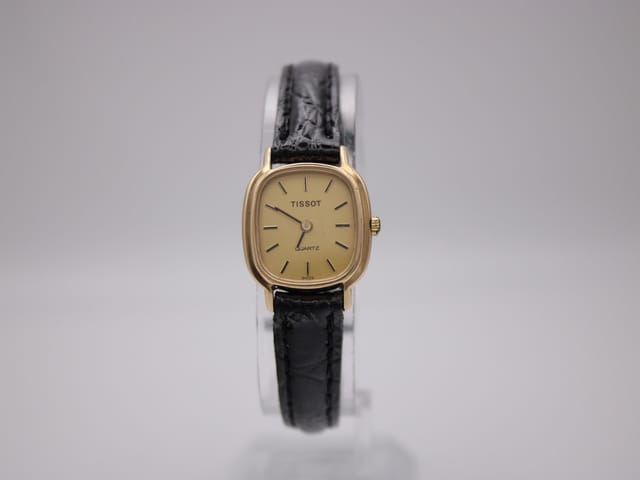
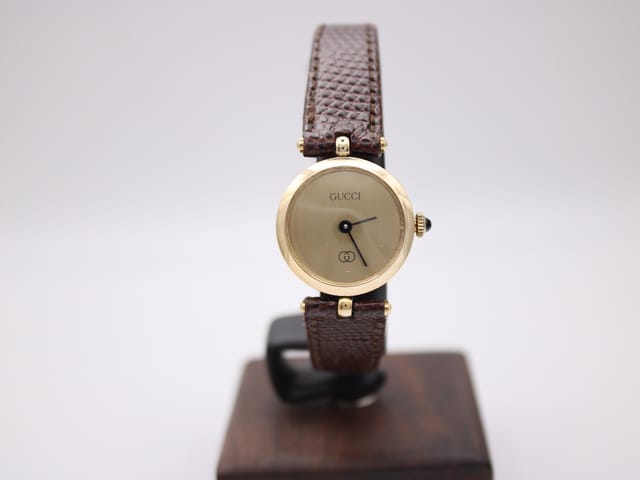
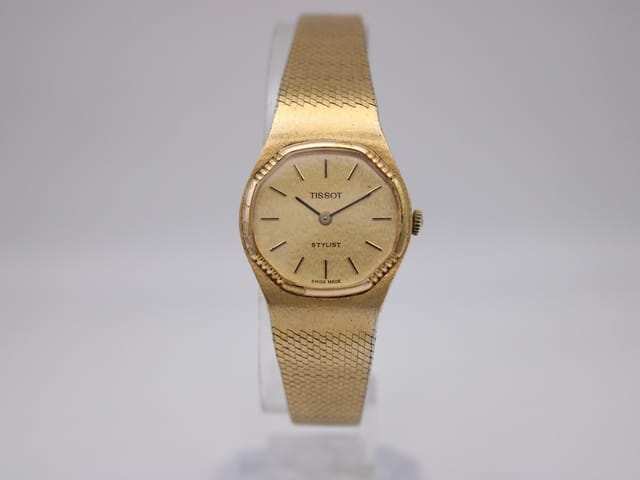
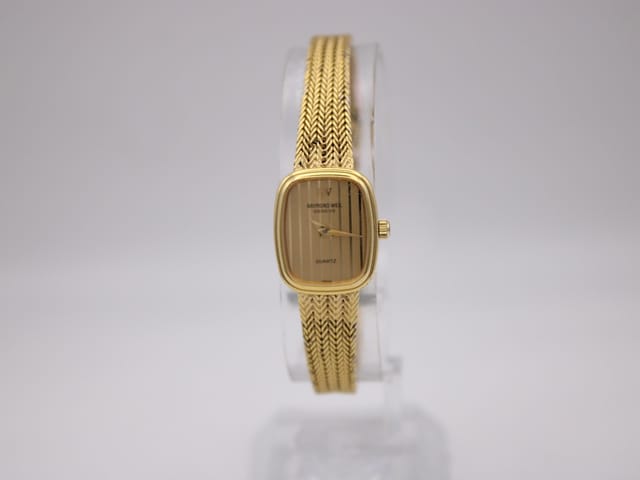
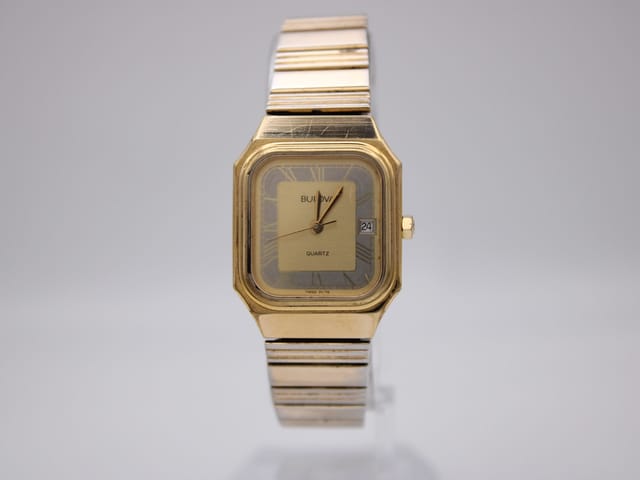
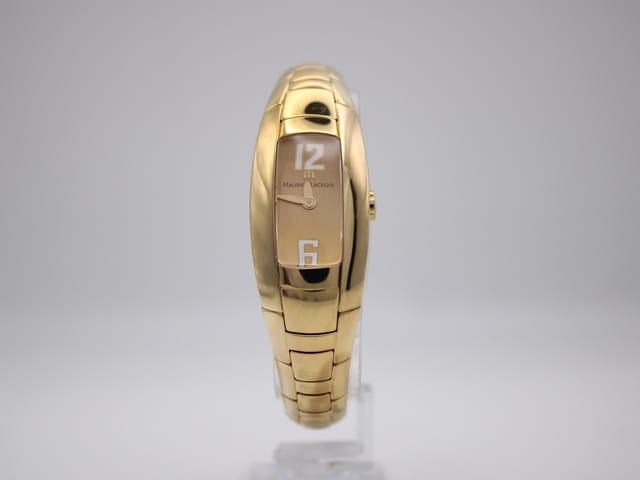
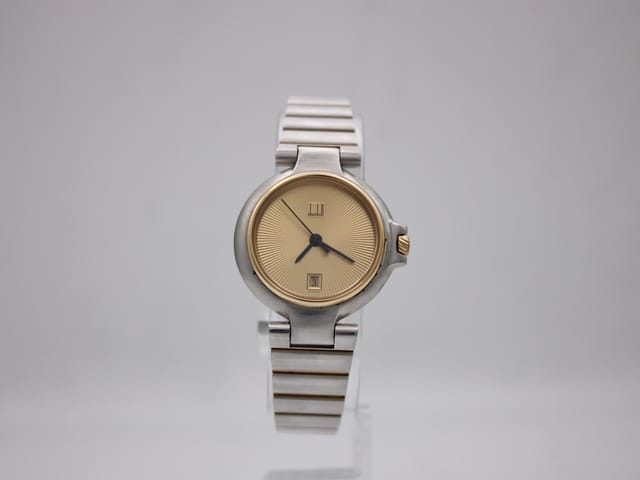
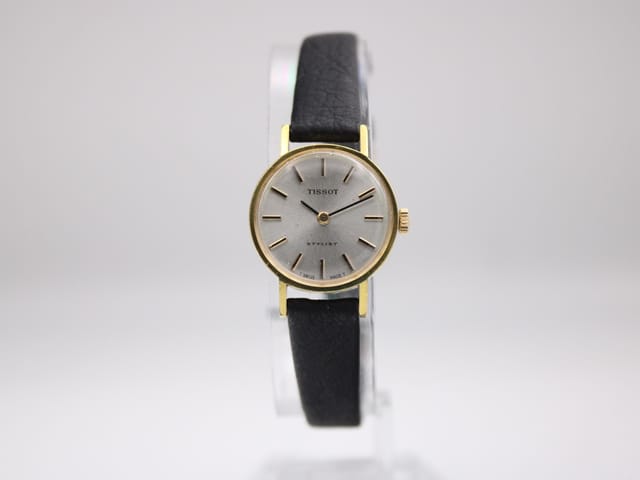
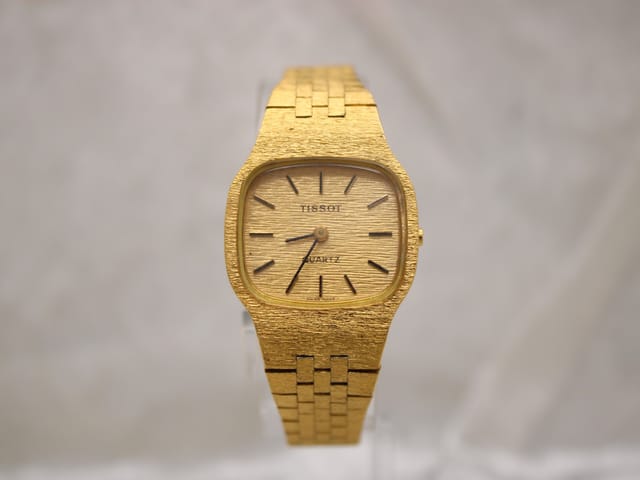
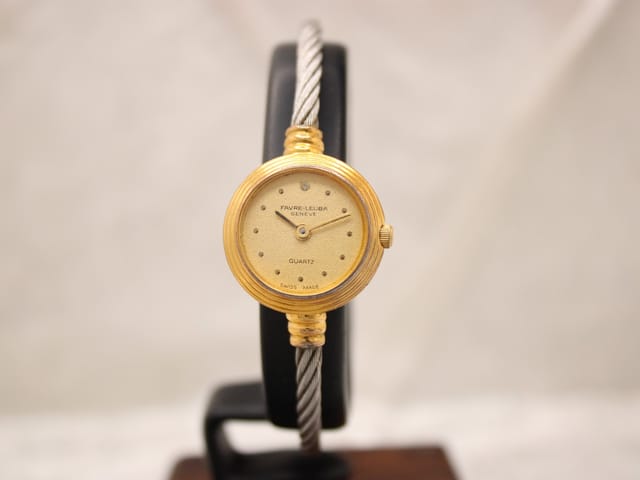
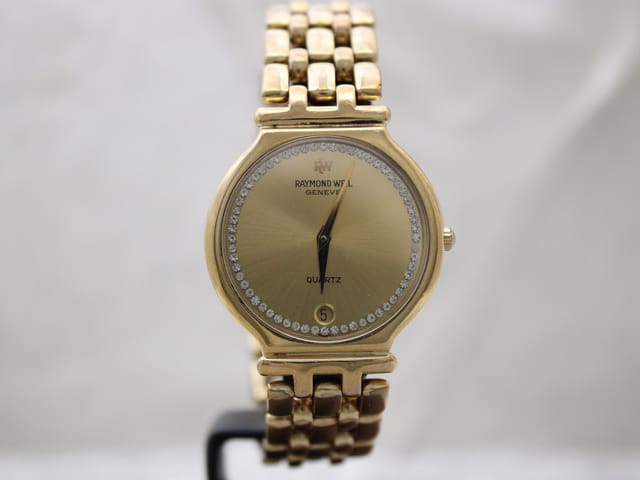
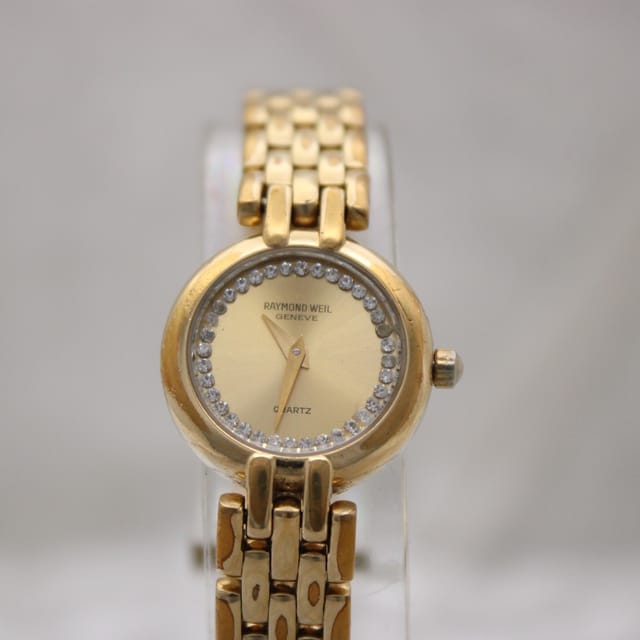
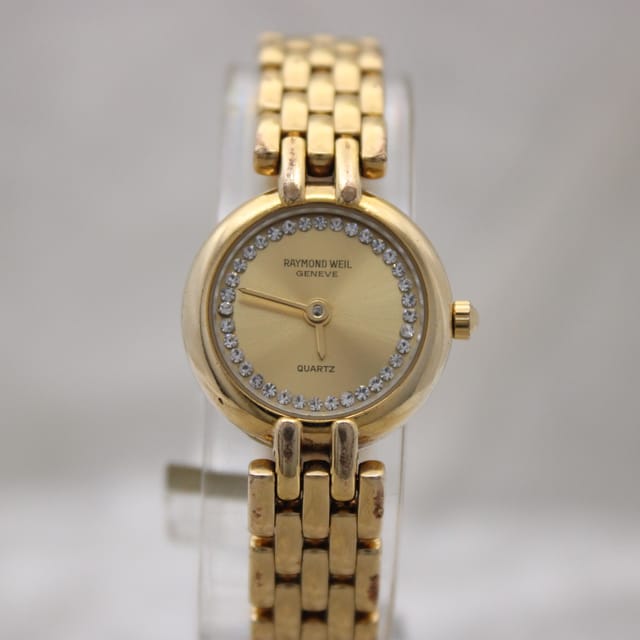
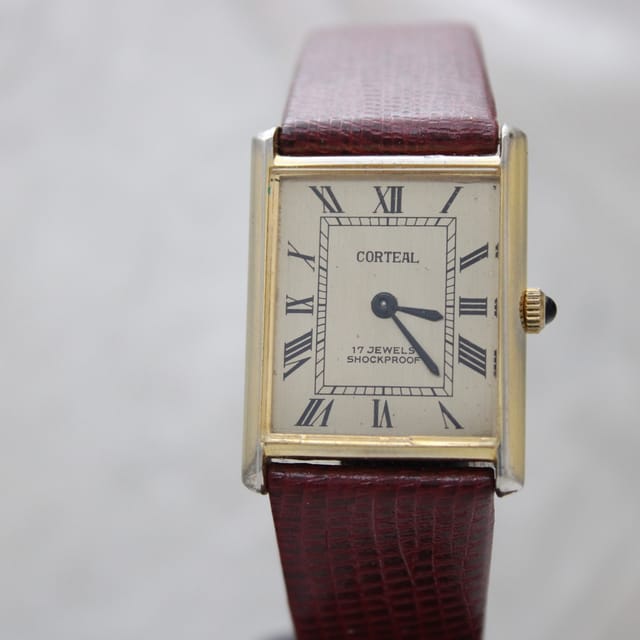
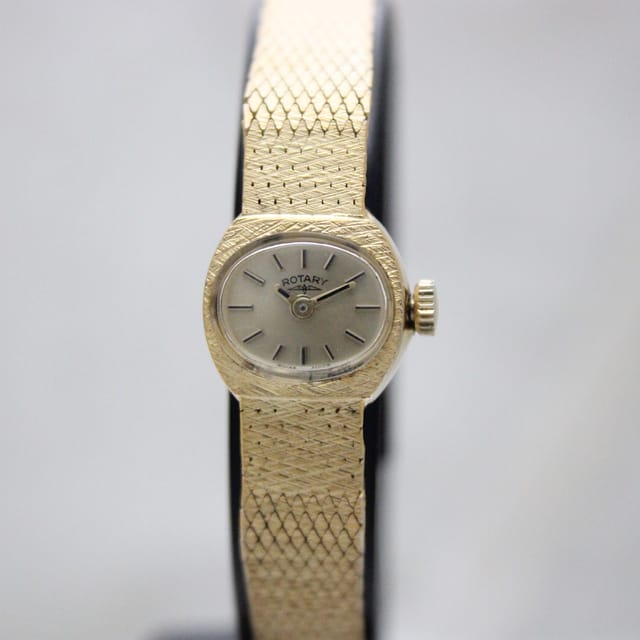
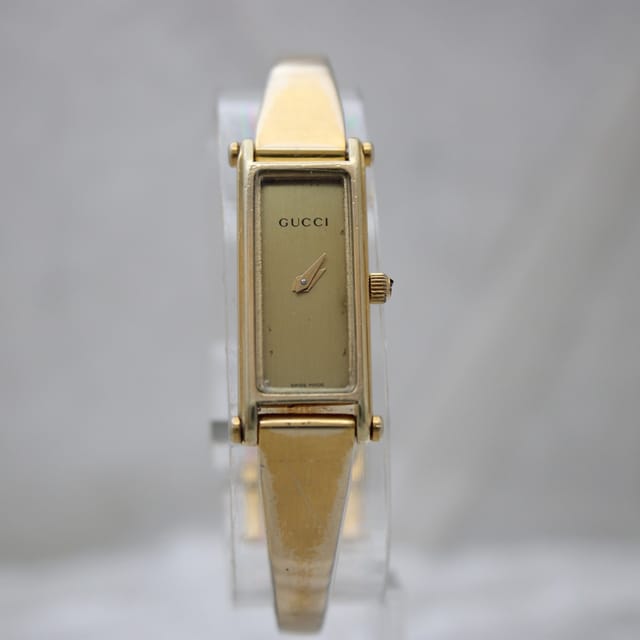
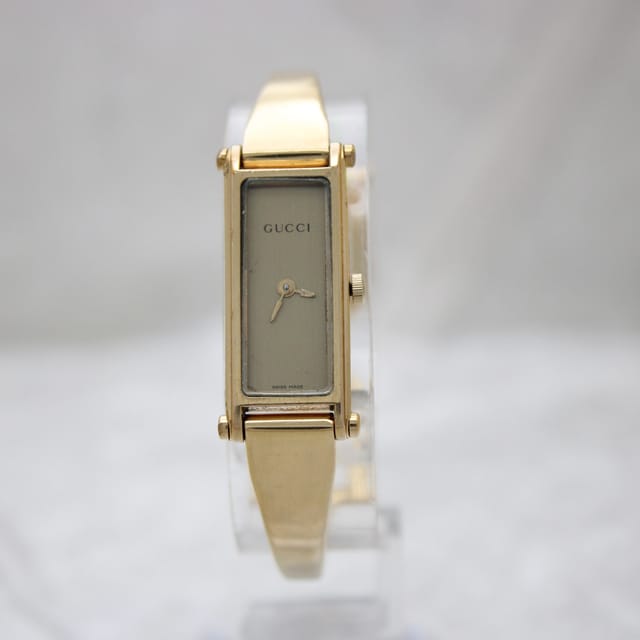
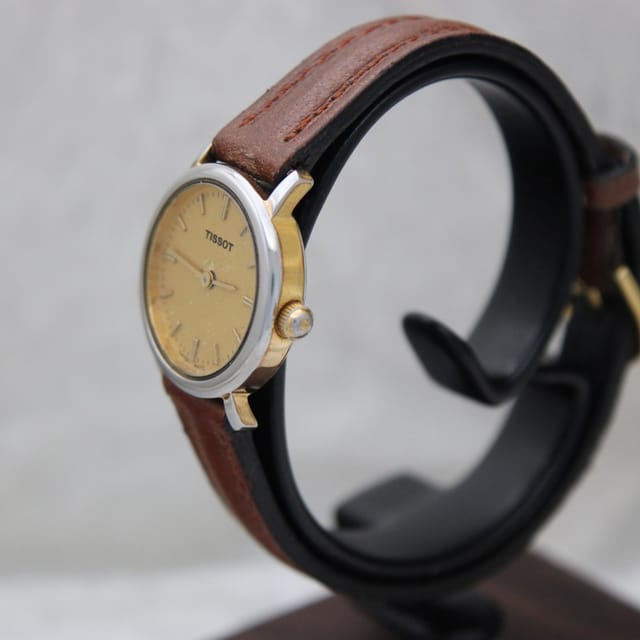
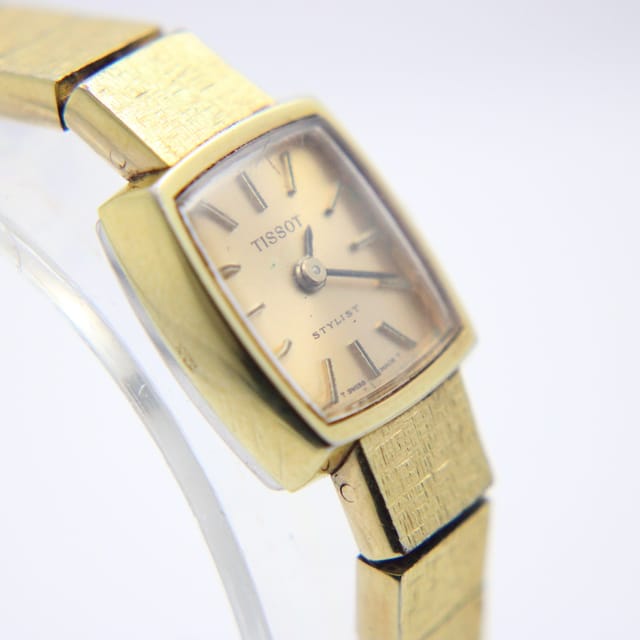
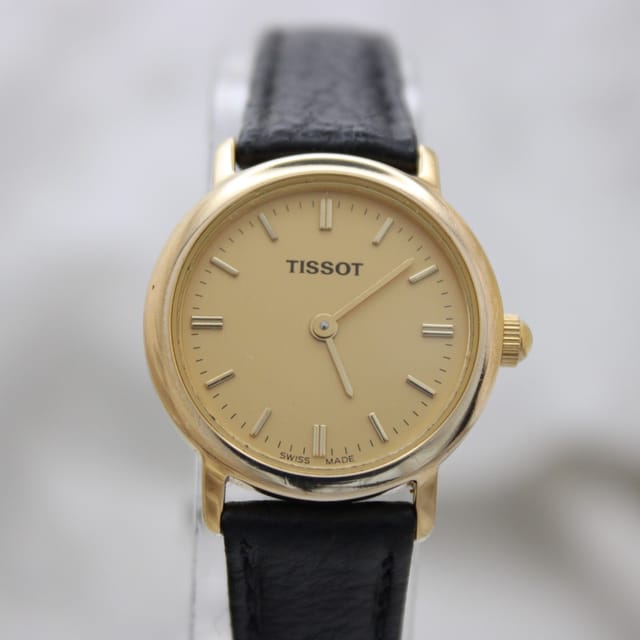
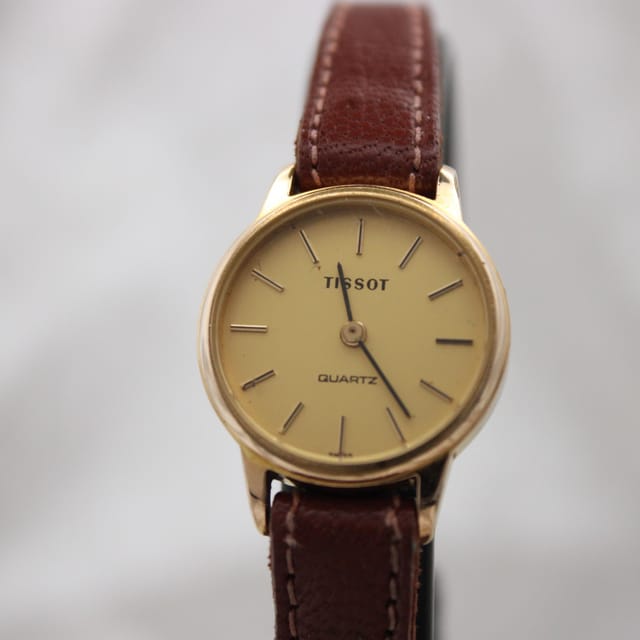
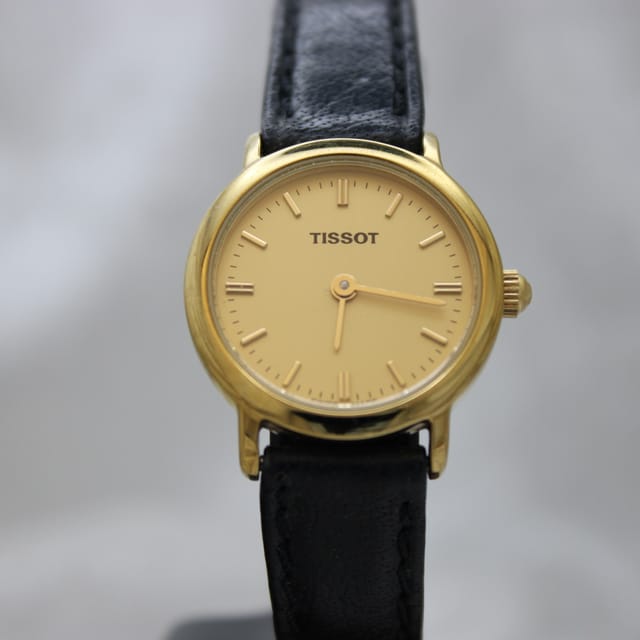
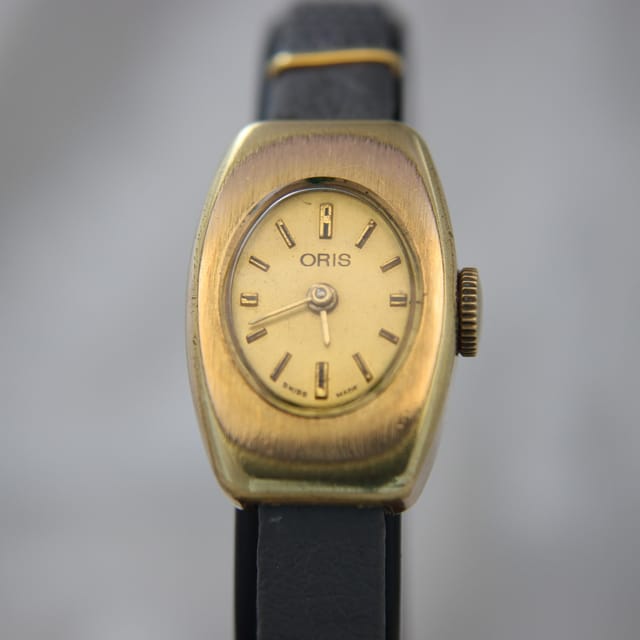
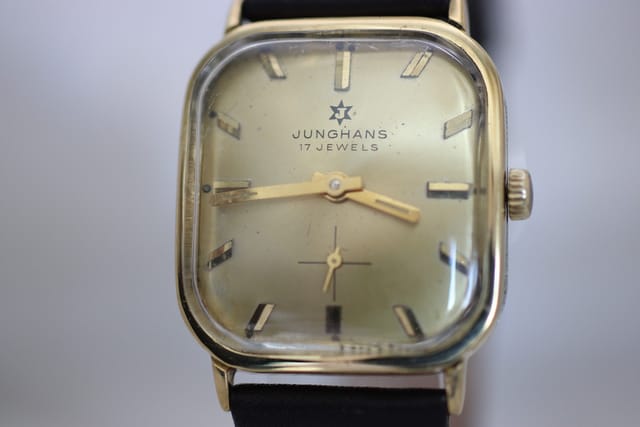
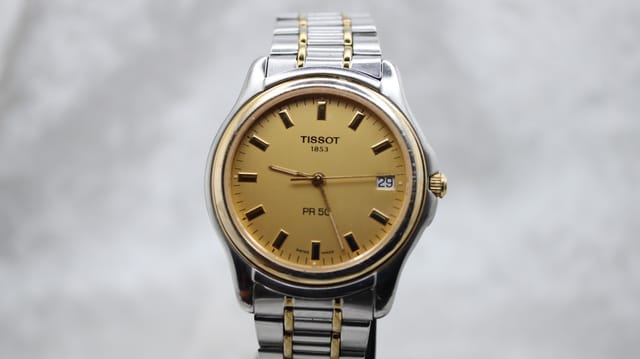
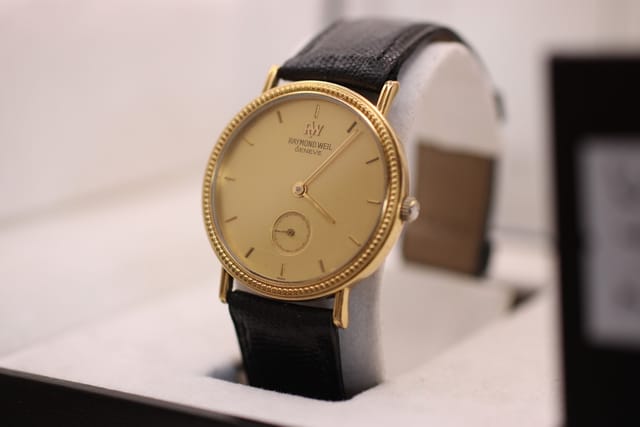
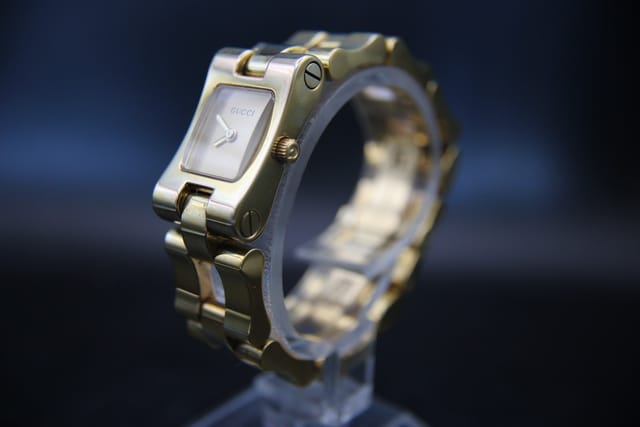
Vintage gold dial watches.
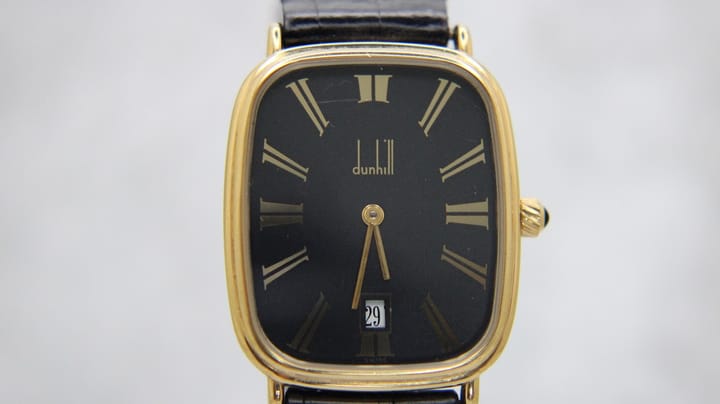
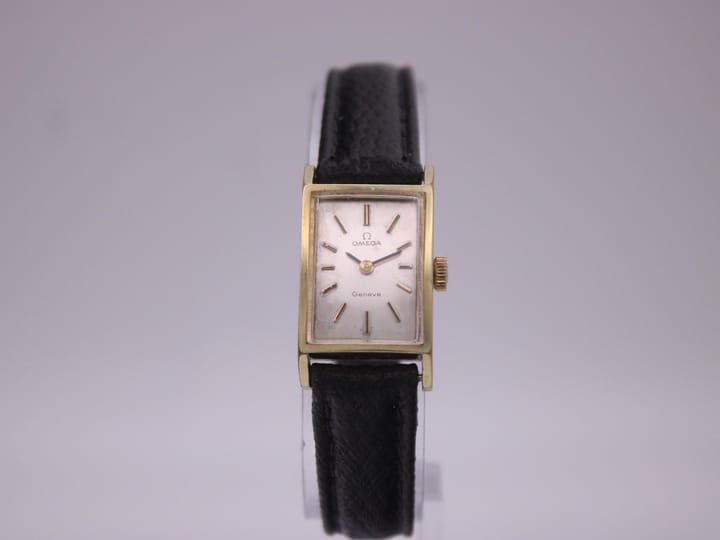
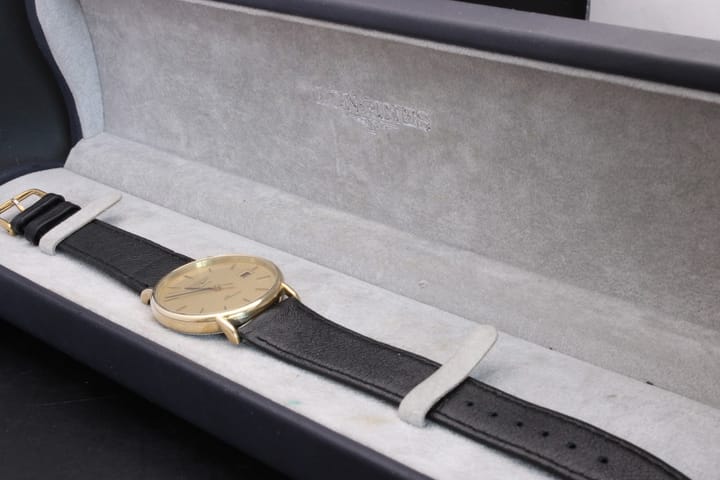
A dial catalogued simply as gold can look anywhere from a deep, warm bronze to a bright, pale sheen depending on the finish underneath it, and that range is worth knowing before judging a listing from its title alone. Tissot and Seiko are the strongest presences in this collection. Most of these watches also carry a gold-tone case, chosen to match the dial at the factory, though a handful do not, and this collection catches those on dial colour regardless of what the case turns out to be.
Frequently asked questions
Does a gold dial work with a case that isn’t gold-toned?
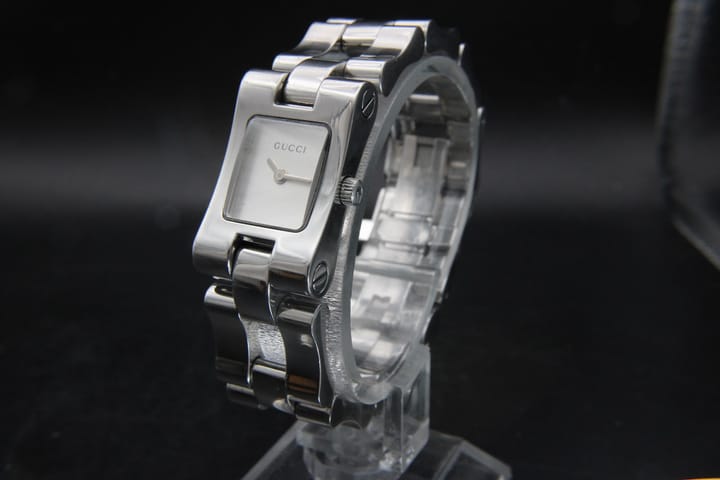
Yes. A small number of watches in this collection pair a gold dial with a biometal, silver-tone or rose gold case rather than plain gold, and the contrast between a cooler case and a warm dial can look sharper than a fully matched gold-on-gold watch.
Does a gold dial wear differently to a gold-plated case?
Generally yes. A gold dial, whether printed, brushed or sunburst, tends to hold its colour more consistently than a plated case, which can thin at points of repeated contact such as a bracelet clasp. We check and describe the two independently on every listing.
Is a gold dial the same colour as a champagne dial?
Not quite. Gold reads more metallic and often brighter or more saturated; champagne is a warmer, creamier gold tone without the same shimmer. We record them as separate dial colours on our listings rather than treating one as a looser version of the other.
Is a gold dial the same as gold-tone hands and markers?
No. The dial colour we record describes the dial surface itself, and the hands and markers are best judged from the listing photographs. Most gold dial watches pair them in the same warm tone, but that isn't guaranteed by the dial colour alone, so it is worth checking the photographs for the specific combination.