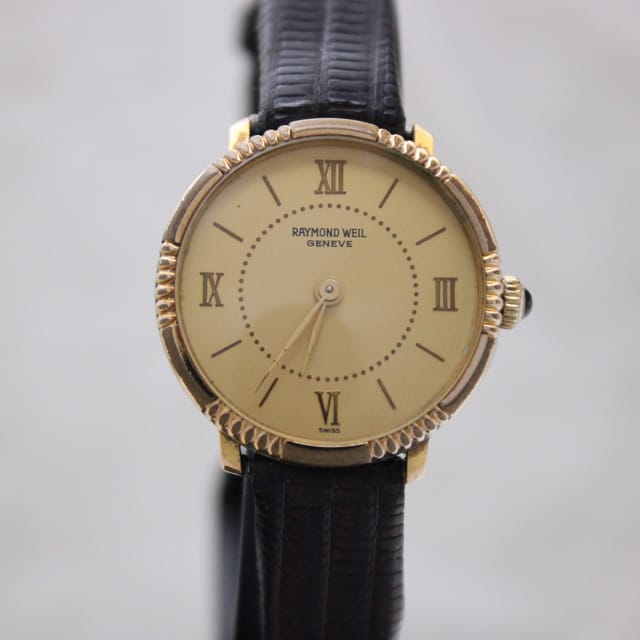
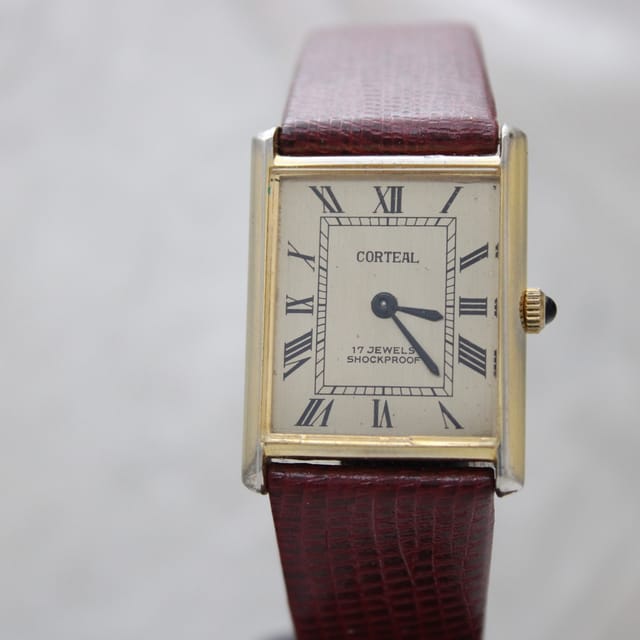
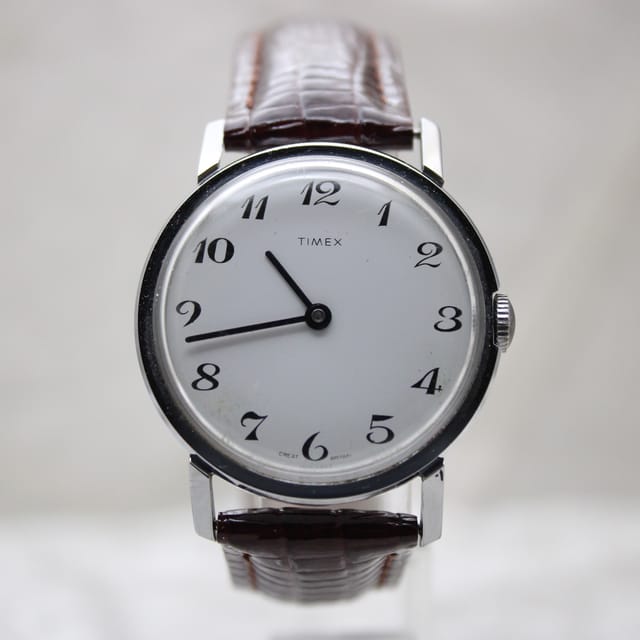
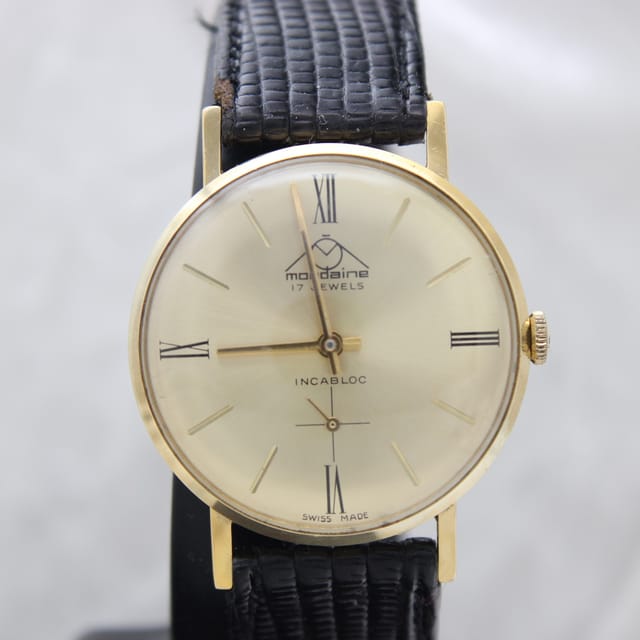
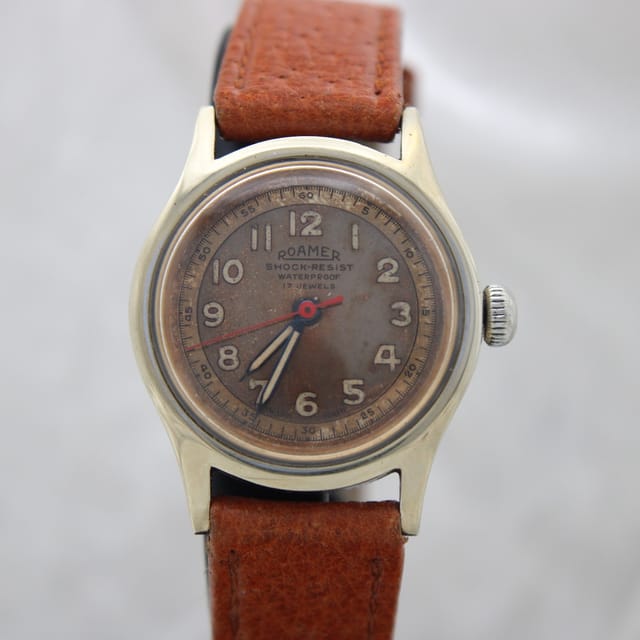
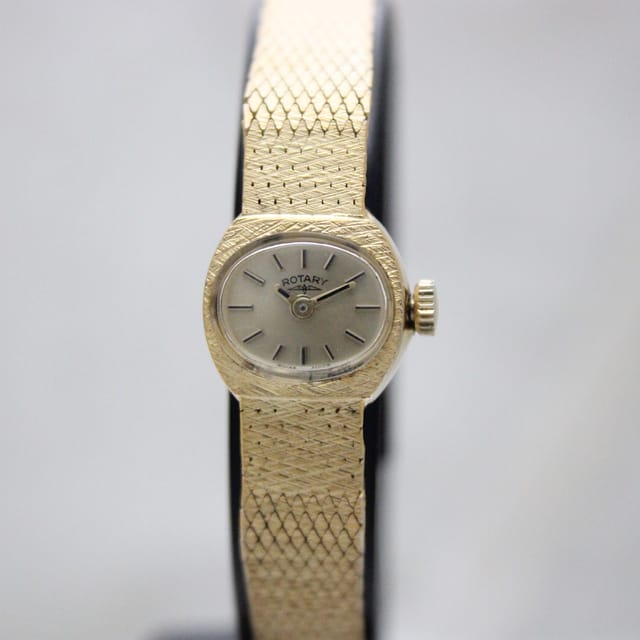
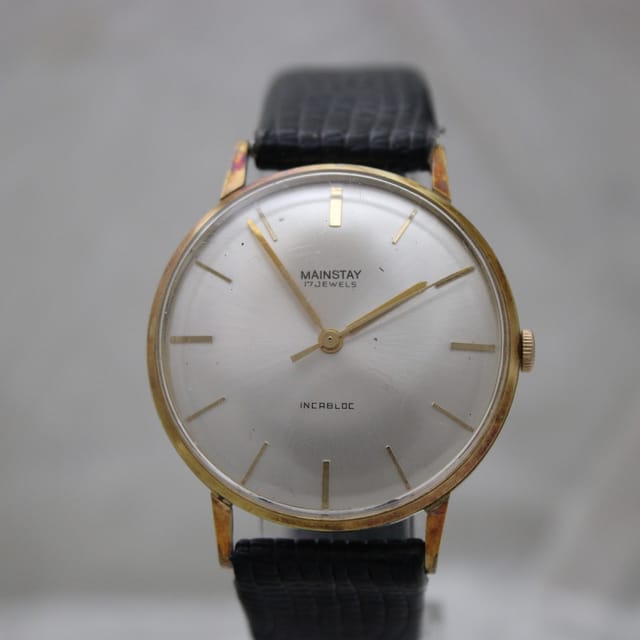
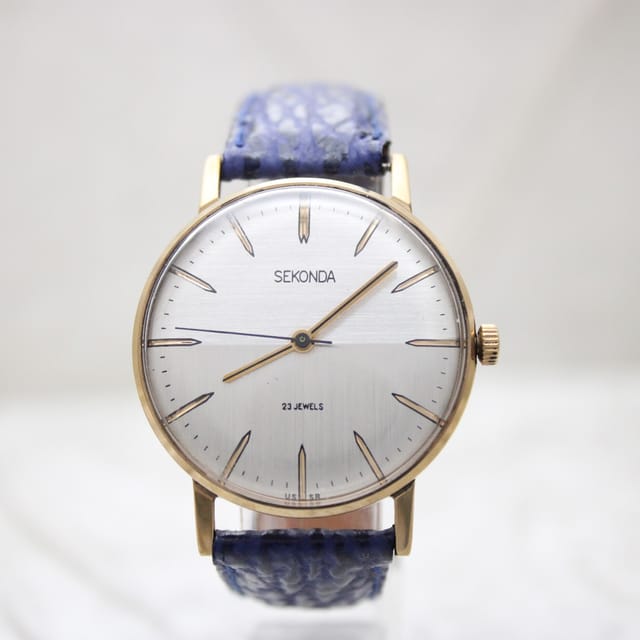
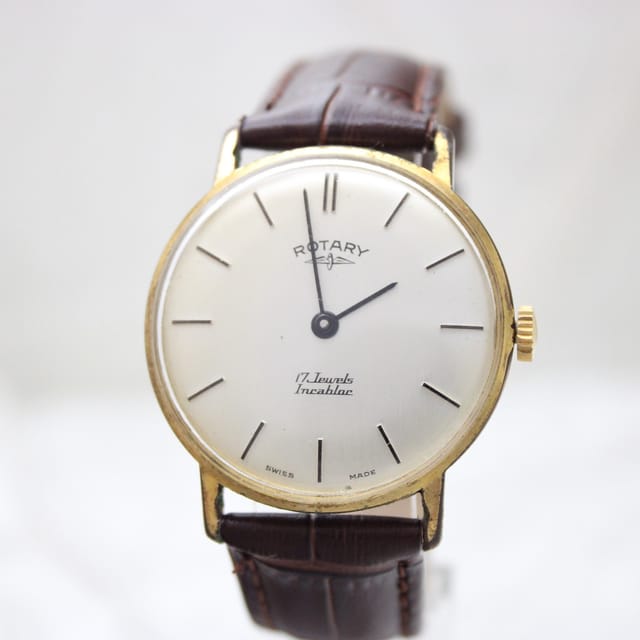
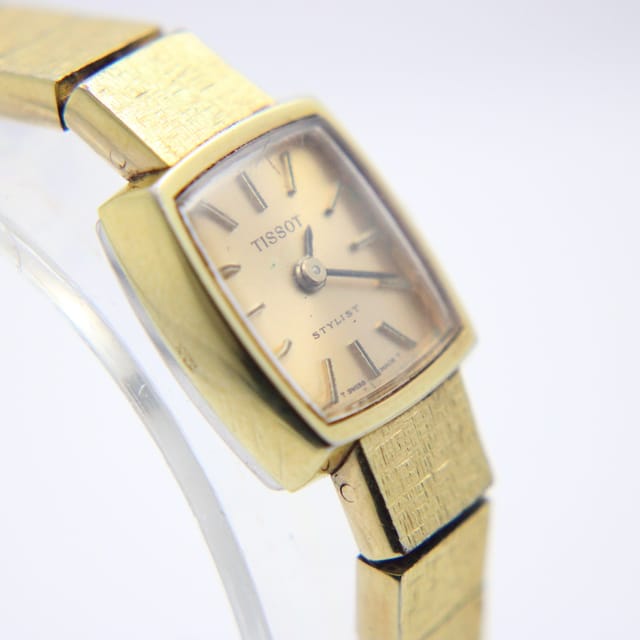
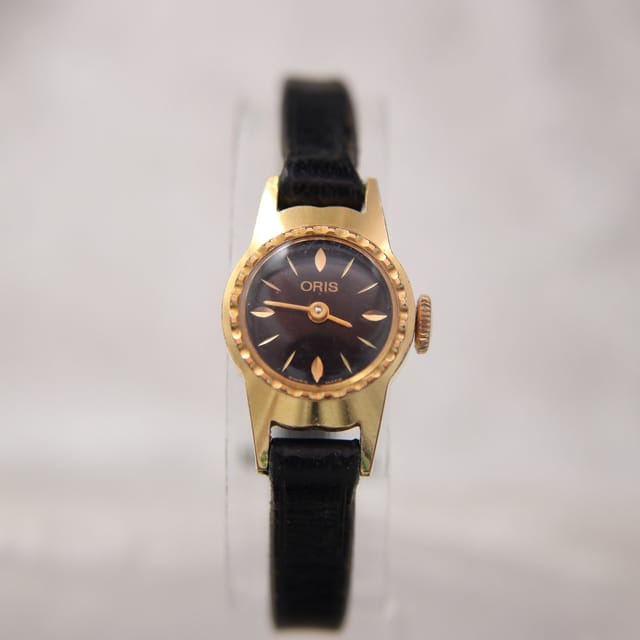
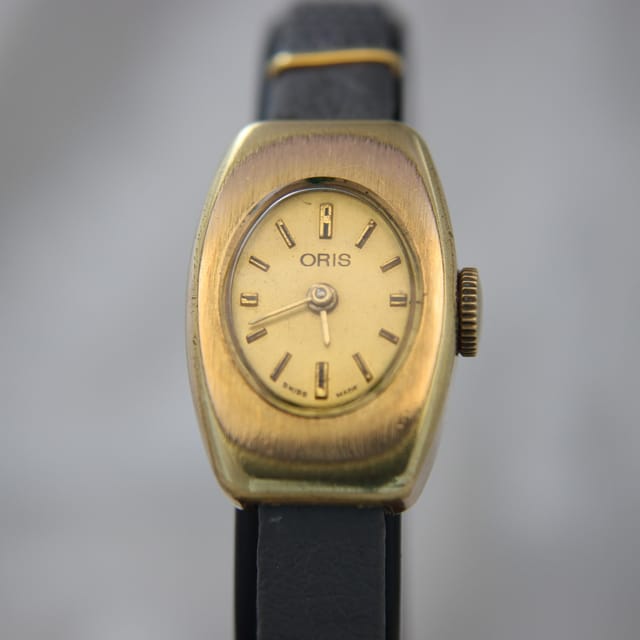
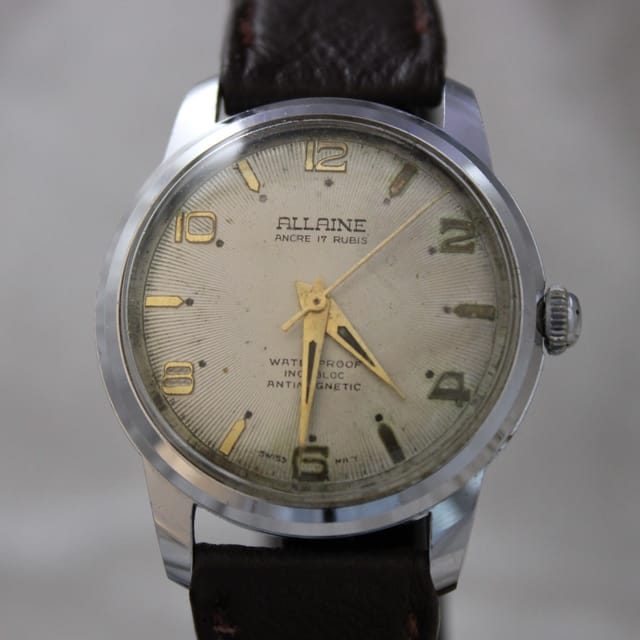
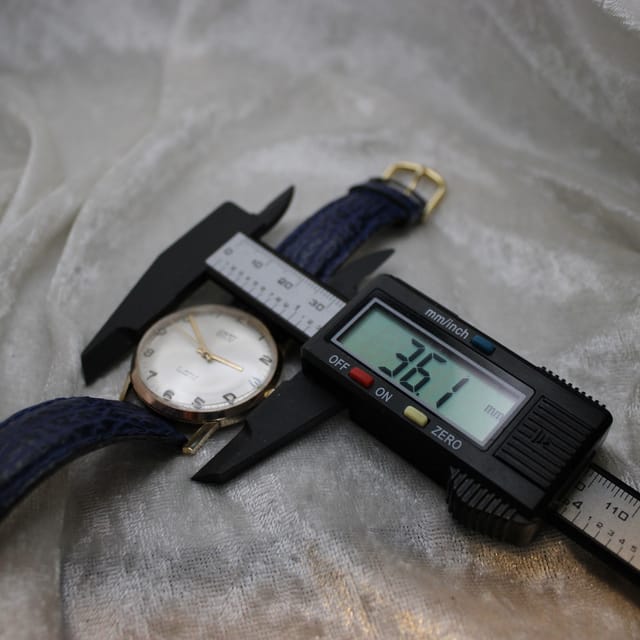
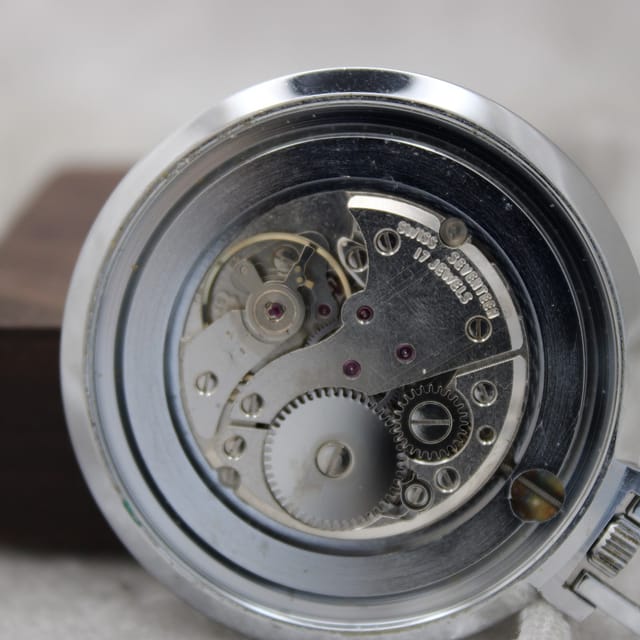
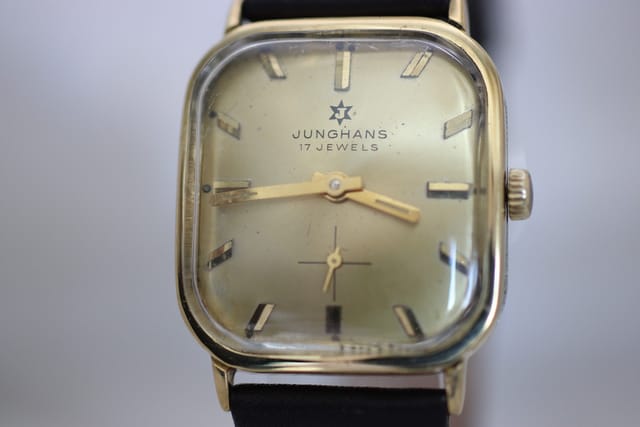
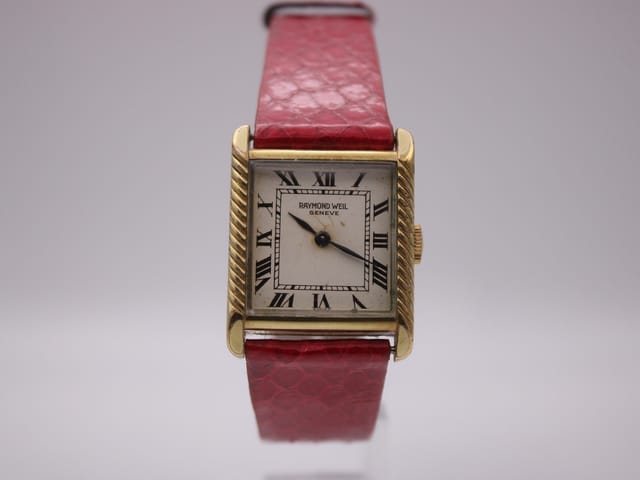
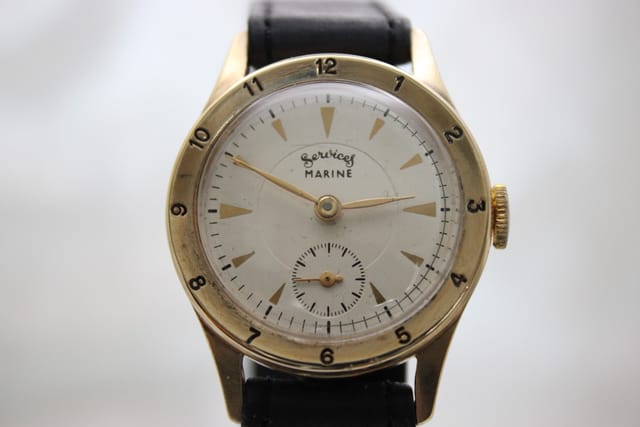
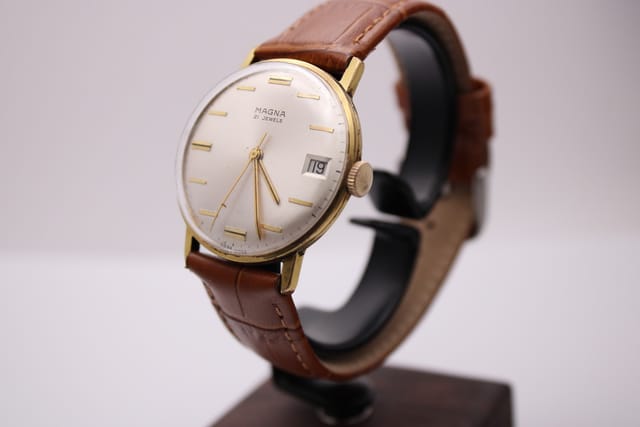
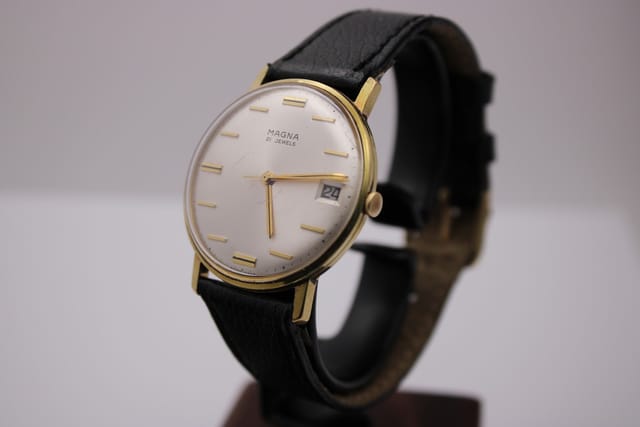
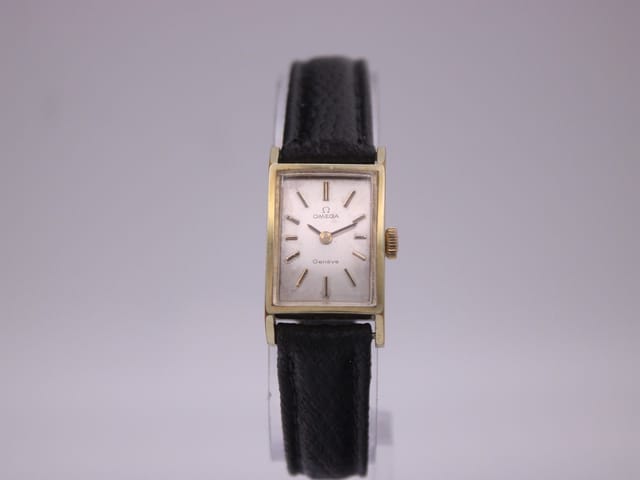
Vintage hand-wound watches.
A hand-wound watch asks something of you. There is no rotor and no battery: you turn the crown each morning, feel the mainspring tighten, and the watch runs because you wound it. An automatic does the same job with a weight that spins as you move; a manual watch leaves that job to you, and is thinner for it. That is why the slimmest, most elegant dress watches of the 1950s and 1960s are almost all hand-wound. Every piece here has been wound, set and timed before listing.

Frequently asked questions
How often do I need to wind a hand-wound watch?
Once a day, at roughly the same time each morning. Most vintage manual movements hold thirty to forty-five hours of reserve, so a daily habit keeps the watch running continuously and the mainspring working in its healthiest range.
Can I over-wind a vintage watch?
On a healthy movement, no. The mainspring reaches a positive stop and simply will not turn further. Wind gently until you feel firm resistance and then stop. Forcing the crown past that point is what causes damage, not the winding itself.
Is a hand-wound watch less accurate than an automatic?
No. Accuracy comes from the escapement and the state of service, not from how the mainspring gets wound. A well-kept manual watch keeps time as well as an automatic of the same era, typically within a minute or so a day.
How often should a hand-wound watch be serviced?
Every five to seven years of regular wear is the usual guidance. Every mechanical watch we list is wound, timed and described honestly, so you know how it is running before you buy.